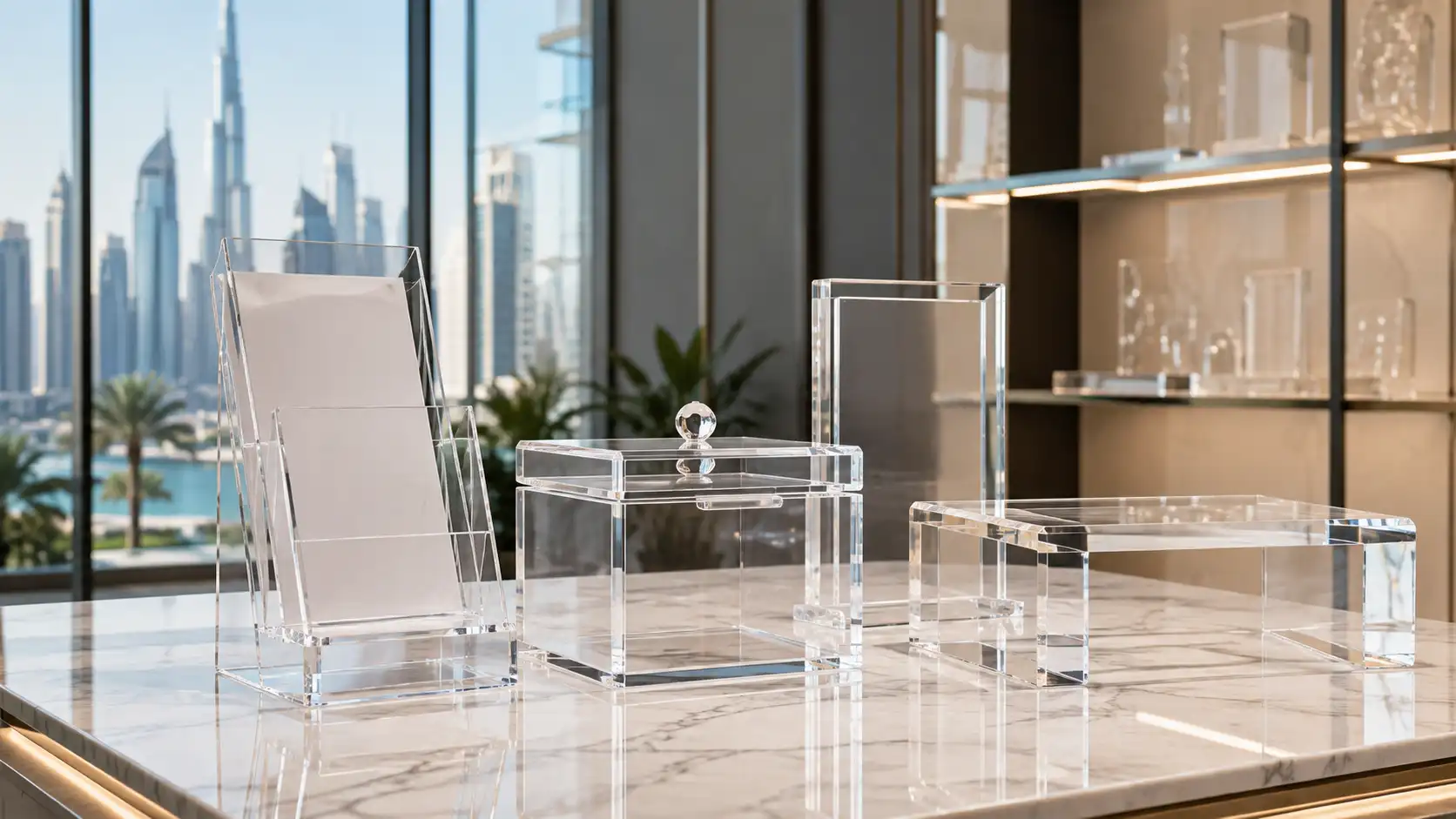

A practical Dubai buyer guide to acrylic brochure holders, leaflet holders, menu stands, table tents and literature displays for offices, clinics, hotels, restaurants, showrooms and events.
If you need brochure holders, menu stands, leaflet holders or literature displays for a Dubai office, clinic, restaurant, hotel, showroom or exhibition, this guide helps you choose the right size, format, thickness, placement and finishing style.
Acrylic brochure holders may look simple, but they do a useful job in busy Dubai business spaces. They keep brochures, flyers, menus, QR cards, service sheets and promotional materials neat, visible and easy to pick up. A well-placed brochure holder can make a reception counter look more organized, help customers find information faster and reduce clutter on desks and service counters.
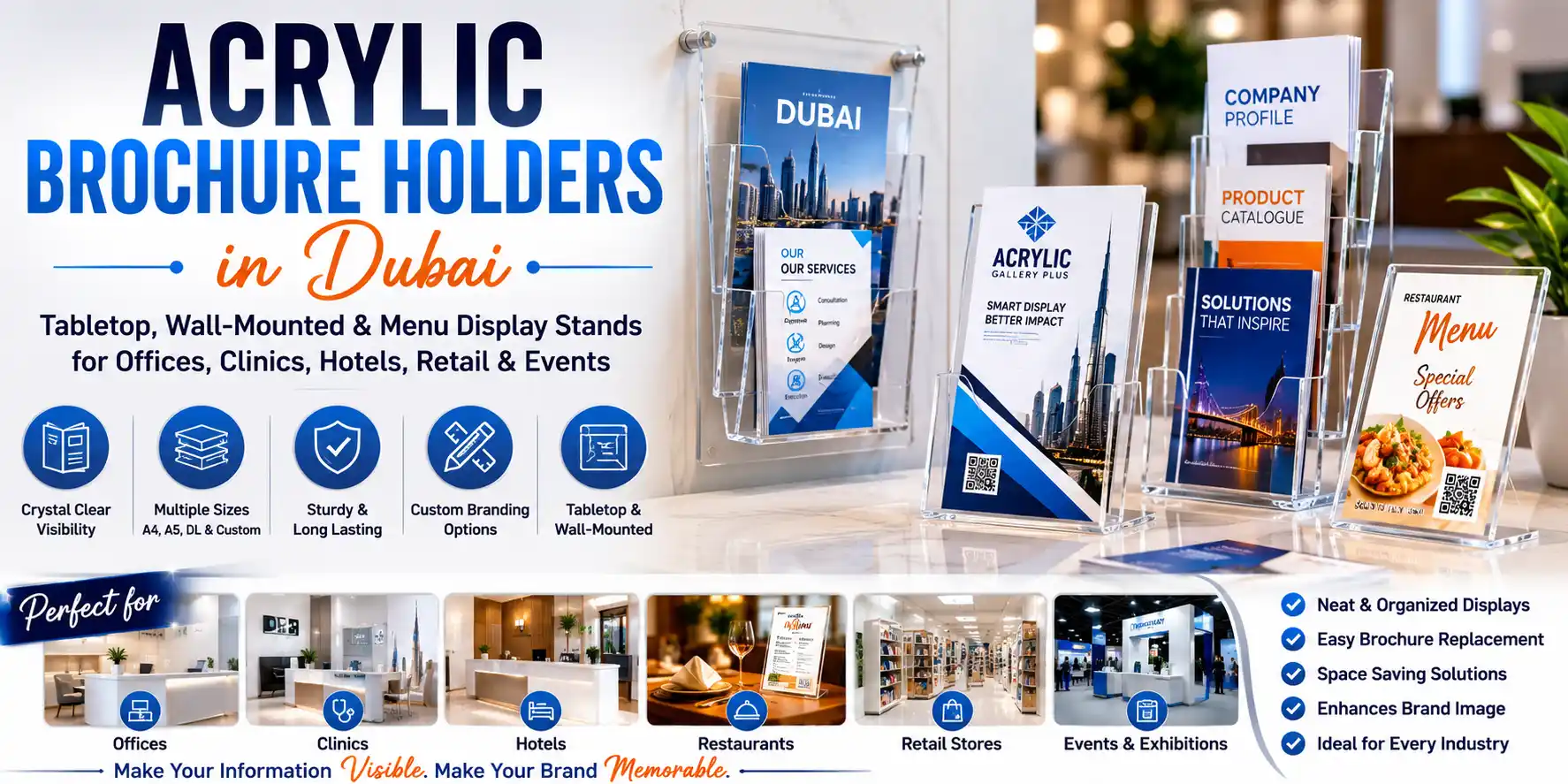
If you are looking for acrylic brochure holders Dubai businesses can use in offices, clinics, hotels, restaurants, showrooms, retail counters or exhibitions, this guide will help you choose the right type. It covers sizes, tabletop and wall-mounted styles, menu holders, multi-tier stands, material thickness, branding options, fabrication methods and common ordering mistakes.
The best brochure holder should match the paper size, fit the counter space, stand firmly and keep printed materials easy to see. A poor holder can bend, fall over, hide the brochure design or make the counter look untidy. The right one becomes part of the customer journey.
Even in a digital-first market, printed brochures still work. Many customers prefer to take a leaflet, service list, price guide, menu card or QR information card with them. This is especially true in clinics, real estate offices, travel desks, restaurants, hotels, showrooms and exhibitions.
Acrylic brochure holders are useful because they:
In Dubai, business spaces often need to look neat and professional. A clear acrylic holder fits that need because it does not compete with the brochure design. The material stays visually light, so the printed content remains the focus.
Acrylic brochure holders are used across many types of businesses. The size, shape and placement should change based on the location.
Office reception desks often display company profiles, service brochures, visitor instructions, application forms or department information. A clear holder keeps the material upright and easy to access.
Best uses:
For office spaces, a clean tabletop holder usually works well. If the counter is small, a wall-mounted option can save space.
Clinics use brochure holders for patient information, treatment guides, health packages, insurance forms and awareness material. Clear holders help visitors find what they need while waiting.
Best uses:
For clinics, holders should be easy to clean and stable enough for daily use.
Hotels, restaurants and cafés use acrylic holders for menus, promotions, table cards, QR code menus and event information.
Best uses:
Acrylic menu holders and table tents are especially useful because they are easy to replace when the menu or promotion changes.
Retail counters use brochure holders for product information, warranty details, payment plans, after-sales service, offers and new launch material.
Best uses:
In showrooms, a well-placed holder helps customers read product details without asking staff immediately.
Exhibition booths need clear, quick information. Brochure holders help keep catalogues, flyers and company profiles arranged neatly.
Best uses:
At events, holders should be light enough to carry but stable enough to handle crowd movement.
Different materials work for different needs. Acrylic is popular because it balances appearance, cost, visibility and custom fabrication.
Acrylic gives a clean and clear look. It works well in modern reception areas, clinics, restaurants and retail counters.
Best for:
Acrylic also supports bending, laser cutting and polishing, which makes it useful for custom designs. For related product display work, see acrylic display stands in Dubai.
Cardboard holders are useful for short-term promotions. They can be printed with campaign graphics and disposed of after use.
Best for:
The main issue is durability. Cardboard can bend, absorb moisture and lose shape.
Metal holders are strong and suitable for heavy-use areas. They can be used in permanent installations, especially where durability matters more than transparency.
Wood holders give a warmer appearance and work well in boutique hotels, cafés and premium hospitality interiors. Wood can look premium, but it is less transparent and may not suit all corporate or clinical settings.
The first practical decision is size. A holder must match the paper or card that will sit inside it.
A4 holders are used for full-size brochures, catalogues, company profiles and service sheets. They are suitable when the printed material includes more details or larger images.
Best for:
A4 holders need more counter space, so check the available area before ordering.
A5 holders are compact and practical. They are widely used for service leaflets, clinic information, small menus and promotional cards.
Best for:
A5 is often the best choice when the counter is small but the information still needs to be visible.
DL holders are made for tri-fold leaflets. They are common in service businesses, hotels, clinics and tourist desks.
Best for:
Custom acrylic holders are useful when your printed insert is not a standard size. This is common for QR cards, tabletop menu cards, price cards, hotel signs and branded counter inserts.
Best for:
Custom sizing is helpful when the holder must match a specific brand layout.
Placement matters as much as size. A brochure holder should sit where customers naturally look and reach.
Tabletop holders are placed on desks, counters and tables. They are easy to move, clean and replace.
Best for:
Tabletop holders are practical when staff need to refill brochures often.
Wall-mounted holders save counter space and keep printed materials visible in waiting areas and corridors.
Best for:
Wall-mounted options need proper fixing and should be installed at a comfortable viewing height.
Multi-tier holders display several brochures in one unit. They are useful when a business offers different services or product categories.
Best for:
The main rule is simple: do not overcrowd the holder. Too many brochures can make the display look messy.
Restaurants, cafés and hotels use acrylic menu holders for tabletop menus, QR cards, promotional inserts and special offers. These holders must be stable because they are touched often and moved during cleaning.
Common styles include:
A clear acrylic menu holder is useful because it protects the printed card while keeping the design readable. It also lets staff replace inserts without replacing the whole holder.
For restaurants and cafés, stability matters. A holder that falls over every time a table is cleaned will not last long in daily use.
Acrylic thickness affects stability and how long the holder lasts.
This range is used for lightweight holders and small inserts. It can work for basic brochure holders, especially when the design is small.
Best for:
This range is better for stronger custom holders, thicker bases and premium counter displays.
Best for:
Sometimes the pocket can be thinner, but the base should be thicker for stability. This is common in menu holders and table signs where the insert must stand upright.
Acrylic brochure holders can remain fully clear, or they can include branding. The right option depends on where the holder will be placed.
Common branding options include:
Keep branding simple. The brochure or menu should remain the main focus. A small logo at the base is usually enough for a professional look.
A good acrylic brochure holder depends on neat fabrication. The bends, edges and pockets must be clean and consistent.
Laser cutting is useful for accurate panels, curves, slots and custom shapes. It gives clean edges when the design is prepared properly. For this type of work, see acrylic laser cutting and engraving in Dubai.
Bending is used to create pockets, slanted stands, table tents and one-piece holders. A clean bend line makes the holder look more professional. For formed acrylic work, see acrylic bending in Dubai.
CNC routing is useful for custom bases, thicker parts and repeated accuracy when producing holders in bulk.
Edges should feel smooth and safe. Poor finishing makes the holder look cheap and can create sharp touch points. For clean finishing standards, see edge polishing and finishing in Dubai.
Some holders need bonding. The joint should be clear and neat, without visible glue marks or cloudy areas.
For custom quantities, branding, sizing and product display builds, working with an acrylic fabrication company in Dubai helps keep the final holder accurate and consistent.
A holder made for A5 will not properly hold an A4 sheet. Always confirm the printed material size before ordering.
A lightweight holder may work on a calm office desk, but not at a busy restaurant table or event booth.
If the holder angle is wrong, people may not read the brochure easily. Slanted holders are often better for counters.
Smooth counters can make holders slide. Rubber feet or a heavier base can help.
A holder packed with too many papers looks messy and becomes hard to use.
A pocket that is too tight makes paper replacement difficult. A pocket that is too loose makes the insert look untidy.
For exhibitions and premium counters, a small logo or branded base helps the holder feel more intentional.
Before ordering acrylic brochure holders in Dubai, prepare these details:
For multi-branch businesses, it is better to keep the same size, finish and branding style across all locations.
Acrylic holders are easy to clean, but they can scratch if wiped carelessly.
Use:
Avoid:
For restaurants and clinics, cleaning happens often. Choosing a durable design and giving staff basic care instructions will help the holders stay clear for longer.
For acrylic care reference, see ACRYLITE acrylic sheet care guidance. For technical plastics standards context, see ASTM Committee D20 plastics standards. For fire testing context, see UL plastics flammability testing overview.
Share your paper size, holder style, quantity, branding requirement and placement area. Acrylic Gallery Plus can help with custom tabletop, wall-mounted, multi-tier and menu display holder options.
Contact Acrylic Gallery PlusThe best size depends on your printed material. A4 works for full brochures and catalogues, A5 works for compact flyers, and DL works for tri-fold leaflets.
Choose A4 for larger information sheets, A5 for smaller service flyers and DL for tri-fold brochures. If your insert is a custom size, order a custom acrylic holder.
Yes. Acrylic brochure holders are commonly used in clinics, offices and reception areas because they keep information visible and organized.
Yes. Acrylic menu holders can be made as table tents, slanted holders, QR code stands or double-sided menu displays for restaurants, cafés and hotels.
Yes. Logos can be added through printing, engraving, frosted strips, colored bases or branded side panels. Keep the branding simple for a cleaner look.
Wall-mounted holders save counter space and work well in waiting areas and corridors. Tabletop holders are easier to move and refill. The right choice depends on placement.
Small holders can use 2 mm to 3 mm acrylic. Stronger custom holders and premium bases often use 4 mm to 5 mm acrylic or thicker base parts.
Yes. Custom sizes are useful for QR cards, menu cards, offer cards, service cards and branded inserts.
Use a microfiber cloth and mild soap solution. Avoid rough cloths, paper towels, dry wiping and strong chemical cleaners.
Yes. Bulk production is common for offices, clinics, restaurants, showrooms and retail chains. Approve a sample or drawing before full production.
Acrylic brochure holders in Dubai are practical for offices, clinics, hotels, restaurants, showrooms, retail counters and exhibitions. They keep printed materials neat, visible and easy to access. The right holder should match the paper size, fit the counter or wall space, stand firmly and look clean with the surrounding interior.
A4, A5, DL and custom formats each serve a different purpose. Tabletop holders work well for counters and tables, while wall-mounted holders save space in waiting areas and corridors. Menu holders and table tents are useful for restaurants, cafés and hotels where information changes often.
When the size, thickness, bend, base and finishing are planned properly, acrylic brochure holders become more than a small display item. They help customers find information faster and help businesses present printed material in a clean, professional way.