
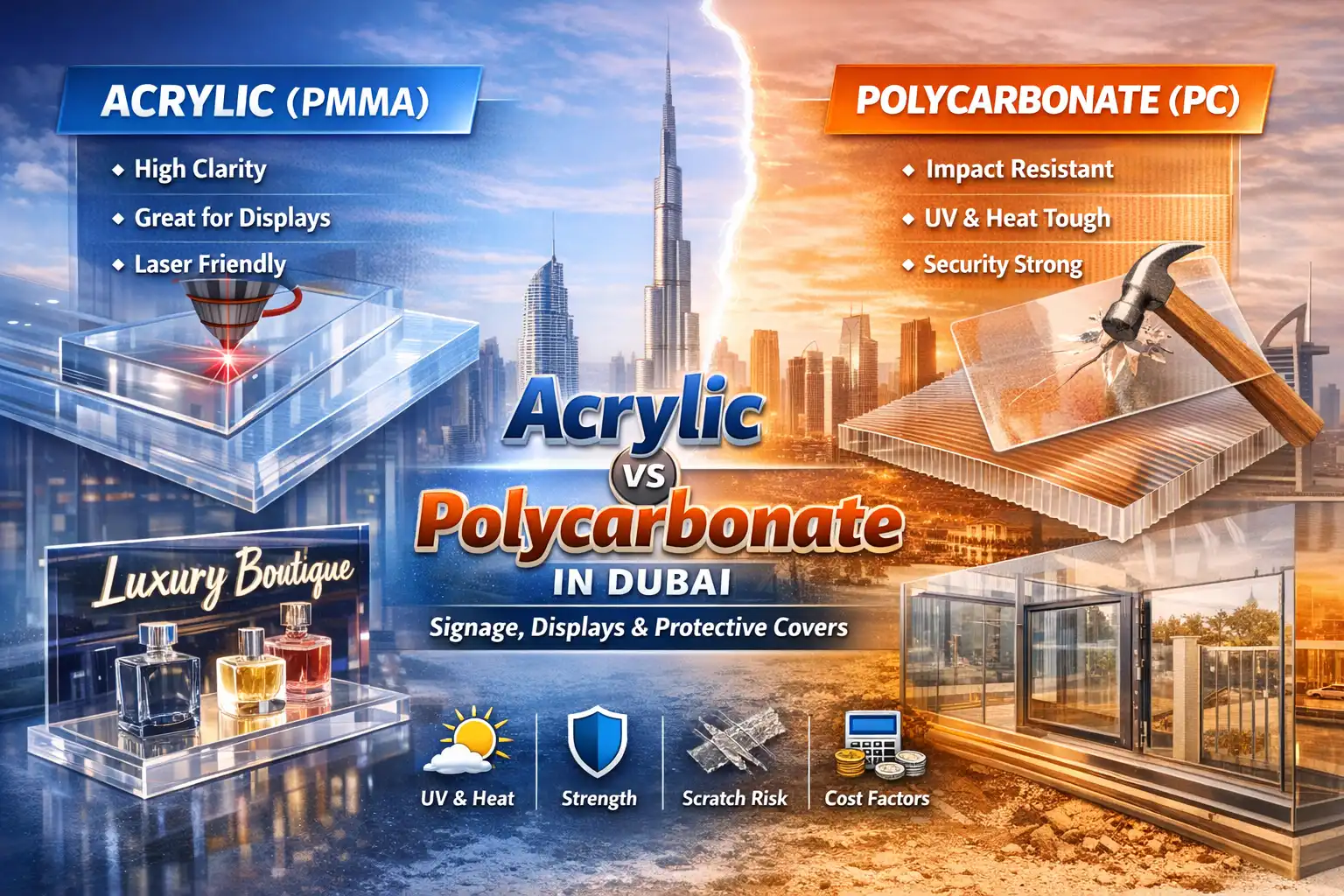
Dubai heat, UV, dust, and high-traffic spaces can expose weak material choices fast. This guide compares acrylic (PMMA) and polycarbonate (PC) using practical selection rules you can apply to shop signs, retail displays, guards, and covers.
If you are choosing sheets for a shop sign, showroom display, menu holder, machine guard, sneeze guard, or protective cover in Dubai, the sections below help you decide on the right material, thickness, finish, and fabrication method without guesswork.
Best when you want a premium “glass-like” look, clean edges, and strong optical clarity for signage and retail. It is rigid and polish-friendly, but it can crack under high impact if the design is not engineered well.
Best when impact resistance is the priority (guards, protective covers, public-facing barriers). It can handle knocks and vibration better, but it can scratch easier and may need protective coatings for long-term outdoor clarity.
Simple rule for Dubai: If the part is likely to be hit, flexed, or stressed (busy entrances, public areas, machinery, high-traffic retail), polycarbonate is usually safer. If the part must look premium and stay visually sharp (branding, display cases, 3D letters, clean edges), acrylic often wins.
Acrylic (often called PMMA) is a clear, rigid plastic known for high clarity and a refined finish. It machines cleanly, takes edge polishing and finishing in Dubai very well, and is widely used for premium signage, display covers, and branded retail fixtures.
Polycarbonate (often called PC) is a tough engineering plastic. Many buyers choose it when impact resistance matters more than an ultra-glossy edge. It is common for protective shields, machine guards, security glazing alternatives (application-specific), and areas where knocks are expected.
Helpful references: You can review general material descriptions for PMMA (acrylic) and polycarbonate. For safety testing context, UL’s overview of plastics flammability testing is also useful: UL plastics flammability testing.
Dubai’s sunlight and heat can punish the wrong sheet choice. Acrylic is widely preferred for outdoor signage where long-term clarity matters, especially when the design is fixed and not exposed to impacts. Polycarbonate can perform outdoors too, but it often benefits from UV-protected grades or protective coatings depending on the application and exposure time.
Many installations in Dubai face dust and frequent wiping. Acrylic can still scratch, but it tends to keep a cleaner “showroom look” when properly finished. Polycarbonate is tough against impact, but scratching can show faster if cleaning is rough. In public-facing applications, we often recommend clear cleaning rules and, where suitable, protective films or coatings.
If your sheet is close to foot traffic, carts, door swings, or equipment movement, impact resistance becomes the main risk. This is where polycarbonate is often the safer choice. Acrylic can work, but it needs design support: correct thickness, rounded internal corners, safe hole clearances, and proper mounting to avoid stress cracking.
For projects involving public areas, food environments, partitions, or machinery, stakeholders sometimes request documentation for fire performance, safety, or test standards. Requirements vary by project. If you need to reference industry standards, ASTM committees list common optical and weathering test methods used across plastics, such as haze/transmittance and outdoor weathering categories. See ASTM’s overview pages for optical properties (including D1003) and plastics standards listings.
| Use case | Typical priority | Best fit | Notes for Dubai projects |
|---|---|---|---|
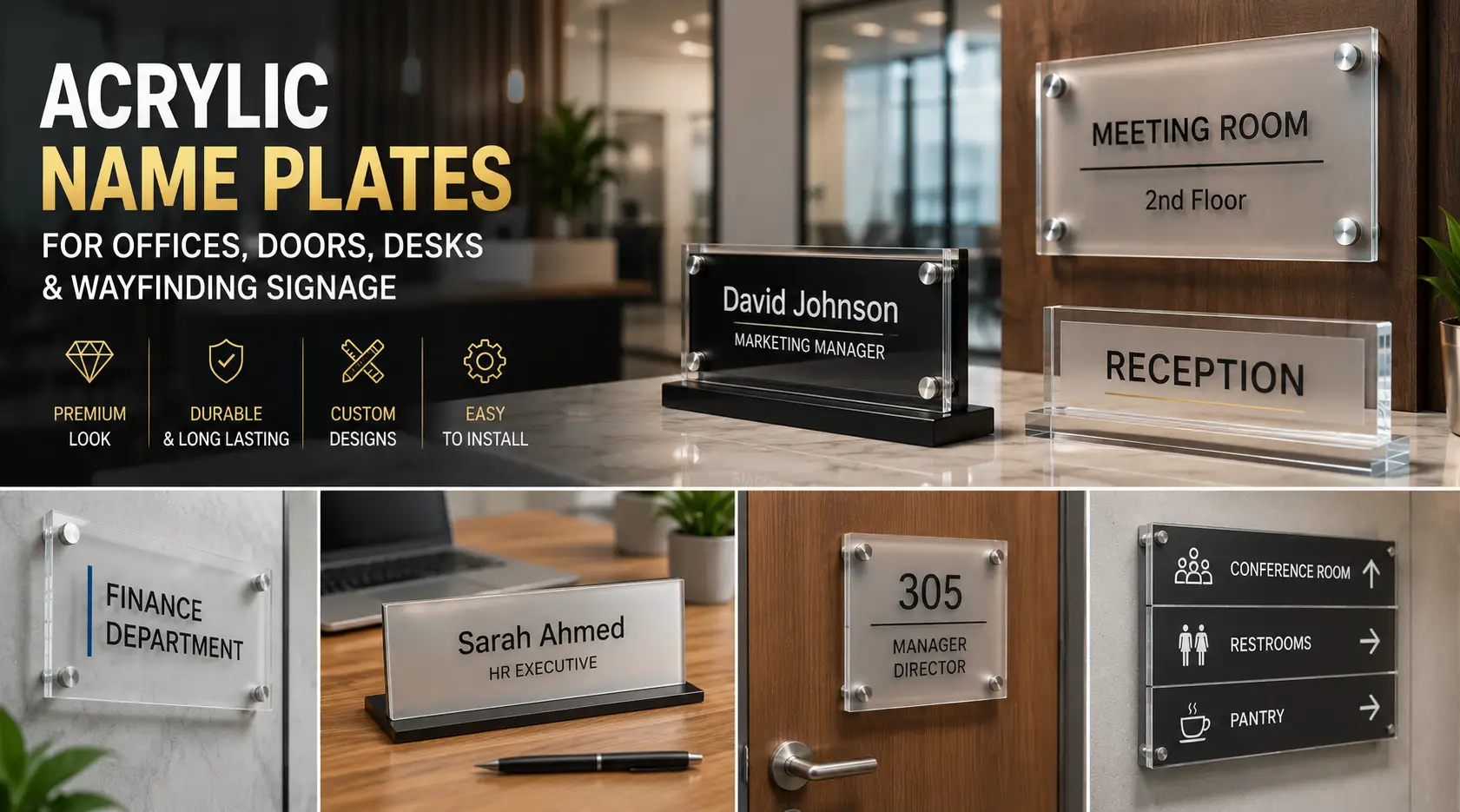
| Shop signs, 3D letters, branded panels | Clarity, premium finish, clean edges | Acrylic | Works well with CNC and laser workflows. Pair with refined finishing for a premium look. |
| Retail display risers, trays, counters, POS fixtures | Look + stability + easy cleaning | Acrylic (often) | Ideal when the customer sees the edges and surface every day. Good for gloss or satin finishes. |
| High-traffic display stands (public touch points) | Impact resistance + durability | Polycarbonate or engineered acrylic | If knocks are expected, polycarbonate reduces break risk. Use coatings if scratch control is needed. |
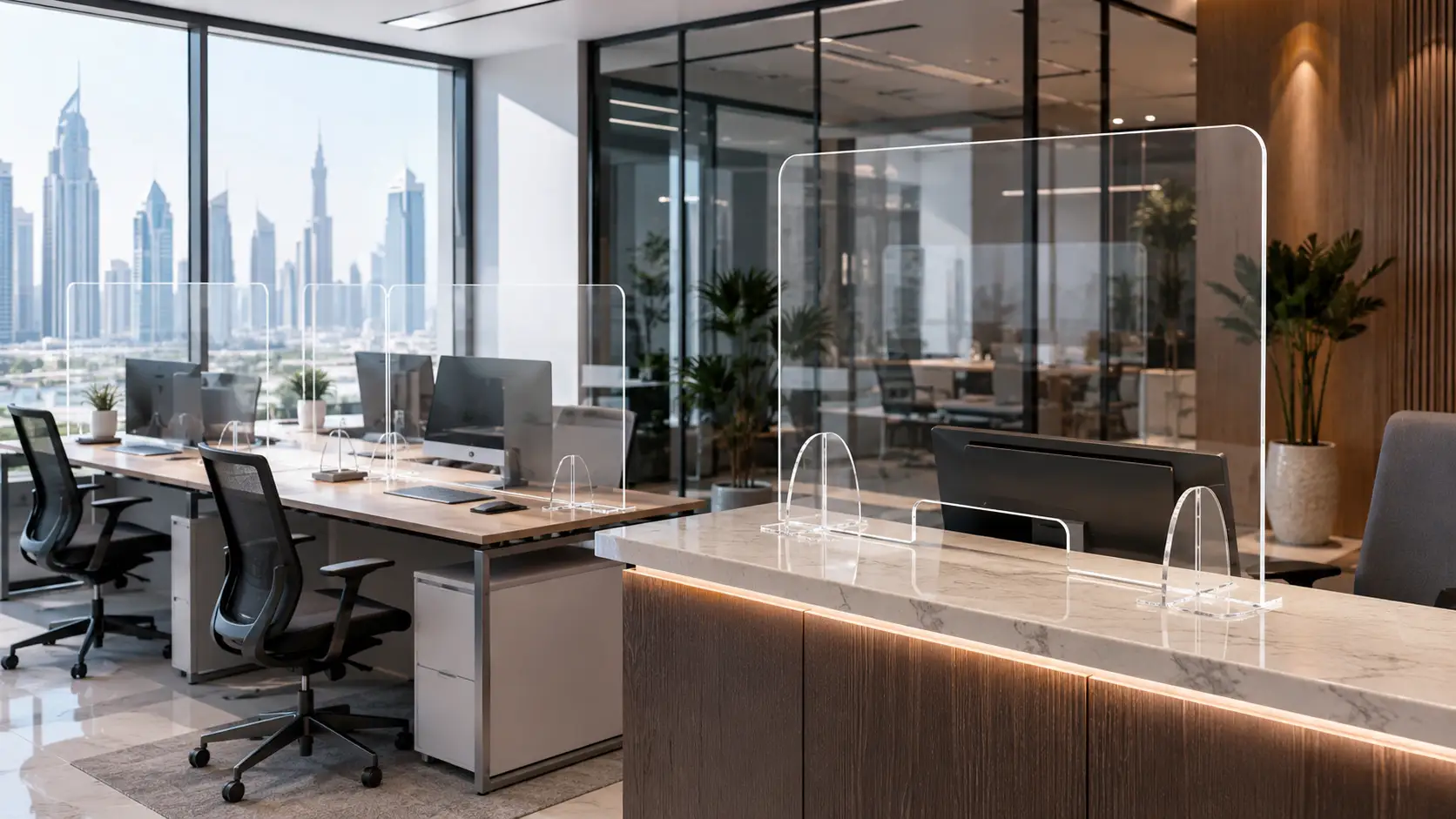
| Protective covers, guards, shields | Impact resistance + safety | Polycarbonate | Common choice where a hit, drop, or vibration can occur. Confirm grade and thickness by application. |
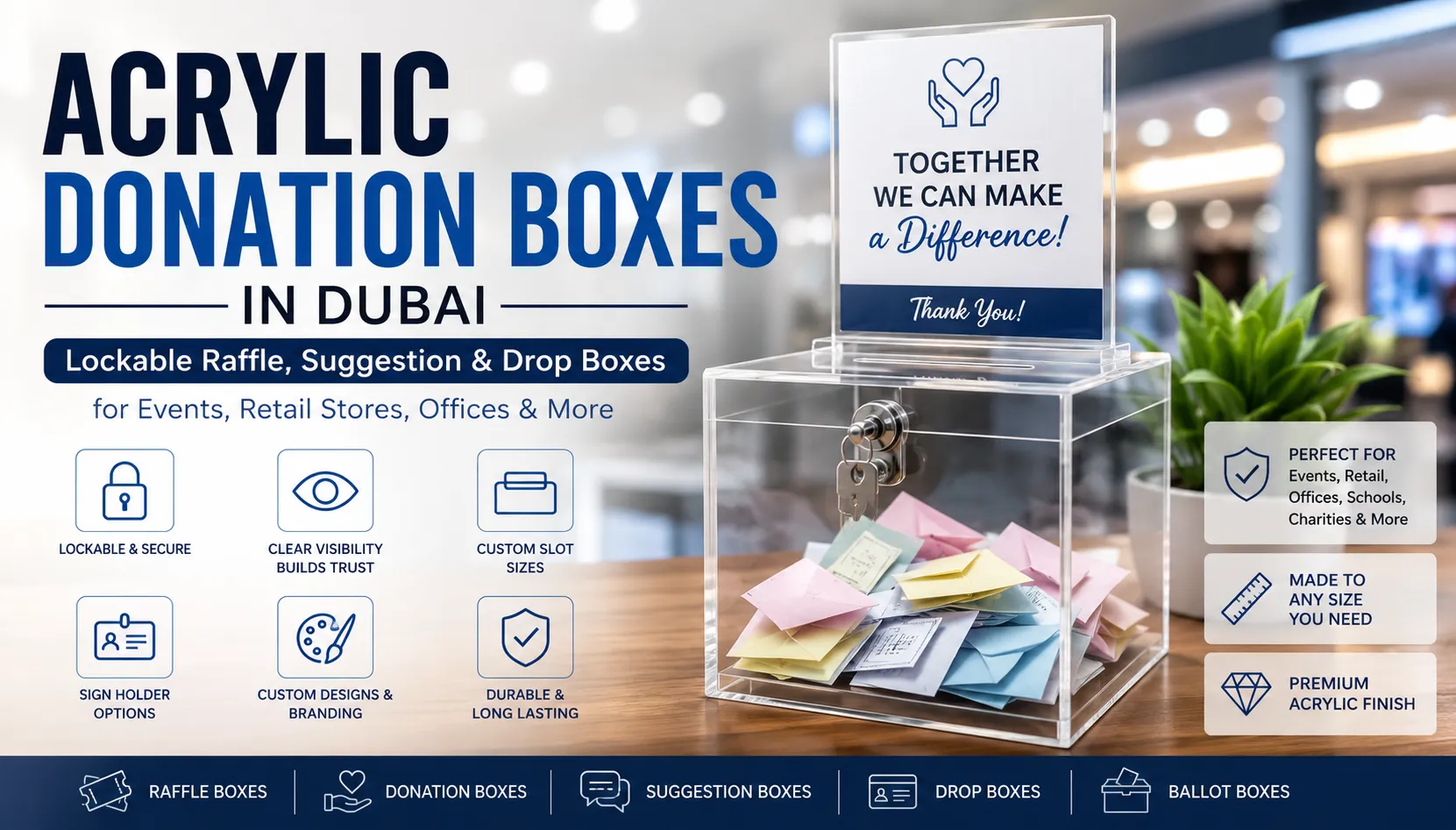
| Display boxes and premium packaging | Clarity + polish + presentation | Acrylic | Great for clear lids, dust covers, and premium product protection. |
If your project involves retail fixtures, you can also check our related pages for acrylic display stands in Dubai and acrylic boxes in Dubai.
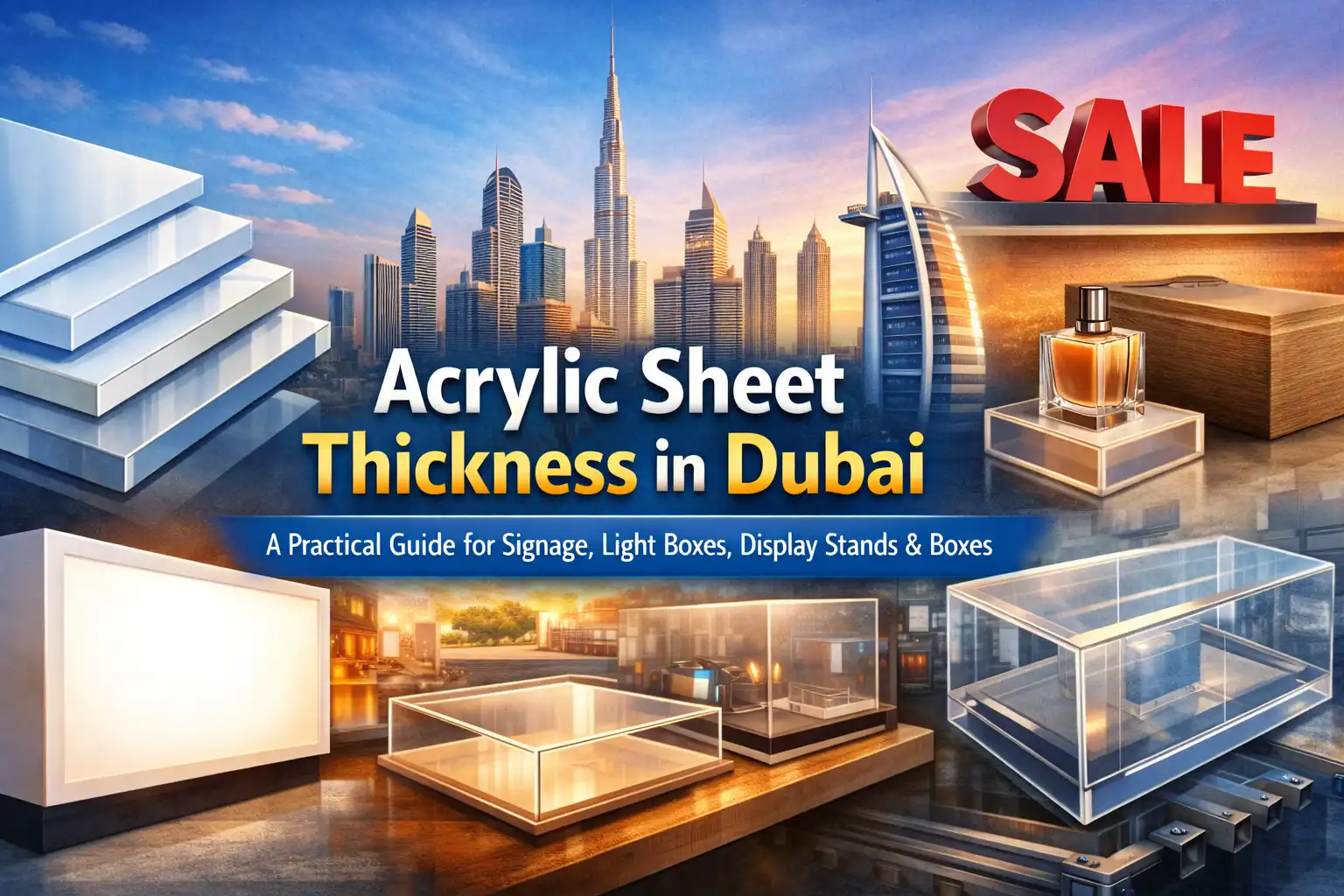
Thickness is not only about “stronger is better”. It is about span, load, mounting points, and how the part will be cleaned and handled. Below is a practical way to think about thickness when you are deciding between acrylic and polycarbonate for Dubai installations.
Many signage panels use moderate thickness because the sheet is supported by frames, standoffs, or back panels. If the panel is large, thin sheets can bow with heat or mounting stress. For clean results, design the mounting pattern to avoid concentrated stress. When routing or cutting matters, our CNC routing in Dubai capability helps keep edges consistent on repeat production.
Display stands are “handled” products. Customers touch them, staff moves them, and cleaning happens often. If the stand has long unsupported spans, increase thickness or add bends and ribs. Acrylic is excellent here because it finishes well and can be heat-formed using controlled acrylic bending in Dubai to improve rigidity without making the design bulky.
Protective parts must account for impact. Polycarbonate typically allows thinner sections for the same impact safety than acrylic, but thickness still matters for stiffness. If the cover must remain crystal clear while being frequently cleaned, discuss surface protection options before you finalize.
Engineering tip: The biggest failures come from stress around holes and tight fixings. Use correct hole sizing, allow thermal movement, and avoid overtightening. This matters in Dubai where temperatures can shift the sheet slightly.
Acrylic is widely used because it cuts cleanly and supports crisp branding details, especially for signage, display risers, and premium covers. Depending on thickness and finish requirements, we use CNC routing, laser cutting, or a combined workflow. If your design needs fine detailing (logos, patterns, etching, or serial markings), our acrylic laser cutting and engraving in Dubai service may be relevant.
Polycarbonate can also be fabricated effectively, but it often needs extra care to reduce heat marks, stress, or edge haze depending on the process. For projects where optical perfection is the brand goal, acrylic usually provides the sharper finish with less compromise.
When customers can see the edges (display boxes, premium stands, branded plaques), the difference is obvious. Acrylic accepts polishing and finishing very well. That is why many retail and corporate projects choose acrylic for front-facing elements and reserve polycarbonate for hidden protective tasks.
Clean joints matter in display products. Acrylic bonding techniques can produce visually neat seams when done correctly. For larger assemblies, structural design matters more than just adhesive choice: use overlaps, mechanical supports, and avoid stress concentrators.
Buyers often compare only the sheet price. In reality, the replacement cycle and maintenance cost can be bigger. If a protective cover cracks, the cost is not only the sheet. It includes downtime, refitting, and rework. That is why polycarbonate can be cost-effective for protection tasks.
For signage and premium display, acrylic can save money over time because it keeps a clean look with proper finishing and correct cleaning methods. In retail, the “visual” cost of a scratched or hazy fixture is real. Customers notice.
If you need a supplier who can advise on build strategy, start with our acrylic fabrication company in Dubai page and share your use case.
Best practice for mixed projects: Use acrylic for front-facing branding and display surfaces, and polycarbonate for hidden protection parts. This keeps the premium look while controlling break risk.
In Dubai, both acrylic and polycarbonate can be the “right” choice, but for different reasons. Acrylic usually wins for premium presentation, signage clarity, and refined edges. Polycarbonate usually wins where impact resistance and safety are the top priority. If you are unsure, start with the use case (signage, display, or protective cover), then match the material to the risk, finish, and lifecycle needs.
If you want a quick recommendation for your project, message us through the Contact page with your dimensions and where the item will be installed in Dubai.