
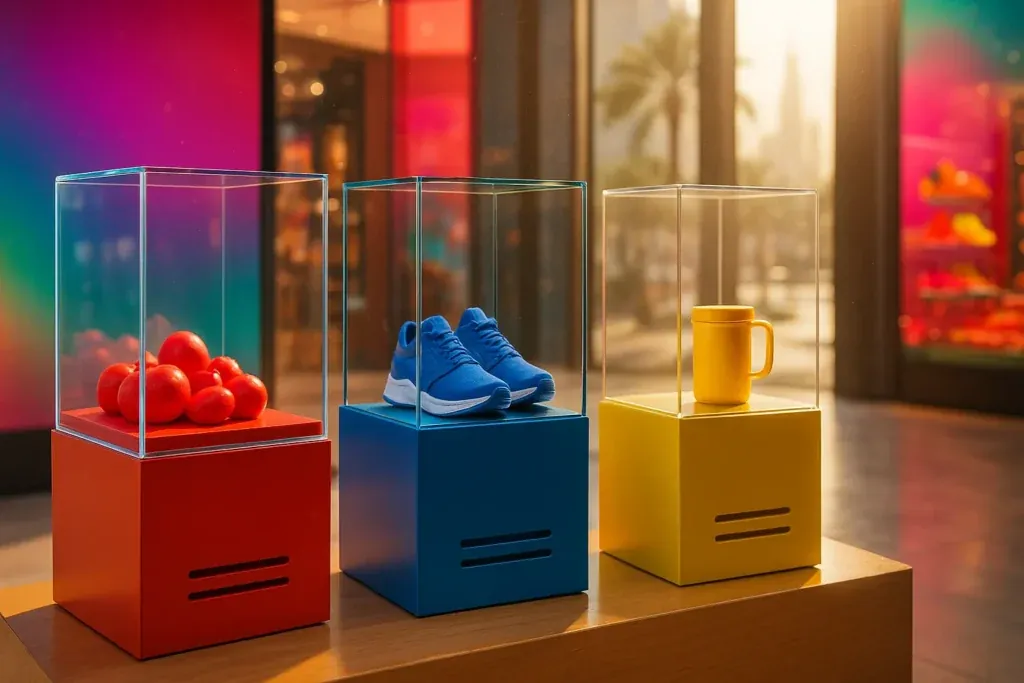
Extended Producer Responsibility changes how businesses think about product life, material use and waste. Acrylic can support longer-lasting signage, displays and fixtures when the design allows repair, reuse and part replacement. It does not make a product automatically compliant, but it can help reduce dependence on short-life items.
What EPR Means in Practical Terms
Extended Producer Responsibility (EPR) is a policy approach that shifts product lifecycle impacts—especially post-consumer waste—back to producers. The UAE’s direction supports durability, reuse, and responsible end-of-life. For updates and guidance, track the UAE Government Portal, MOCCAE, and WAM. For global definitions and best practices, see UNEP and OECD.
Where Acrylic Can Support a Longer Product Life
- Longevity & Reuse: Acrylic products last for years with the right thickness and finish.
- Recyclability Pathways: PMMA can be depolymerized in specialized streams; responsible end-of-life is achievable with partners.
- Repair & Refurbish: Replace panels and update graphics—no need to scrap the base unit.
- Traceability & Branding: Laser engraving and UV printing support serials, batch codes, and durable labels.
Where Longer-Life Acrylic Can Make Sense
Reusable Signage & Wayfinding
Retire disposable foams and short-life plastics. Move to acrylic wall logos, door plaques, aisle markers, and safety signage. Pair precision cutting with long-life graphics.
Display Stands & Visual Merchandising
Consolidate seasonal POS items into modular acrylic systems. Refresh graphics and hero panels while the structure endures across campaigns.
- Display Stands for retail, electronics, beauty, and jewelry.
F&B Front-of-House & Back-of-House
Switch to acrylic trays, pastry covers, condiment organizers, sneeze guards, menu holders, and buffet labels. Improve hygiene and reduce waste simultaneously.
Interior Fixtures & Furniture
Acrylic furniture and fixtures deliver modern aesthetics and fast cleaning in reception areas, offices, and hospitality spaces.
- Acrylic Furniture: podiums, host stands, nesting tables, plinths, literature racks.
Awards, Events & Corporate Gifts
Make events more sustainable with durable acrylic awards, plaques, and trophies that outlast laminated or disposable options.
Material, Thickness and Finish
Material Type
- Cast Acrylic (PMMA): Best clarity and engraving quality—ideal for signage, awards, displays, and furniture.
- Extruded Acrylic: Suitable for simple panels and protective screens where fine engraving is not required.
Typical Thickness (Guidance)
- Signage & Menu Boards: 3–5 mm
- Display Stands & Risers: 4–8 mm (increase for wide spans or heavy loads)
- Trays & Organizers: 4–6 mm
- Shields & Partitions: 4–10 mm (thicker panels resist flex)
- Furniture & Plinths: 8–15+ mm depending on design
Finishes & Options
- Polished Edges: Flame or buff polishing for glass-like clarity.
- UV Printing: Durable, brand-accurate graphics. Consider second-surface printing for depth and abrasion resistance. Learn more.
- Engraving: Permanent logos, serials, and QR codes for traceability.
- Hardware: Non-slip feet, hinges, standoffs, and handles to extend service life.
Design Choices That Support Reuse
- Modularity: Standardize base units; refresh graphics and replace worn panels only.
- Easy Disassembly: Use compatible fasteners and accessible joints for part replacement.
- Traceability: Add engraved batch codes, serials, or QR labels on second-surface to protect marks.
- Hygiene by Design: Favor rounded corners, lids, and wipe-friendly surfaces for F&B operations.
- Brand Consistency: Calibrate color profiles and keep master artwork for multi-site rollouts.
Documenting Reuse, Repairs and Replacement Parts
EPR success depends on evidence. Acrylic systems make data capture practical.
- Reuse Metrics: Track cycles per unit before component replacement.
- Repair Logs: Record refurbished parts and avoided full-unit purchases.
- Material Passports: Note sheet type, thickness, and suppliers for traceability.
- End-of-Life Plans: Coordinate take-back or specialized recycling where available.
A Practical 90-Day Review
Days 1–30: Audit & Prioritize
- Catalogue single-use and short-life items across locations.
- Prioritize high-visibility replacements: signage, stands, trays, shields.
- Choose standard sizes, thicknesses, and finishes for consistency.
Days 31–60: Prototype & Approvals
- Order pilot sets for one branch; test cleaning and durability.
- Lock artwork and calibrated color profiles for UV printing.
- Confirm edge finishing and hardware (feet, hinges, handles).
Days 61–90: Rollout & Training
- Place production order with phased deliveries.
- Train teams on cleaning, storage, and damage reporting.
- Set quarterly refresh for graphics and parts—not whole units.
Questions Businesses Usually Ask
- What does Extended Producer Responsibility mean for my business?
- EPR encourages design for reuse and responsible end-of-life. Switching to modular acrylic products reduces waste and supports reporting with traceable, long-life items.
- Can acrylic support an EPR or circular-economy plan?
- It can support a plan when the product is designed for reuse, repair and part replacement. Actual compliance depends on the product category, the rules that apply and the documented end-of-life arrangement.
- What thickness should I choose for stands, trays, and shields?
- As a guide: 4–8 mm for stands, 4–6 mm for trays, and 4–10 mm for shields (use thicker for wide spans or heavy traffic). We’ll confirm the exact spec per use case.
- How can we prove EPR progress to stakeholders?
- Track reuse cycles, refurbished parts, replaced panels, and end-of-life actions. Use engraving or printed identifiers for batch codes and QR links to digital records.
- Are acrylic surfaces suitable for F&B hygiene?
- Yes. Acrylic cleans quickly with mild soap and a soft cloth. Design lids, guards, and wipe-friendly corners to support operations and inspection.
Planning a Reusable Acrylic Product?
Share the application, dimensions, quantity and expected service life through the project enquiry form. Regulatory compliance should still be confirmed with the relevant UAE authority.