
In Dubai, acrylic is used everywhere, from shop signs and light boxes to retail display stands and premium product boxes. But a lot of projects fail for one simple reason: the wrong acrylic sheet type was selected at the start. This guide breaks down cast vs extruded acrylic, UV grades, finishes, thickness, and quality checks, so you can choose the right sheet confidently and avoid rework.
If you are choosing acrylic sheets in Dubai for signage, retail displays, or custom acrylic boxes, the sections below will help you select the right grade, thickness, finish, and fabrication method without guesswork.
Acrylic (PMMA) looks simple on the surface: clear plastic sheets cut and assembled into a final product. In practice, sheet selection determines whether your piece stays crystal clear, holds its shape, and looks premium after fabrication. Dubai adds extra pressure on materials because projects often face:
The good news: once you understand the difference between cast and extruded acrylic, UV grades, thickness, and finishing, you can specify materials clearly and avoid quality surprises.
If you need a supplier who can guide selection and execute the build, start here: acrylic fabrication company in Dubai.
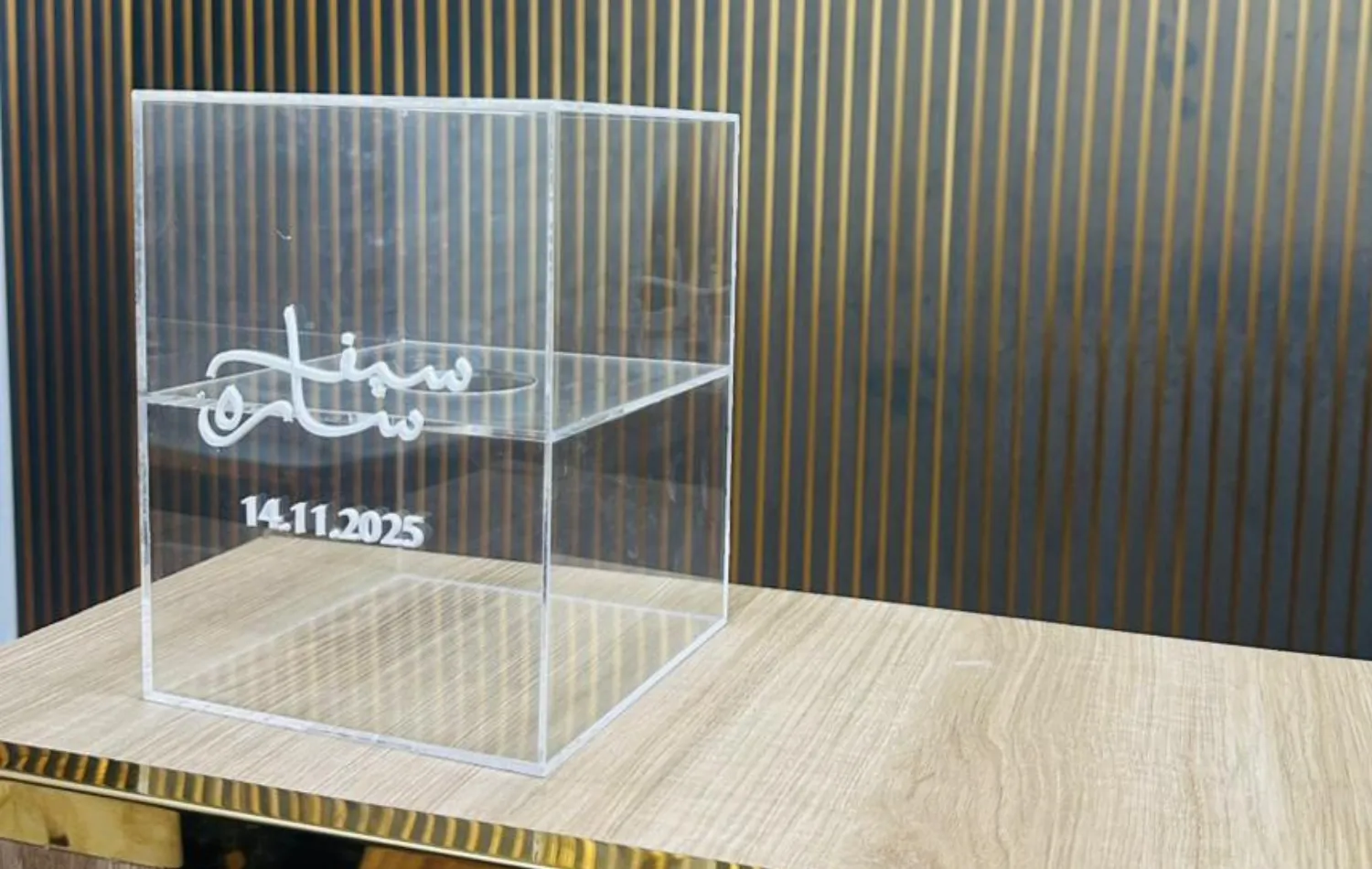
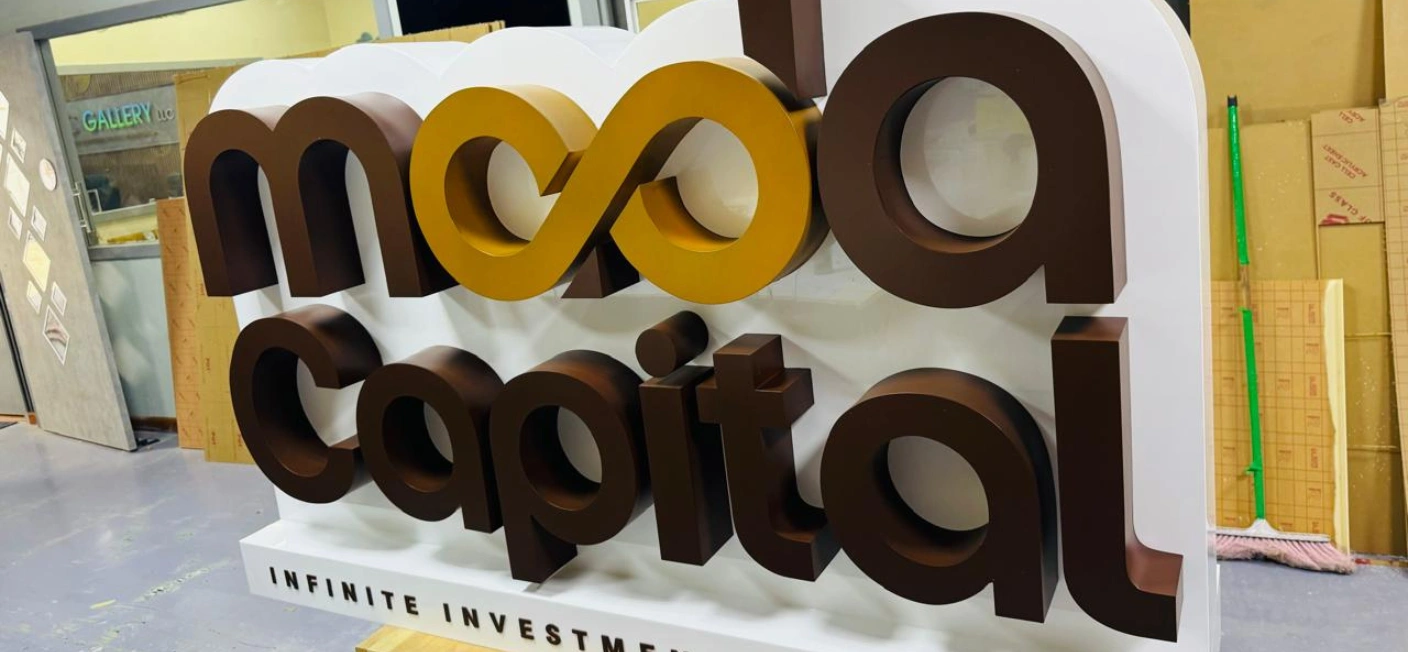
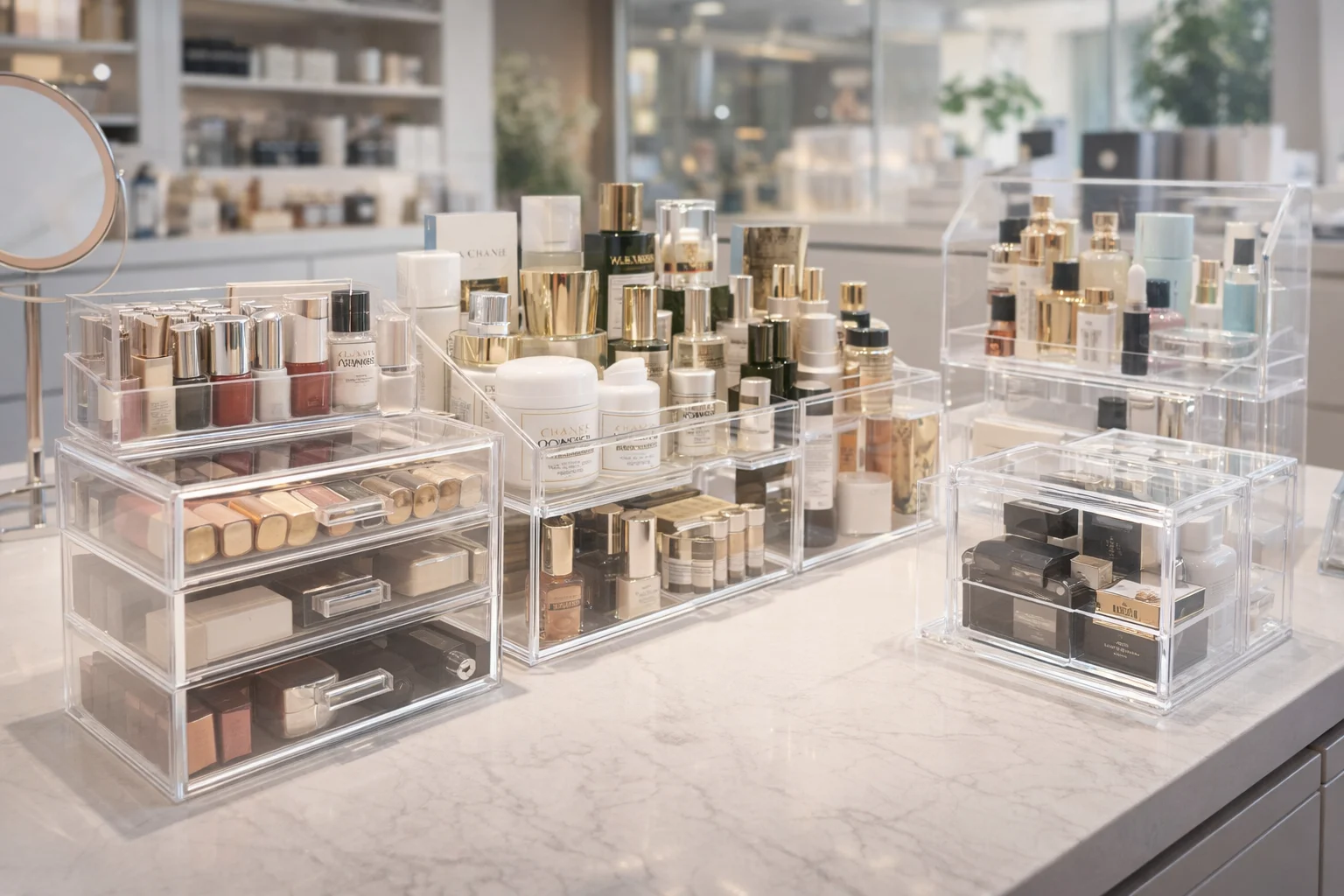
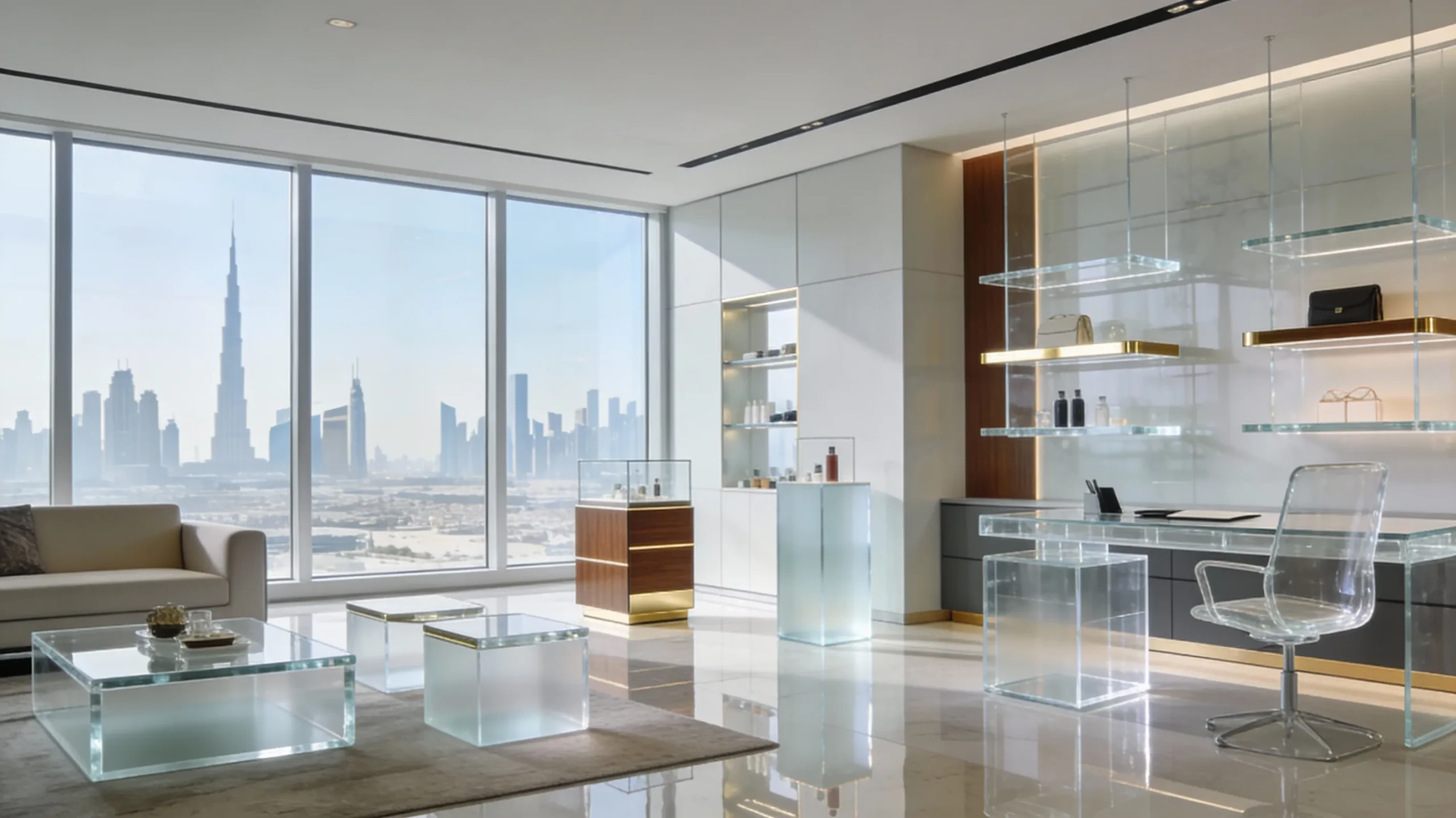
Acrylic sheets are frequently used for acrylic signage, acrylic display stands, and custom acrylic boxes.
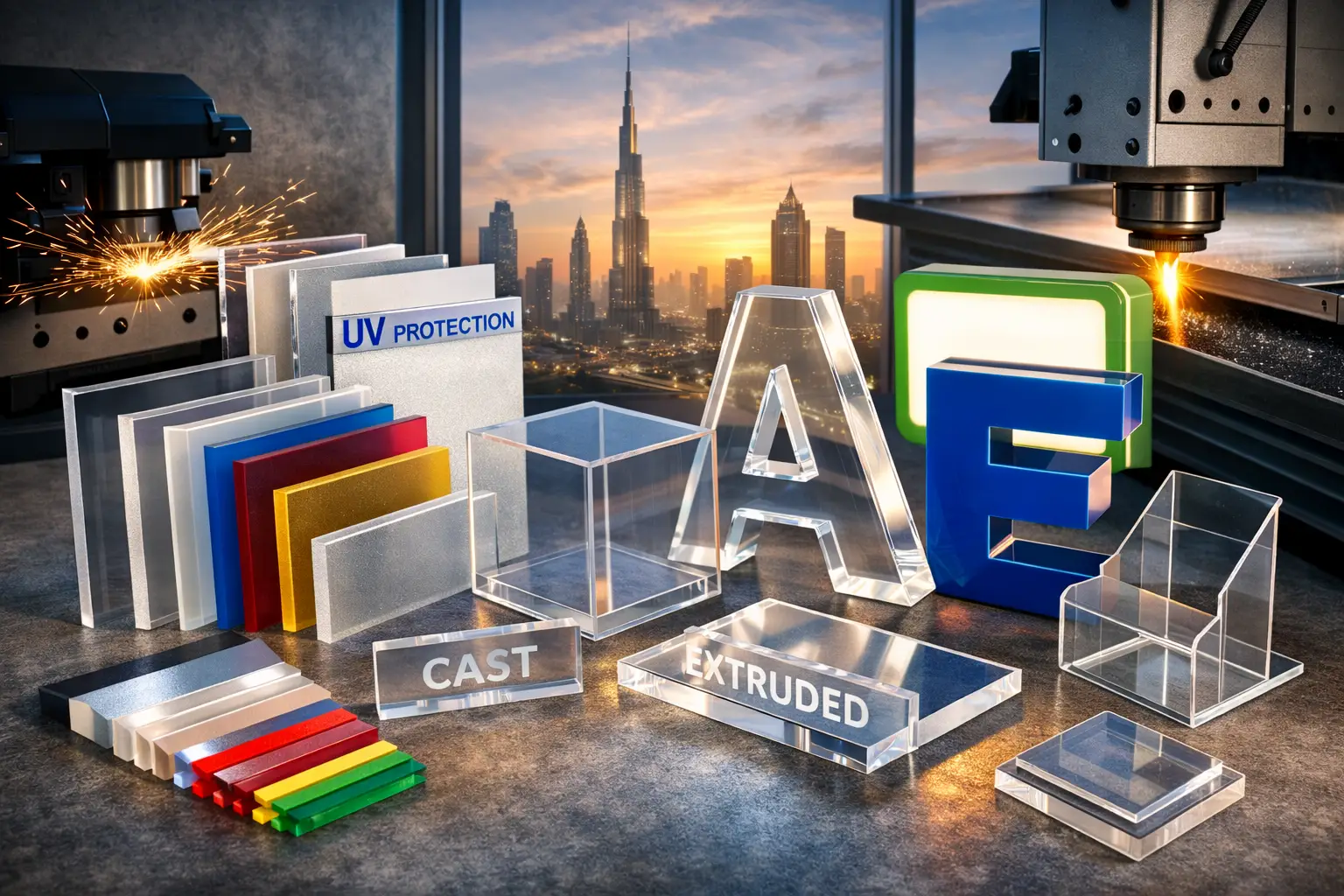
“Cast” and “extruded” are not marketing words. They describe how the sheet is made, and that affects how it behaves when you cut, laser, CNC route, bend, and polish. If you are deciding between the two, think in terms of finish quality, tolerance, and fabrication stability.
| Factor | Cast acrylic sheet | Extruded acrylic sheet |
|---|---|---|
| Typical finish | Often higher optical clarity and a more premium edge after polishing. | Good clarity, but edges can show more stress or haze depending on process. |
| Thickness tolerance | Can vary slightly more across a sheet; still excellent for most fabrication work. | Usually tighter thickness tolerance, which helps for some production jobs. |
| Laser cutting behavior | Usually produces cleaner, clearer laser edges with less chance of gumminess. | Can melt faster; laser edges may show more build-up if settings are not tuned. |
| CNC routing behavior | Stable for routing, engraving, and detailed profiles with good finish control. | Routes well, but can heat up faster; tool choice and speed matter. |
| Best for | Premium retail displays, signage letters, polished edges, higher-end boxes. | General covers, partitions, basic displays, and cost-sensitive production. |
When the final product is a brand-facing item, selection is not just technical. It is visual. For example, a premium box that will sit on a retail counter should not show cloudy edges or stress marks. That is why many high-visibility projects choose cast acrylic and then focus on finishing.
For outdoor signage in Dubai, UV matters. Acrylic can hold clarity and color well compared to many plastics, but “acrylic” is still a broad label. Some sheets are better suited to continuous sun exposure, while others are primarily intended for indoor applications.
If the acrylic will be exposed to sun for long hours (shop signs, facade lettering, outdoor panels), specify a UV-suitable sheet and confirm supplier details before production.
For indoor displays, boxes, brochure holders, and decorative items away from direct sun, standard grades can be suitable, but clarity and scratch resistance still matter for long-term appearance.
If you are producing shop signs or light boxes, the sheet is only one part of durability. Installation, ventilation, LED heat management, and correct assembly also affect how the sign looks after months and years. That is why a “materials checklist” approach is better than relying on one material claim.
External references (high authority): You can review general PMMA sheet standards and material information via official publishers such as ISO and ASTM International.
Thickness is the fastest way to spot a weak specification. Too thin and the acrylic flexes, bows, or cracks at joints. Too thick and the project becomes unnecessarily heavy or expensive, especially for large pieces. Use the guides below as a starting point, then adjust based on size, load, and whether the piece will be moved frequently.
If you are planning a box build, you can also cross-check your specification with this internal page: Acrylic Boxes in Dubai. It helps align thickness, finishing, and branding choices with the purpose of the box.
Acrylic finish changes both the look and how fingerprints, scratches, and light diffusion appear. Dubai projects often involve high footfall and bright lighting, so surface choice matters.
Best for premium display cases, boxes, and protective covers. Works well with edge polishing when you want a glass-like look.
Useful for privacy panels, soft lighting effects, and reducing visible fingerprints. Popular for modern retail and corporate interiors.
Common for light boxes and illuminated signage faces because it spreads light evenly when paired with correct LEDs.
Used for brand accent panels, themed displays, and decorative signage. Confirm color consistency if multiple sheets are used.
For brand-facing applications, small finishing decisions make a big difference: a polished edge looks premium, a clean chamfer reduces chipping risk, and consistent panel fit prevents visible gaps. If finishing quality is a priority, this internal page is useful: Edge Polishing and Finishing.
In Dubai, the same acrylic sheet can produce very different results depending on how it is fabricated. When your project is a shop sign, a retail display, or a custom box, the right method protects the finish and keeps tolerances tight.
Laser cutting is ideal for precise shapes, clean lettering, and detailed cutouts. It is widely used for signage layers and decorative panels. For projects where laser is a core method, see: Acrylic Laser Cutting / Engraving.
CNC routing is preferred when you need clean profiles, pockets, channels, or thicker sheet machining. It is also useful for larger panels and controlled edge finishing. For CNC-driven projects, see: CNC Routing in Dubai.
Many retail stands and counter displays require crisp bends rather than glued corners. Heat bending is common for brochure stands, angled product holders, and display trays. If your design needs bends, see: Acrylic Bending in Dubai.
Many acrylic failures are not caused by the sheet itself. They happen during assembly. If you want a premium result, quality control should be planned, not guessed. Here are practical checks that match real Dubai production outcomes:
If your project involves branding, engraving, or layered signage, the same QC mindset applies. For signage builds, these pages are relevant depending on your format: Acrylic 3D letter cutting and Light boxes in Dubai.
Acrylic sheet cost is only one part of the final budget. The biggest differences usually come from specifications and finishing. If two quotes look far apart, check these factors first:
The most cost-effective way to protect budget is to align purpose, material, and fabrication method early. It reduces iterations and prevents rework, which is where time and money usually disappear.
Use this checklist before you confirm production. It helps you communicate clearly with any supplier and ensures the output matches your expectations.
Share your use case (signage, display, or box), size, and where it will be installed. We can recommend the right sheet type, thickness, finish, and fabrication approach before production starts.
For premium, brand-facing work where edges are visible, cast acrylic is often preferred because it typically polishes and lasers cleaner. For consistent thickness and cost-sensitive production, extruded can be suitable. The best choice depends on visibility, fabrication method, and durability needs.
If the acrylic will be exposed to direct sun for long hours (facade signs, outdoor light boxes, external panels), UV suitability should be considered. Confirm grade details before production and validate with a sample when the project is high-visibility.
Many small displays use 3 to 5 mm acrylic. Mid-size shelves and risers often use 6 to 10 mm for stability. Premium displays with polished edges commonly go 10 mm and above, depending on size and load.
Small boxes can be made with 3 mm acrylic, while many durable boxes use 4 to 6 mm. Large boxes or premium builds can use 8 mm or more, especially when thickness is part of the visual design.
Not always. Laser cutting is excellent for detailed shapes and crisp lettering. CNC routing is better for thicker sheets, pockets, channels, and structural parts. Many Dubai projects combine both methods to get the best finish and fit.
Cloudy edges can come from incorrect cutting settings, heat build-up, or inconsistent polishing. Choosing the right sheet type, using correct tooling and speeds, and applying proper polishing steps help maintain a clear, premium edge.
Opal or milky acrylic is commonly used because it diffuses light more evenly. The final result also depends on LED spacing, heat management, and how the face panel is mounted.
Yes. Acrylic Gallery Plus supports end-to-end fabrication including CNC routing, laser cutting, bending, and edge polishing. Start here to discuss requirements: Acrylic fabrication in Dubai.