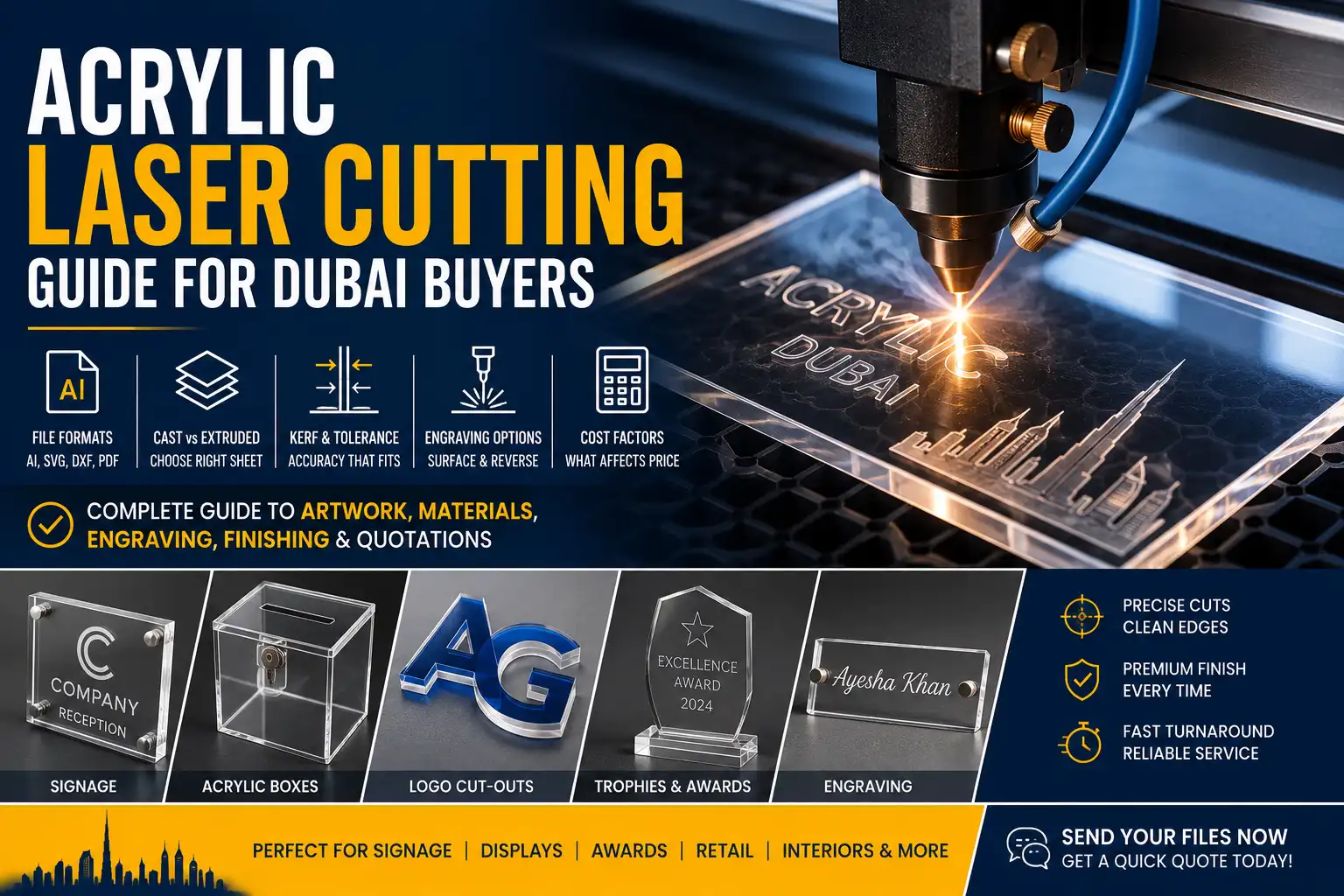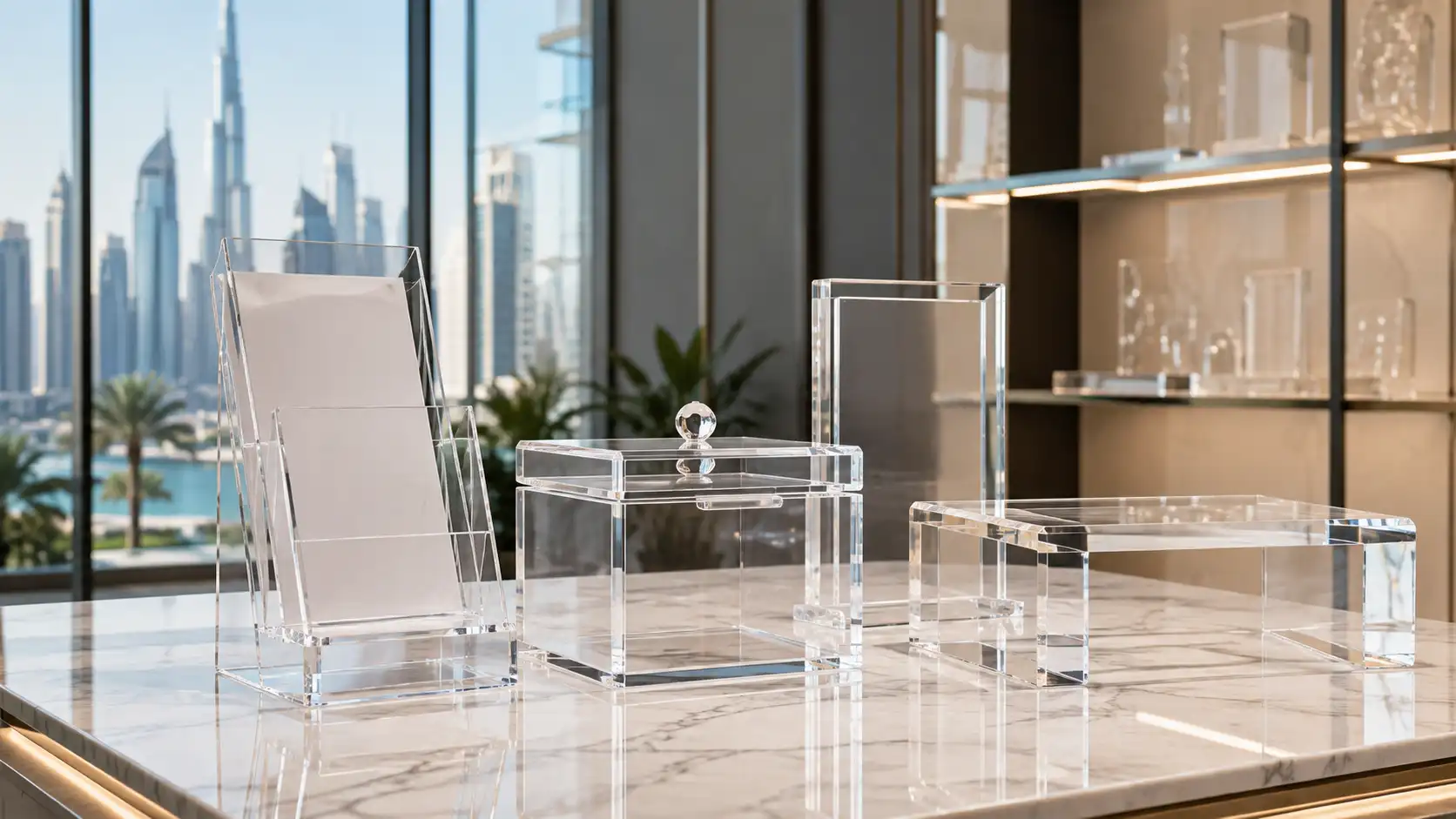
Why acrylic is popular for signage in Dubai
Dubai signage has two constant requirements: it must look premium and it must hold up in real conditions. Heat, strong daylight, dust, and high foot traffic can quickly expose weak materials and rushed installation. Acrylic is widely used because it delivers the clean, glossy finish people expect in malls, offices, and shopfronts, while still being practical to fabricate and install.
Acrylic (PMMA) is valued for clarity, surface finish, and edge quality. It can be cut, routed, engraved, bent, and polished with precision. It also works well with LEDs, which is why you see it in 3D logo walls, light boxes, and shop sign lettering across Dubai.
Where acrylic signage performs best
- Reception logo walls and office branding
- Shopfront letters inside malls and retail streets
- Light boxes for menus, promotions, and brand identity
- Directional signs and wayfinding in commercial buildings
- Event signage and exhibition branding for short timelines
Why brands choose it
- Premium look with clean edges and crisp shapes
- Easy to pair with LED illumination
- Flexible finishes: gloss, matte, frosted, translucent colors
- Good balance of strength and weight for installations
- Consistent results for repeated branding across branches
Tip for Dubai projects: for outdoor signage, durability depends as much on LED sealing, mounting, and power supply placement as it does on the acrylic sheet itself.
Types of acrylic signage: 3D letters, light boxes, and shop signs
Signage decisions become easier when you match the type to your location and viewing distance. A reception logo is seen at close range, while a façade sign needs strong visibility from far away. Below are the most common acrylic signage formats used in Dubai.
1) Acrylic 3D letters (non-lit)
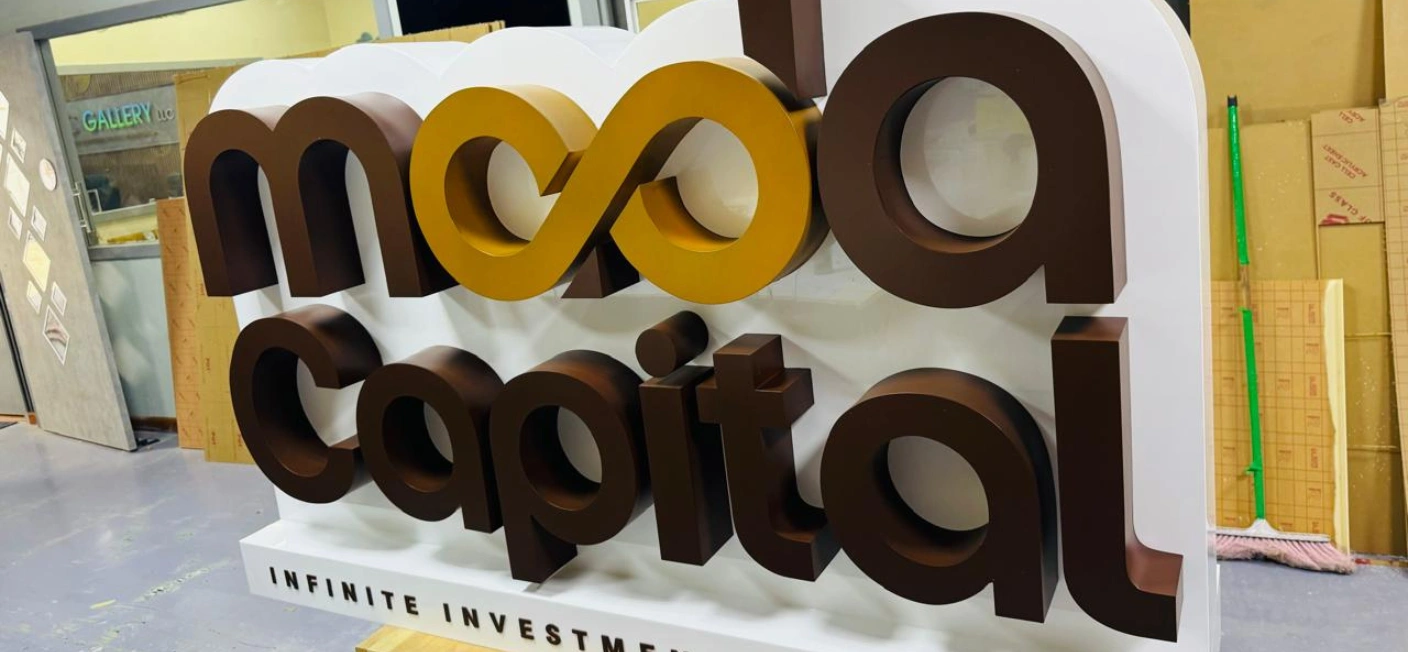
3D letters create depth and shadow, which looks premium in office receptions, clinics, and retail interiors. This style often uses precise cutting and a clean finish. If your design includes raised lettering with accurate curves and consistent spacing, that typically needs experienced cutting and finishing.
For dedicated fabrication, see acrylic 3D letter cutting in Dubai.
2) Acrylic 3D letters with lighting
When LEDs are added, the design must account for depth, diffuser materials, and wiring. Popular lighting styles include front-lit, backlit (halo), and combination effects. This is common for restaurants, salons, clinics, and retail stores that want a strong night-time presence.
3) Light boxes (menu boards, promotional signage, shop branding)
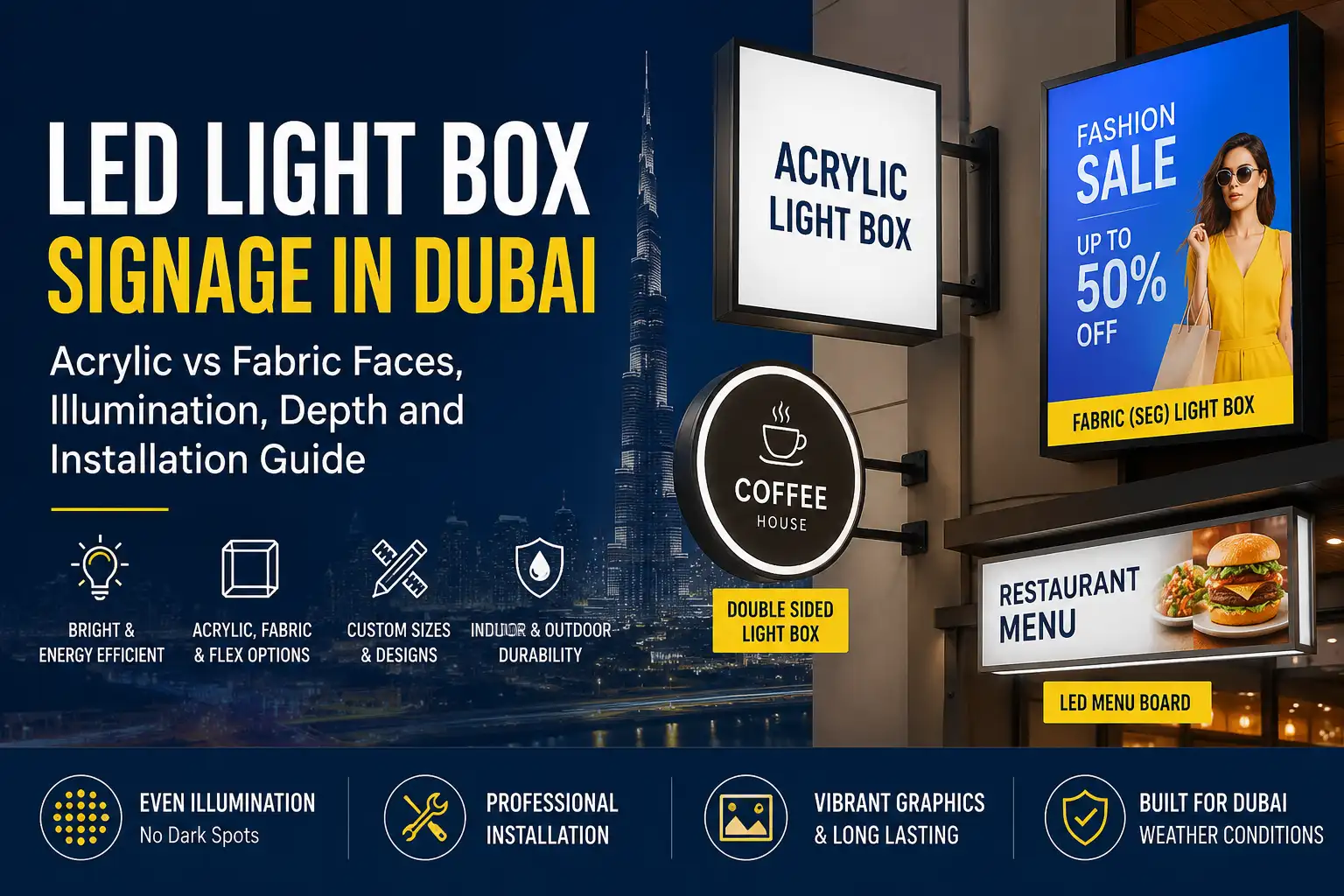
Light boxes are useful when you need high brightness, clear messaging, and consistent brand color. They can be used indoors and outdoors, depending on the construction and LED protection. For related solutions, visit light boxes in Dubai.
4) Flat cut acrylic signs (logos, nameplates, directional signs)
Flat cut signs are effective when the design needs clean lines with a thinner profile. They are used for door signage, room labels, office departments, and directional signs. This option can be fast to produce and install when the artwork is ready.
5) Shop signs and branded panels
Shop signs can combine acrylic with other materials (metal, aluminum composite, vinyl, or printed layers). Acrylic works well for brand elements that need a glossy, premium finish. If your project is primarily a shop sign solution, start here: acrylic signage in Dubai.
Materials that matter: cast vs extruded, thickness, finishes
The best-looking sign can still fail if the material choice is wrong. In Dubai, choosing the correct acrylic type and thickness helps avoid warping, poor edge quality, and weak mounts. Below is a practical way to think about material selection.
Cast vs extruded acrylic (simple difference)
- Cast acrylic is preferred for premium signage, cleaner edges, and better finishing. It is a common choice for laser cutting and polished edges.
- Extruded acrylic can be cost-effective for some applications, but edge finish and heat response can differ, especially in detailed cuts.
Thickness guide that works for most signage
| Use case | Typical thickness range | Why it fits |
|---|---|---|
| Flat signs, labels, small logos | 3mm to 5mm | Clean profile, good for close viewing |
| Reception logo panels, medium letters | 5mm to 10mm | Better rigidity and premium look |
| Large letters, standoff signs, high visibility branding | 10mm to 20mm | Strong structure, better mounting options |
| Light box faces and diffusers | Varies by brightness and size | Balance between light diffusion and strength |
Finishes you will see in Dubai signage
- Gloss clear or gloss color: strong premium feel for brand logos
- Matte or frosted: reduces reflections, good under strong indoor lighting
- Translucent colors: excellent for lit signage and light box faces
- Printed acrylic: UV printing for branding, gradients, and complex artwork
Finishing quality often decides whether the sign looks “factory-made” or “high-end”. If edges matter (and for signage, they do), proper polishing and finishing makes a visible difference. See edge polishing and finishing in Dubai.
Fabrication methods: laser, CNC, bending, edge finishing
The same design can look very different depending on how it is fabricated. For signage, the cutting method affects sharpness, edge clarity, fit, and speed. Here is how to choose the right approach.
Laser cutting and engraving
Laser cutting is ideal for crisp lettering, detailed shapes, and neat engraving. It is commonly used for logo elements, flat signs, and smaller letters where accuracy matters. For projects requiring laser work, visit acrylic laser cutting or engraving in Dubai.
CNC routing for larger or thicker signage
CNC routing is often chosen for thick acrylic, large-format signage, and shapes where routing produces consistent edges. It is also useful when the sign needs recesses, backing pockets, or structural detailing. Learn more at CNC routing in Dubai.
Acrylic bending for profiles, returns, and custom shapes
Some signage designs need bends for shape, depth, or structural support. Bending is also used for certain light box styles and protective covers. For related production, see acrylic bending in Dubai.
Finishing that affects the final look
Cutting is only one part. Deburring, polishing, and consistent finishing edges are what make the sign look premium under spotlights and close viewing. This is especially important for reception areas and luxury retail branding.
Lighting basics: front-lit, backlit, halo, edge-lit
Lighting is not only about brightness. It affects brand feel, readability, and how the sign looks in photos and videos. Below are the main lighting styles used for acrylic signage in Dubai.
Front-lit letters
Light comes through the face. Best for strong visibility and clean readability from a distance.
Backlit (halo) letters
Light glows behind the letter and reflects on the wall. Great for a premium reception and boutique look.
Edge-lit acrylic
LEDs light the edges. Works well for logo panels, decorative signage, and modern office branding.
Light boxes
A diffuser face with internal LEDs. Ideal for menus, promotions, and consistent brand color output.
Dubai tip: for outdoor and semi-outdoor signs, ask about LED protection, waterproofing, heat management, and power supply placement. These details decide long-term performance.
Installation in Dubai: surfaces, wiring, outdoor durability
Installation quality is the difference between “looks good today” and “still looks right after months”. In Dubai, surfaces vary a lot: textured walls, glass partitions, tile, stone cladding, metal panels, and composite sheets. Each needs a proper mounting method.
Common installation approaches
- Standoff mounting: gives a floating look, improves shadow depth, and helps with cleaning
- Direct mounting: clean and minimal, often used for interior branding
- Panel mounting: signage is mounted on a back panel (useful for uneven walls or when wiring needs hiding)
Wiring and power planning
For illuminated signage, wiring must be planned before the final install. This includes power supply access, cable routing, and safe connections. A clean installation also keeps maintenance simple if an LED module needs replacement later.
If your project needs a complete build from fabrication to installation planning, start with acrylic fabrication in Dubai and then align the signage style and mounting approach with your site conditions.
Cost drivers in Dubai: what changes the final price
People often ask for a quick price, but signage cost is usually based on a combination of choices. Here are the drivers that affect pricing most in Dubai.
- Size and quantity: larger signs need more material and longer production time
- Thickness and structure: thicker acrylic and 3D depth require more work
- Lighting type: halo and complex illumination increases internal build work
- Finish and branding: premium polishing, printing, or custom colors add cost
- Installation complexity: height, access, wiring distance, wall condition
- Timeline: urgent production can increase cost due to scheduling
A practical way to control cost without sacrificing quality: keep the brand elements premium (logo, main letters), and simplify supporting parts (backing panels, secondary text) where it still looks clean.
Quality control checklist (print, edges, LEDs, mounting)
Use this checklist before approving production and again before installation. It helps you avoid the most common issues that show up in real-world signage projects.
Pre-production checks
- Artwork is provided in vector format (AI, EPS, SVG, or PDF vector)
- Correct brand colors confirmed (and print proof if printing is included)
- Letter spacing and layout checked against the site measurement
- Mounting method agreed (standoff, direct, panel)
Fabrication checks
- Edges are clean and consistent (no burns, chips, rough finish)
- Surface finish is even (no swirl marks, scratches, or cloudy areas)
- All holes and standoff points align with the mounting template
- Protective film kept until final cleaning
Lighting checks (if illuminated)
- Brightness is even across the face or halo
- No visible hotspots or dark areas
- Power supply is accessible for future service
- Outdoor projects have proper sealing and cable protection
Installation checks
- Template alignment is level and centered
- Fasteners are secure and hidden where expected
- Final cleaning done with acrylic-safe materials
- Night test completed for illuminated signage
Maintenance and cleaning without damaging acrylic
Acrylic stays premium-looking when it is cleaned correctly. The biggest mistake is using harsh chemicals or rough cloths that leave fine scratches. For commercial spaces, clean signage regularly so dust does not become abrasive.
- Use a soft microfiber cloth
- Use acrylic-safe cleaner or mild soap and water
- Avoid harsh solvents that can cloud or crack acrylic
- Do not use rough scrubbing pads
- For outdoor signage, schedule periodic checks for wiring and water exposure
How to brief your signage supplier (faster quotes, fewer revisions)
If you want faster turnaround and accurate pricing, share these details from the start:
- Location photos with wall material (paint, tile, glass, metal, cladding)
- Exact size or the space where signage must fit
- Lighting preference: non-lit, front-lit, halo, or light box
- Brand assets: vector logo and brand color reference
- Timeline: target installation date
If you are planning a full shopfront or interior branding build, it can help to align signage with other elements like display setups and event branding. For related projects, you may also review exhibition stands in Dubai.
Ready to discuss your signage?
If you want acrylic signage that fits Dubai conditions and still looks sharp in real lighting, share your logo, sizes, and site photos. We can recommend the right thickness, finish, and installation method based on your location.
Frequently Asked Questions About Acrylic Signage in Dubai
What is acrylic signage used for in Dubai?
Which is better for 3D letters: acrylic or metal?
What thickness is best for acrylic signage?
Can acrylic signage be used outdoors in Dubai?
What is the difference between front-lit and halo-lit letters?
How long does fabrication and installation take in Dubai?
Will the acrylic surface scratch easily?
What details should I share to get an accurate quote?
Page reference: Acrylic Signage in Dubai checklist guide