CNC Routing in Dubai: Precision Cutting for Acrylic, Wood & Signage — 2026 Expert Guide
Dubai has grown into a global centre for architecture, retail branding, interior design, and advanced fabrication. In this environment, cnc routing dubai has become one of the key technologies behind modern displays, signage, exhibition stands, joinery work, and custom furniture.
With its ability to cut, carve, and engrave a wide range of materials with exceptional accuracy, CNC routing supports everything from acrylic fabrication projects to large-scale retail fit-outs and industrial prototypes. This guide explains how CNC routing works, where it is used, and what to consider when choosing a routing partner in Dubai.
Why CNC Routing Has Become Essential in Dubai’s Fabrication Industry
Dubai’s visual environment is fast-paced and design-driven. Brands, developers, and event organisers need structures and signage that are sharp, accurate, and consistent across multiple locations. CNC routing delivers that level of precision while keeping production efficient.
Key advantages for businesses in Dubai
- High dimensional accuracy for signage, panels, and joinery parts
- Consistent output for brand roll-outs, franchises, and multi-branch stores
- Fast processing for time-sensitive retail and exhibition projects
- Reduced manual errors and material wastage
- Compatibility with acrylic, wood, MDF, ACM, and more
For many workshops, CNC routing is now the backbone of their production line rather than an optional add-on.
What Is CNC Routing? Understanding the Technology
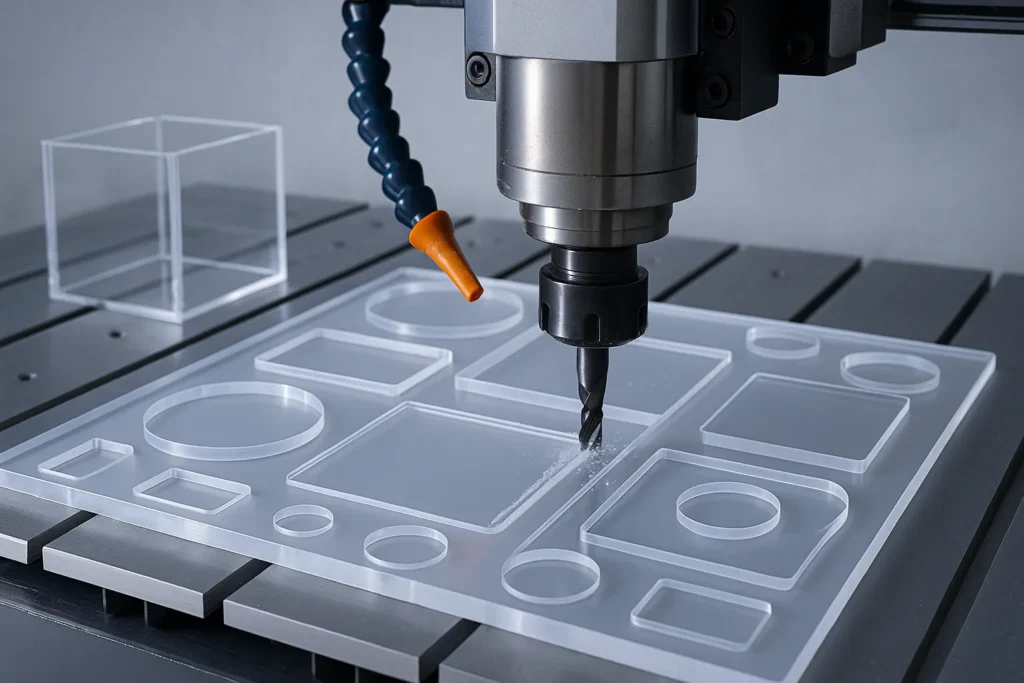
CNC routing (Computer Numerical Control routing) is a digital cutting and machining process where a computer-controlled router follows programmed paths to shape materials. Instead of relying on manual cutting, the router moves according to G-code generated from a digital design, allowing repeatable, highly accurate results.
How CNC routing works in practice
- Design creation: a vector-based drawing is prepared in CAD or design software.
- Toolpath programming: CAM software converts the design into machine-readable G-code.
- Material setup: acrylic, MDF, plywood, or other materials are fixed to the router bed.
- Routing operation: the CNC router cuts, engraves, or carves the material using rotating bits.
- Finishing: edges are cleaned, sanded, polished, or assembled into final products.
General technical information on CNC machining principles is widely documented in engineering and manufacturing standards resources such as ISO publications and open educational articles about CNC routers.
Materials Commonly Processed by CNC Routers in Dubai
One of the biggest strengths of CNC routing is its versatility. A single router can process a wide range of sheet materials used in signage, interiors, and industrial applications.
- Acrylic (clear, coloured, frosted, and textured)
- Solid wood and plywood
- MDF and HDF boards
- PVC and Foamex sheets
- Aluminium composite panels (ACP / ACM)
- Polycarbonate and engineering plastics
- High-density foams and exhibition-grade materials
Each material demands specific router bits, cutting speeds, and depth settings. Skilled operators manage these factors to avoid burning, chipping, or rough edges.
CNC Routing vs Laser Cutting: Which Is Better for Your Project?
Both CNC routing and laser cutting are widely used in Dubai, especially for acrylic and signage work. Choosing the right one depends on thickness, material type, and desired finish.
When CNC routing is the better choice
- Thicker materials such as 10–40 mm acrylic, MDF, and solid wood
- 3D carving, deep engraving, or textured surfaces
- Grooves, pockets, and mechanical features in panels
- Materials that may burn, char, or discolor under a laser
- Furniture components and structural elements
When laser cutting works best
Laser cutting complements CNC routing for:
- Thin acrylic sheets needing flame-polished edges
- Very intricate patterns and fine typography
- Layered acrylic logos and signage faces
Most advanced workshops in Dubai combine CNC routing with dedicated acrylic laser cutting and engraving to cover the full spectrum of cutting requirements.
Applications of CNC Routing Across Dubai’s Industries
Because CNC routing is both precise and flexible, it supports many different sectors in Dubai.
1. Signage fabrication and 3D lettering
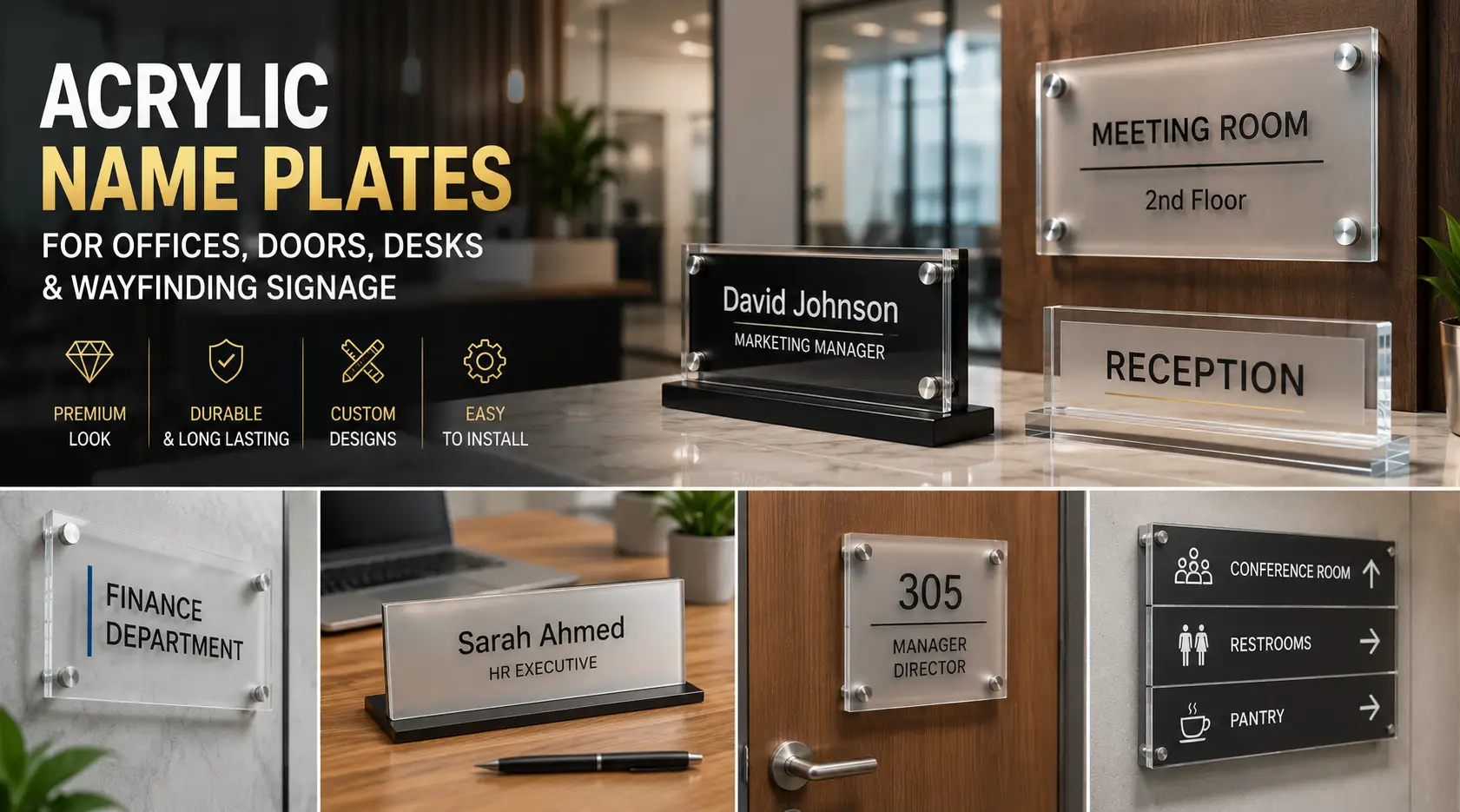
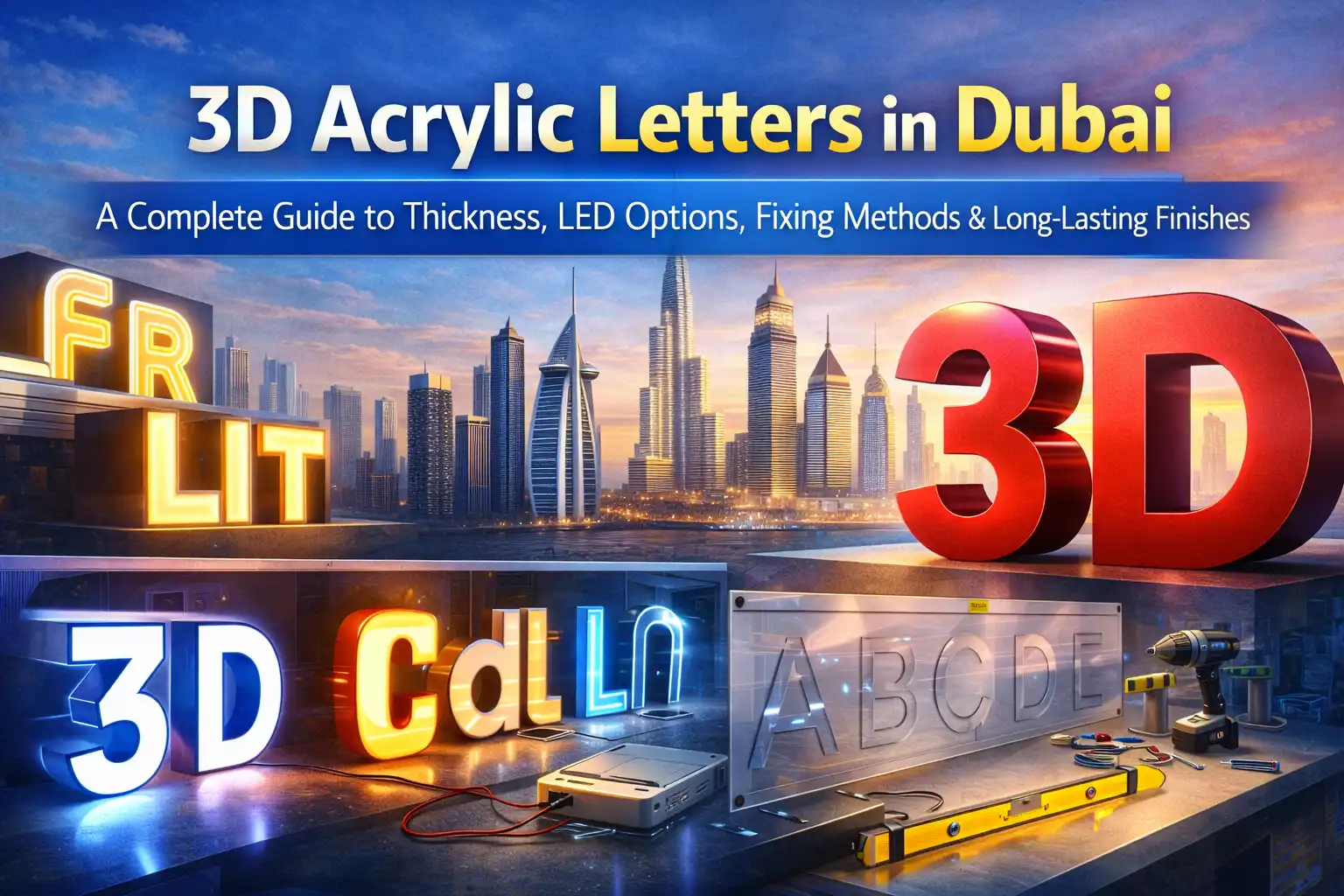
Thick acrylic and composite panels are often routed to create 3D logos, backing plates, and structural components for signage. CNC routing can also support projects that include acrylic 3D letter cutting, especially when letters require extra depth or special edge profiles.
2. Retail displays and custom fixtures
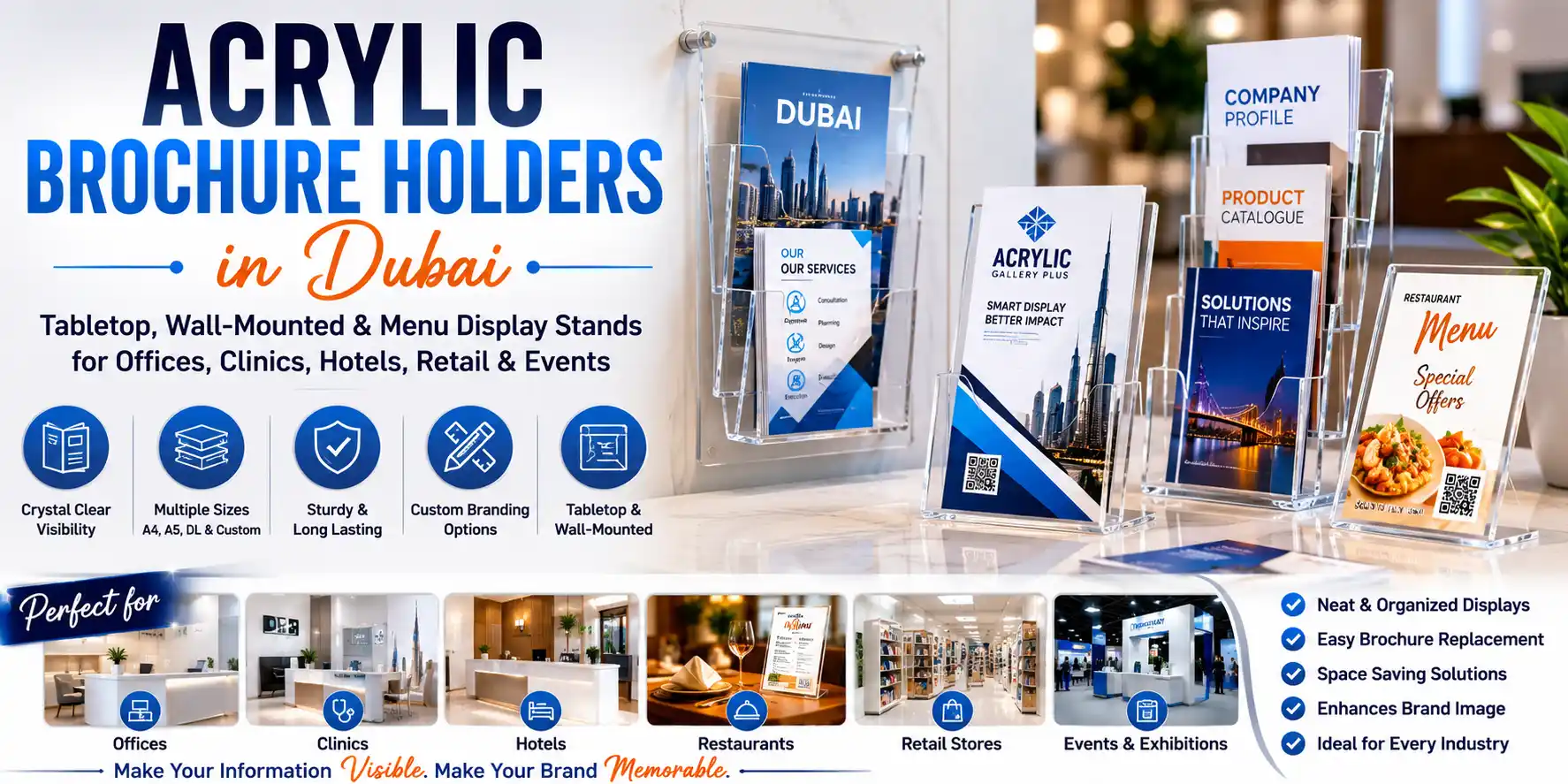
Malls and brand stores rely on CNC-routed components for stands, shelves, podiums, and risers. When combined with acrylic display stands, CNC-cut bases and panels help create clean, repeatable visual merchandising systems.
3. Exhibition stands and event structures
Dubai hosts a constant stream of trade shows and events. CNC routing enables fast production of shaped panels, branding walls, counters, and stage elements that integrate seamlessly with exhibition stand builds.
4. Interior fit-out, carpentry, and joinery
Joinery firms and fit-out contractors use CNC routers to shape cabinet doors, wall panels, decorative screens, and furniture parts. Complex patterns can be cut into MDF or wood with accuracy that would be difficult to achieve by hand. This work often overlaps with broader carpentry and joinery services offered in Dubai.
5. Prototyping, engineering, and industrial parts
Engineering teams and product designers rely on CNC routing for prototypes, mould patterns, and functional plastic or composite components. The ability to iterate quickly with high dimensional accuracy is a major advantage.
The CNC Routing Process: From Design to Finished Product
Understanding the process helps project owners and designers communicate clearly with their fabrication partners.
1. Design and vector preparation
Designers create artwork in software such as Illustrator, AutoCAD, or Fusion 360. Clean, closed paths are essential so the machine can follow them without breaks or errors.
2. Toolpath programming
CAM software converts drawings into toolpaths: profiling, pocketing, drilling, V-grooving, or 3D relief. These toolpaths are compiled into G-code instructions that control the CNC router’s movements.
3. Material setup and calibration
The material is secured to the router bed using clamps or a vacuum system. Operators set the origin point, cutting depth, spindle speed, and feed rate, then perform test cuts if needed.
4. Routing operation
The router follows the programmed toolpaths, using different bits for cutting, carving, or engraving. During this step, operators monitor chip removal, heat, and cut quality to protect both material and tools.
5. Finishing and assembly
Once routing is complete, edges are deburred or sanded, parts are labelled, and any additional operations—such as painting, polishing, or joining with acrylic, metal, or lighting—are carried out.
Types of CNC Cuts and Effects You Can Achieve
CNC routing is not limited to simple outlines. Different strategies create different visual and structural outcomes.
- Profile cutting: cutting the outer contour of parts such as letters, panels, and fixtures.
- Pocket milling: hollowing out areas inside a shape for recesses, inlays, or hardware.
- V-grooving: creating foldable panels or decorative angled grooves.
- 3D relief carving: producing textured panels, logo reliefs, or artistic surfaces.
- Edge rounding and chamfering: softening or angling edges on furniture and display components.
- Inlay cutting: machining shapes that fit together with tight tolerances for decorative work.
Best-practice guidance on cut quality and tolerances can often be found in machining handbooks and technical resources provided by tooling manufacturers and engineering organisations such as ASME.
Benefits of CNC Routing for Businesses in Dubai
For many applications, CNC routing is a more reliable option than manual cutting or basic power tools.
- Precision: CNC routers follow digital instructions, allowing tight tolerances and consistent repetition.
- Scalability: ideal for repeated parts, multi-branch signage, and large interior projects.
- Versatility: one system can handle acrylic, wood, MDF, composite panels, and plastics.
- Efficiency: automated cutting reduces labour time and material waste.
- Professional finish: smooth contours and detailed patterns improve the perceived quality of the final installation.
How to Choose the Right CNC Routing Partner in Dubai
Not all routing services are equal. The quality of your project depends heavily on the experience, equipment, and processes of the workshop you choose.
What to look for
- Material expertise: proven work with acrylic, wood, MDF, and composites.
- Machine capabilities: modern CNC routers with suitable bed size and power.
- Finishing standards: clean edges, proper labelling, and consistent dimensions.
- Portfolio: real examples of signage, displays, joinery, and exhibition work.
- Communication: clear timelines, honest feedback on feasibility, and support with file preparation.
Common red flags
- Visible tear-out, burn marks, or chatter on parts
- Inconsistent sizing between identical pieces
- Lack of test cuts or quality-control steps
- Unclear pricing or no explanation of cost drivers
Conclusion: CNC Routing Is the Backbone of Precision Fabrication in Dubai
From signage and retail displays to joinery components, exhibition elements, and industrial prototypes, cnc routing dubai plays a vital role in shaping the city’s built and branded environment.
Its combination of precision, versatility, and scalability makes CNC routing one of the most important technologies for businesses that care about quality and consistency. By working with an experienced routing partner and combining CNC capabilities with services like acrylic fabrication, laser cutting, and joinery, companies across Dubai can bring technical designs and creative concepts into real, reliable, and visually strong products.
Frequently Asked Questions About CNC Routing in Dubai
What materials can be cut using CNC routing?
CNC routing can process acrylic, MDF, plywood, hardwood, aluminium composite panels, PVC, foam, and several engineering plastics. The exact list depends on the machine and tooling used, so it is always worth checking with your routing partner.
How accurate is CNC routing?
Professional CNC routers can achieve tight tolerances, often around ±0.1 mm for many signage and interior applications. Actual accuracy depends on machine calibration, tooling condition, and material stability.
Are CNC-routed edges smooth enough for finished parts?
In many cases, yes. MDF and wood may need light sanding, while acrylic often comes off the router with clean edges that can be further refined through polishing if a glass-like finish is required.
How much does CNC routing cost in Dubai?
Costs vary based on cutting time, material thickness, design complexity, and finishing needs. Simple panels or letters are usually more economical than detailed 3D carvings or complex multi-layer assemblies.
Do I need to provide a design file?
Most workshops work from vector files, such as AI, DXF, DWG, or SVG. Some can help redraw or optimise artwork, but having clean, ready-to-use files speeds up production and keeps costs under control.
Can CNC routing create 3D designs?
Yes. With suitable tooling and programming, CNC routers can perform 3D relief carving and complex surface machining, which is useful for decorative panels, sculptural signage, and industrial prototypes.
Is CNC routing suitable for signage projects?
Absolutely. CNC routing is one of the core processes used in sign manufacturing, especially for thick acrylic letters, backing panels, structural components, and composite material signage.