Acrylic 3D Letter Cutting in Dubai: Precision Signage for Retail, Offices, Events & Architectural Branding
Across Dubai’s retail storefronts, luxury boutiques, corporate receptions, restaurants, salons, hotels, real estate showrooms, and exhibition stages, one form of signage continues to stand out: 3D acrylic letters. Their clarity, clean edges, premium finish, and ability to integrate with both lighting and architecture make them one of the most powerful visual branding tools in the UAE.
Whether used for a glowing backlit logo, a high-contrast shopfront sign, a multi-layered wall feature, or a sleek corporate identity installation, acrylic 3D letter cutting in Dubai has become an essential service for brands that want to elevate visibility and present a professional image.
This guide explores applications, materials, manufacturing methods, technical considerations, cost factors, and long-term care, written to build real trust and authority for decision-makers and designers.
Why Acrylic 3D Letters Dominate Dubai’s Branding Landscape
Dubai’s visual environment is dense, competitive, and highly curated. Brands cannot rely on signage that looks dated or is difficult to notice. Acrylic 3D letters deliver three key advantages.
A premium look that fits Dubai’s aesthetic
Acrylic has a glass-like clarity without the weight, fragility, or safety concerns of real glass. When cut and polished correctly, it reflects light beautifully and looks at home in luxury shopping malls, five-star hotels, and corporate towers.
Adaptable to any industry and interior style
From retail fashion and fine dining to clinics, spas, real estate, and finance, acrylic letters adapt easily to each brand’s identity. Colour layering, finishes, and illumination options give designers a wide creative range.
Designed for LED lighting and modern architecture
Acrylic diffuses LED light evenly, which is why it is used for backlit letters, halo effects, and edge-lit logos. It also pairs naturally with glass, steel, marble, wood, and other architectural materials common in Dubai’s interiors.
What Are 3D Acrylic Letters? The Material Behind the Design
3D acrylic letters are fabricated from polymethyl methacrylate (PMMA), a strong, UV-resistant, and optically clear plastic widely used in professional signage. Acrylic behaves predictably under both laser cutting and CNC routing, allowing extremely precise shapes and smooth edges.
Why acrylic is the preferred material for modern signage
- Weather resistance and colour stability under UAE sun
- Lightweight compared with glass and some metals
- Available in clear, opaque, frosted, and coloured variants
- Supports both matte and glossy finishes
- Compatible with LED modules and light boxes
General material references for acrylic (PMMA) can be found in open resources such as acrylic glass overviews and plastics industry organisations like the British Plastics Federation, which explain its optical and structural behaviour.
Laser Cutting vs CNC Routing for Acrylic 3D Letters
High-quality acrylic letter cutting in Dubai typically uses one of two methods: laser cutting or CNC routing. Each has advantages depending on thickness and design.
Laser-cut acrylic letters
Laser cutting is ideal for thin to medium-thickness acrylic where clean edges and intricate shapes are required. The heat of the laser naturally polishes the edges, often eliminating the need for extra finishing. It is well-suited for logo scripts, curves, and layered letters, and pairs seamlessly with specialist acrylic laser cutting services in Dubai.
CNC-cut acrylic letters
CNC routing excels with thicker acrylic sheets and larger letters. It allows for deep profiling, bevels, and sculpted edge treatments, which are common in premium architectural signage. For heavy-duty or extra-thick letters, a combination of CNC routing and hand finishing is often used.
Types of Acrylic 3D Letters Used Across Dubai
Acrylic can be cut, layered, and illuminated in many ways. The main categories give a good overview of what is possible.
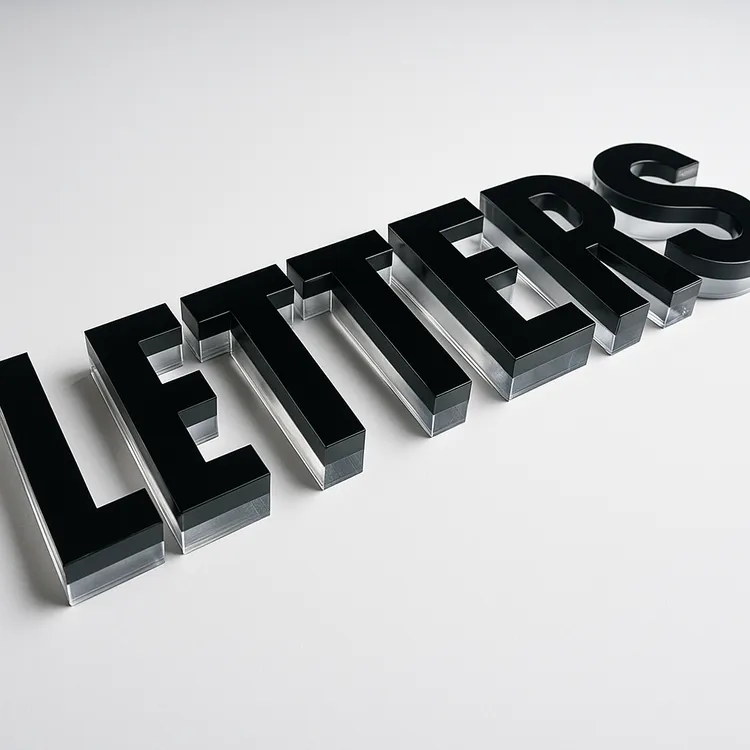
Flat-cut acrylic letters
These are made from a single sheet, typically between 3 mm and 8 mm thick. They are commonly used for indoor logos, wall messages, and reception-area branding.
Layered 3D acrylic letters
Multiple layers of acrylic are bonded together to create deeper, more dimensional letters. Colour contrast can be introduced between the front face and backing layer for visual impact.
Backlit acrylic letters with LED glow
Backlit letters combine acrylic faces with LED modules and often a backing tray. They produce halo effects, full-body illumination, or edge glow, and are widely used for restaurants, salons, and shopping-mall signage. These projects often work alongside acrylic light boxes for cohesive illuminated branding.
Acrylic letters combined with metal
Hybrid signage, where acrylic faces are backed by aluminium or stainless steel, blends the warmth of acrylic with the strength of metal. This style is popular for banks, real estate firms, and premium hospitality brands.
Where Acrylic 3D Letters Are Used in Dubai
Acrylic 3D letters appear in almost every part of the city’s commercial landscape.
Retail storefront signage
Shopfront logos rely heavily on 3D acrylic letters in Dubai to stand out in crowded malls and busy streets. LED illumination ensures visibility from a distance and during evening hours.
Corporate reception and office branding
Reception-area logo walls, corridor wayfinding, and meeting-room names often use acrylic letters for a clean, professional look. Combined with carefully planned lighting, they set the tone for visitors the moment they arrive.
Restaurants, cafés, and salons
Food, beverage, and beauty businesses favour acrylic letters for menu boards, exterior logos, and interior feature walls. The material’s ability to hold bold colours and shine is ideal for lifestyle brands.
Exhibitions, events, and pop-up installations
Exhibition stands, stage sets, and branded event areas frequently use lightweight acrylic letters for ease of transport and installation. They integrate naturally with exhibition stand structures, counters, and podiums.
Real estate showrooms and architectural branding
Acrylic letters appear in sales centres, building entrances, project branding walls, and model-room displays. Their sharp edges and high legibility fit well with contemporary property marketing.
The Manufacturing Process Behind Acrylic 3D Letter Cutting
Professional acrylic 3D letter cutting in Dubai follows a well-defined workflow to ensure precision and durability.
1. Digital vector preparation
Designers create accurate vector artwork based on the logo or typography. Line thickness, spacing, and mounting requirements are considered from the start.
2. Material selection
Acrylic thickness, colour, and finish are chosen according to viewing distance, lighting, and whether the signage is for indoor or outdoor use.
3. Laser cutting or CNC routing
The acrylic sheets are cut using either laser or CNC equipment. Laser cutting is used for finer details and edge polish, while CNC routing is reserved for thick, heavy-duty letters.
4. Layering, bonding, and forming
For multi-layered designs, acrylic pieces are bonded together with professional adhesives. Any shaping or minor bending is performed using controlled heat, working alongside services like acrylic bending when required.
5. Edge finishing and polishing
Visible edges are polished to give a glass-like appearance, using mechanical polishing, flame treatment, or dedicated edge polishing and finishing systems.
6. Lighting integration (for illuminated letters)
If backlighting is required, LED modules, wiring, and diffusers are installed. The internal layout must be carefully designed to avoid hotspots or uneven glow.
7. Assembly and installation preparation
Mounting templates are created, fixing points are drilled or marked, and hardware such as studs, spacers, or brackets is checked before on-site installation.
Choosing the Right Acrylic Thickness for 3D Letters
Thickness affects both appearance and structural performance. A simple guideline helps with planning:
- 3–4 mm: suitable for indoor logos, quotes, and small wall messages.
- 5–8 mm: ideal for reception signs, medium-sized branding, and most interior applications.
- 10–20 mm: preferred for outdoor shopfronts, mall corridors, and large identity signage.
- 20 mm+: used for premium, highly dimensional letters where deep 3D profiling is required.
For compliance and consistency, many organisations refer to general signage guidance from standards bodies such as ISO when developing large projects, especially for safety and legibility.
Advantages of Acrylic 3D Letters Over Other Signage Materials
While metals, wood, and PVC have their place, acrylic offers a unique balance of aesthetics and practicality.
- Superior visual impact: sharp edges and high gloss convey a premium feel.
- Lightweight and safe: easier to install on various surfaces with fewer structural concerns.
- High customisation potential: supports colour, layering, and complex shapes.
- Lighting-friendly: diffuses LED light evenly for glow and halo effects.
- Durable indoors and outdoors: resistant to UV and typical urban pollution when quality acrylic is used.
Why Professional Installation Matters
Even the best-fabricated letters can fail if they are not installed correctly. Professional installers bring experience in:
- Accurate alignment with laser levels and templates
- Correct spacing and kerning between letters
- Choosing the right fixings for each wall type
- Routing and hiding power cables for illuminated signage
- Ensuring that signage remains safe and secure over time
For illuminated acrylic signage, professional installation is especially important to protect electrical components and maintain even lighting.
Cost Factors for Acrylic 3D Letter Cutting in Dubai
Pricing varies based on a combination of design choices and technical requirements:
- Acrylic type and thickness: thicker or specialty finishes cost more.
- Cutting method: CNC-heavy projects and complex laser paths require more machine time.
- Illumination: adding LEDs, power supplies, and trays increases both material and labour costs.
- Letter size and quantity: larger signage or multi-location roll-outs involve more material and installation effort.
- Finishing complexity: layering, polished edges, and hybrid metal-acrylic designs add value but also cost.
- Installation conditions: high-level or difficult access locations require additional planning and equipment.
Even with these variables, acrylic 3D letters remain one of the most cost-effective ways to achieve a high-end look compared with many metal or fully custom fabricated alternatives.
Maintenance Tips for Acrylic 3D Letters
With regular care, acrylic letters maintain clarity and shine for many years.
- Dust with a soft microfiber cloth; avoid rough fabrics.
- Use mild, non-abrasive cleaners specifically safe for plastics.
- Avoid harsh solvents or ammonia-based sprays that can cloud the surface.
- Inspect illuminated signage periodically to check LEDs and power connections.
- Clean more frequently for outdoor signage exposed to dust and traffic pollution.
Conclusion: Acrylic 3D Letter Cutting Is Shaping Modern Signage in Dubai
Acrylic 3D letter cutting in Dubai offers everything modern brands need: aesthetic excellence, structural reliability, lighting compatibility, and competitive cost. From retail storefronts and corporate headquarters to exhibitions and architectural spaces, 3D acrylic letters create visual impact that strengthens brand identity and communicates professionalism.
With the right combination of design, material selection, precision cutting, finishing, and installation, acrylic letters become more than just signage. They become a physical expression of your brand’s presence in one of the world’s most visually ambitious cities.
Frequently Asked Questions About Acrylic 3D Letter Cutting in Dubai
Are acrylic 3D letters durable outdoors?
Yes. When quality acrylic and proper installation methods are used, 3D acrylic letters perform well outdoors. They are resistant to UV exposure and typical urban conditions, making them suitable for shopfronts and building signage in the UAE.
What is the difference between laser-cut and CNC-cut acrylic letters?
Laser cutting is ideal for thinner sheets and intricate shapes, producing highly polished edges. CNC routing is more suitable for thicker acrylic and deep 3D profiling. Many projects use a combination of both techniques depending on the design.
Can acrylic 3D letters be illuminated?
Yes. Acrylic letters work very well with LED backlighting, halo effects, and edge-lighting. The material diffuses light evenly, creating a clean, modern glow that is highly visible at night.
What thickness is best for outdoor signage?
For most outdoor applications, acrylic between 10 mm and 20 mm offers a good balance of strength, visibility, and cost. Larger letters or high-impact installations may use even thicker materials.
How long does it take to produce acrylic 3D letters?
Lead time depends on design complexity, size, and whether illumination is included. Simple, non-lit letters may be completed within a few working days once artwork is approved, while large illuminated projects may require additional time.
Are acrylic letters better than metal letters?
Each material has strengths. Acrylic is lighter, easier to illuminate, and often more flexible for complex shapes. Metal excels in extreme durability and a different aesthetic. Many premium signs combine both, using acrylic faces with metal backs or frames.
How are acrylic 3D letters installed?
Letters can be installed using studs, spacers, high-bond tapes, or brackets, depending on weight and wall type. Professional installers also use mounting templates and laser levels to ensure accurate alignment and spacing.