
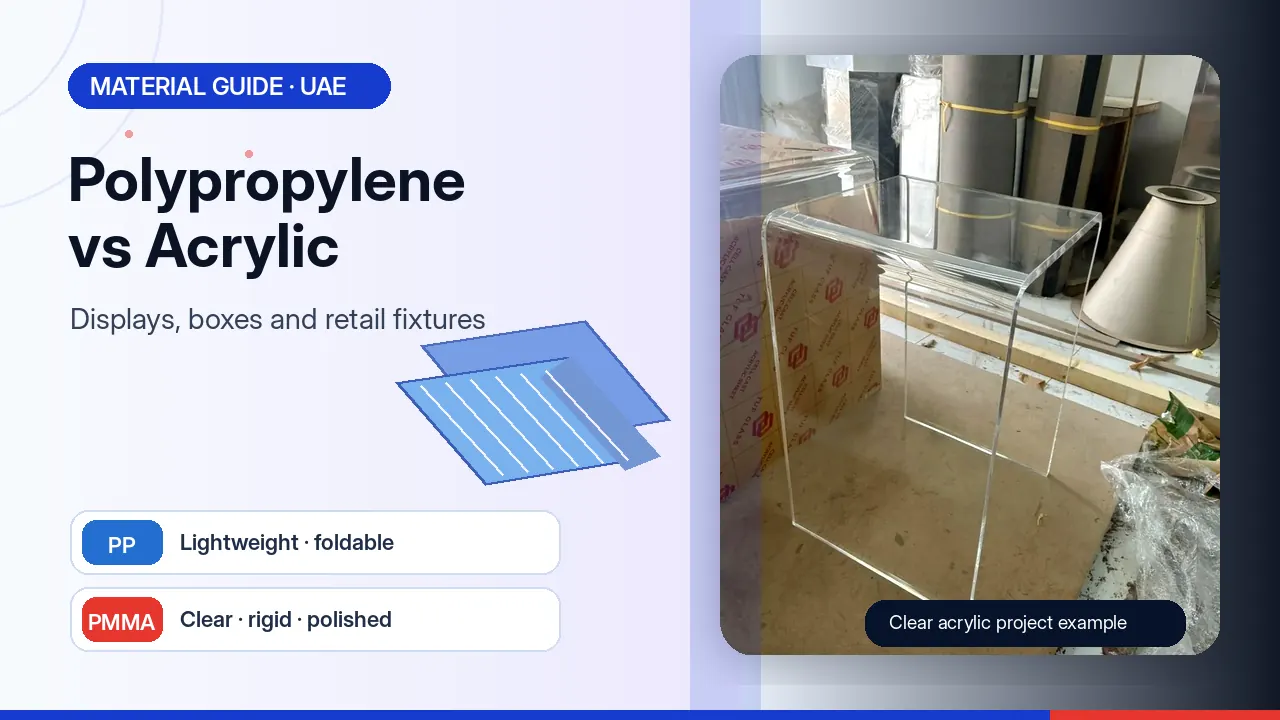
A request for a “clear plastic box” or a “lightweight display stand” does not give a fabricator enough information to choose a material. Acrylic and polypropylene are both thermoplastics, but they do not behave the same way. One favours rigid presentation. The other can favour low weight, flexing and practical handling.
The useful question is not simply, “Which material is better?” Ask what the product must do. Does it need glass-like clarity? Will it be moved every day? Must it fold flat? Will staff clean it with strong chemicals? Does the artwork need direct printing? Will it sit in a shop window or outdoors in the UAE?
If you are comparing materials before fabrication, use this guide to narrow the choice and prepare a clearer brief. The material notes below are based on published technical guidance; the final check should always be the data sheet for the exact sheet grade being supplied.
A quick material check: where acrylic and PP part ways
| Decision point | Acrylic (PMMA) | Polypropylene (PP) |
|---|---|---|
| Visual appearance | Available in very clear, coloured, frosted, mirrored and opaque finishes. Clear grades are often chosen when the product must remain visible. | Common sheet forms are translucent or opaque. Clear grades exist, but they do not normally give the same glass-like presentation as clear display acrylic. |
| Shape and stiffness | Rigid. Holds straight lines, flat faces and defined display shapes well when thickness and support are suitable. | More flexible. A design may need folds, ribs, returns or other support if it must stand upright. |
| Weight | Light compared with glass, but generally heavier than PP for a similar volume. | Low density and useful where low weight matters. |
| Folding and repeated flexing | Not selected for repeated folding. Bends are normally formed with heat and remain in that shape. | Some sheet grades work well for creased, foldable or repeated-flex designs. The exact grade and fold detail matter. |
| Edges | Edges can be machined and polished for a clean display finish. | Usually treated as a functional edge. The look depends on sheet type and cutting method. |
| Joining | Can be bonded, mechanically fixed or assembled with suitable acrylic methods. | Conventional adhesive bonding can be difficult because PP has low surface energy. Welding, mechanical fixing or compatible specialist adhesives may be considered. |
| Branding | Works with compatible printing, vinyl, engraving, paint and changeable graphic inserts. | Can be printed or labelled, but ink, tape and surface preparation must match the PP grade. |
| Chemical contact | Cleaner choice is important because unsuitable solvents can mark or craze acrylic. | Often selected for useful chemical resistance, subject to the actual chemical, concentration and temperature. |
| Outdoor use | Outdoor-grade acrylic is widely used where clarity and weather resistance matter. Colour, grade, fixing and expansion allowance still need review. | Outdoor use should specify a UV-stabilised grade backed by supplier data. Generic PP should not be assumed suitable for long exposure. |
| Typical fit | Premium product displays, clear boxes, reception signs, covers, risers and presentation pieces. | Lightweight operational boxes, dividers, foldable items, packaging-style parts and chemical-resistant functional components. |
What acrylic means in this comparison
Acrylic is the common name used in fabrication for polymethyl methacrylate, or PMMA. It is a rigid thermoplastic available in clear, coloured, frosted, mirrored and opaque sheet. In retail work, it is often selected because merchandise remains visible and the finished edges can be polished.
Clear acrylic can provide very high light transmission. Röhm states that clear, colourless PLEXIGLAS grades can transmit up to 92% of visible light. That figure belongs to the stated product family and should not be applied to every acrylic sheet without checking the supplier’s data.
Acrylic can be laser cut or CNC routed, heat bent, engraved, printed and assembled using methods suited to the sheet and design. A rigid material still needs proper engineering. Unsupported spans can bow. Holes placed too close to an edge can crack. Fasteners that are overtightened can place stress around the fixing point.
If the planned item is a clear display, branded fixture or presentation box, the relevant starting pages are the company’s custom acrylic fabrication service, acrylic display stands and custom acrylic boxes.
What polypropylene means in this comparison
Polypropylene, usually shortened to PP, is a semi-crystalline polyolefin. It is known for low density, useful chemical resistance and the ability of suitable grades to tolerate repeated flexing. The British Plastics Federation lists chemical resistance, fatigue resistance and low density among common PP characteristics.
PP appears in several forms. Solid sheet, thin flexible sheet and twin-wall or fluted board do not behave alike. The grade used for a reusable divider is not automatically the grade required for a printed retail unit or an outdoor panel.
Many buyers associate PP with white, milky or coloured material. Some transparent grades exist, yet “transparent” does not always mean the same optical result as clear acrylic. When the product inside a box must be seen sharply from several angles, compare physical samples before approving the material.
Appearance and product visibility
Acrylic usually has the advantage when the display itself should almost disappear. Clear risers, perfume stands, jewellery holders and covers rely on visual openness. Polished edges can become part of the design rather than something that needs to be hidden.
PP often looks more functional. That can be entirely appropriate. A stock divider, protective insert, foldable tote or back-of-house organiser does not always need a glossy clear finish. Low weight, easy handling and chemical resistance may matter more than optical clarity.
Do not approve either material from a screen image alone. Ask for a physical sample if colour, translucency, texture or edge appearance affects the result. Lighting in a mall, showroom or shop window can reveal haze, surface marks and colour shifts that are difficult to judge from a photograph.
Rigidity, support and dimensional stability
Acrylic is rigid, which helps a display retain straight faces and a defined silhouette. That is useful for countertop stands, tiered risers, sign panels and clear boxes. Rigidity does not remove the need for support. Long shelves, wide lids and tall panels may need greater thickness, returns, dividers or hidden reinforcement.
PP flexes more. A thin PP panel that looks economical on a sheet-price comparison may need folds, ribs or a frame to perform the same structural task. That extra fabrication can change the final cost and appearance.
Flexibility can also be an advantage. A PP insert may bend during loading instead of cracking. A foldable unit can take less storage space. The correct choice depends on whether movement is a problem to control or a feature the design needs.
Repeated handling, impact and service life
Retail products are rarely left untouched. Staff move them, clean them, reload them and sometimes stack them. A material decision should reflect that routine.
PP is often considered for repeated-flex parts and practical handling. Acrylic is rigid and can present products well, but it can scratch, chip or crack if a part is dropped or a stressed fixing is hit. Neither label tells the whole story. Thickness, corners, cut-outs, joints and support affect service life.
If impact is the main risk, do not assume either material is automatically correct. Polycarbonate may be a more relevant material to assess for some protective applications. The product brief should describe the impact risk instead of asking for a material by name.
Cutting, bending, joining and edge finish
Acrylic fabrication
Acrylic is commonly cut by laser or CNC, depending on the part, sheet type and edge requirement. Heat bending creates fixed angles and curves. Machined edges can be polished. Components may be bonded, screwed, slotted or assembled with other hardware.
The drawing should show more than outside dimensions. State the internal clearance, bend direction, lid or door movement, slot widths, hardware, load and acceptable joint position. A clean drawing saves more time than a vague request for a “premium finish.”
Polypropylene fabrication
PP can be cut, machined, formed, welded or creased, depending on the sheet format and grade. Joining needs early attention. 3M classifies polypropylene as a low-surface-energy plastic, which means many ordinary adhesives and tapes struggle to wet the surface and form a reliable bond.
That does not make PP impossible to join. It means the method must be chosen deliberately. Plastic welding, mechanical fasteners, interlocking folds or specialist adhesive systems may be used after testing. A design based on a standard acrylic bonding method should not be transferred to PP without review.
Printing, vinyl, engraving and branding
Acrylic gives brands several routes for graphics. Direct printing, reverse printing on clear sheet, applied vinyl, laser engraving, paint-filled details and changeable printed inserts can all be considered. The right method depends on artwork, viewing distance, colour, surface finish and cleaning.
PP can also carry graphics, but the ink, tape or label system must be compatible with its surface. Surface treatment may be required. A print test is sensible when colour accuracy, adhesion or repeated cleaning matters.
Send vector artwork where possible. Identify Pantone, CMYK or brand colour references. State whether graphics sit on the front, reverse side or a separate insert. For multilingual UAE signage, supply final approved Arabic and English artwork rather than asking the fabricator to reconstruct a logo from a small image.
Cleaning, moisture and chemical contact
PP is often considered where chemical resistance is useful. That statement still needs limits. A sheet can respond differently to a cleaner depending on concentration, contact time and temperature. Ask the material supplier to confirm compatibility with the actual chemical.
Acrylic should be cleaned with products approved for acrylic. Strong solvents, abrasive pads and unsuitable glass cleaners can haze, scratch or craze the surface. If shop staff use a fixed cleaning product, name it before production rather than after damage appears.
Moisture alone does not decide the material. Joints, printed graphics, metal hardware, drainage and trapped dirt can become the weak point. A bathroom organiser, chilled counter display and outdoor donation box each place different demands on the full assembly.
UAE heat, sunlight and outdoor use
Direct sun in the UAE can raise surface temperatures far beyond the weather report, especially behind glass or on a dark panel. Outdoor selection should account for material grade, colour, thickness, expansion, fixing, wind, drainage and the direction of exposure.
Röhm describes PLEXIGLAS as having built-in UV stability. That supports the use of suitable acrylic grades for exposed applications, but it is still a brand-specific statement. Confirm the actual acrylic manufacturer, colour and product warranty before promising outdoor life.
PP intended for prolonged outdoor use should be specified as UV stabilised and supported by a supplier data sheet. A generic indoor PP sheet may fade, chalk or become brittle sooner under sunlight. There is no responsible single lifespan figure for “PP” or “acrylic” without the grade and installation details.
Which one costs less?
There is no reliable answer based on the material name alone. Sheet price is only one line in the quotation.
Total cost can include cutting, bending, welding or bonding, edge work, hardware, print preparation, surface treatment, tooling, assembly, packing and rejected parts. Quantity changes the calculation as well. For a one-off clear box, acrylic may be straightforward. Higher-volume foldable items may favour PP. A low-cost sheet that needs a frame and specialist printing may not remain the lower-cost option.
Compare both materials against the same drawing, quantity and performance brief. Otherwise, the prices do not describe the same product.
Which material suits the application?
Retail display stands and product risers
Acrylic is usually the first material to assess when clarity, rigid geometry and a polished visual result are central to the display. PP may suit a lightweight temporary unit, divider or foldable promotional component where the graphic treatment has been tested.
Presentation and display boxes
Acrylic normally suits clear gift boxes, perfume covers, donation boxes, collectible cases and presentation pieces. PP may suit an operational storage box, a foldable container, a protective insert or a part that must tolerate certain chemicals. The opening style, product weight and handling routine can change the answer.
Signs, logos and information panels
Acrylic is widely used for reception logos, 3D letters, sign faces and rigid information holders. PP can suit temporary, lightweight or packaging-style signs when the finish, print method and outdoor period are defined.
Cosmetic and perfume displays
Acrylic helps buyers see colours, bottles and packaging. PP may work for internal dividers, replaceable inserts or practical trays. Test direct contact with fragrances, oils and cleaning products before approving any material.
Outdoor fixtures
Start with the environmental brief, not a generic material preference. State direct-sun hours, shade, wind, mounting surface, cleaning routine and expected service period. Then select a documented outdoor grade.
What to include in a UAE fabrication enquiry
A useful enquiry makes the material discussion much faster. Send:
- Overall length, width and height, with units.
- Required internal clearance as well as outside dimensions.
- What the item will hold, including weight and loading points.
- Indoor, shop-window, covered outdoor or fully exposed location.
- Clear, translucent, opaque, coloured, frosted or mirrored appearance.
- Whether the item must remain rigid, flex, fold or stack.
- Quantity now and likely repeat quantity.
- Opening method, hinges, locks, handles, slots, dividers and removable parts.
- Artwork files, print colours and branding position.
- Cleaning chemicals, product spills or oils that may contact the surface.
- Installation location, fixing method and access restrictions.
- Any required material, fire, food-contact or other certification.
A marked sketch and two reference photographs are often enough for an initial review. Final production should follow an approved drawing or sample when dimensions and fit are critical.
Common material-selection mistakes
- Asking for “clear plastic” without naming the visual standard. Clear, translucent and haze-free are not interchangeable descriptions.
- Comparing sheet prices instead of finished products. Joining, finishing, printing and support can change the result.
- Assuming every grade is outdoor grade. Ask for the manufacturer and product data.
- Leaving the print method until the end. Surface preparation and ink or adhesive choice can affect the material decision.
- Treating food contact as a material-wide claim. Compliance belongs to a specific grade and documented use, not the letters PP or PMMA.
- Ignoring tolerances and movement. A lid, insert or fitted part needs practical clearance.
- Skipping a sample when appearance matters. A small material and print test can prevent a costly mismatch.
Source notes for the material comparison
The links below support the general material points in this article. They do not replace the data sheet for the exact sheet being purchased.
- PLEXIGLAS information on light transmission
- PLEXIGLAS information on UV resistance
- British Plastics Federation: polypropylene
- 3M guidance on surface energy and bonding
Questions UAE buyers ask before choosing a sheet
Is polypropylene always cheaper than acrylic?
No. PP sheet may cost less in some grades or quantities, but the finished price also includes cutting, forming, joining, printing, support, tooling and assembly. Compare quotations against the same drawing and performance brief.
Can polypropylene be as clear as acrylic?
Transparent PP grades exist, but they do not automatically provide the same glass-like optical appearance as clear display acrylic. Ask for physical samples if product visibility is important.
Which material is better for a clear display box?
Acrylic is usually the first option to assess because it is rigid, clear and can have polished edges. PP may be more suitable when the box must be light, flexible, foldable or resistant to a particular chemical.
Which material is better outdoors in the UAE?
The grade matters more than the generic name. Suitable outdoor acrylic grades are widely used for signs and displays. PP should be specified as UV stabilised for long exposure. Fixing, expansion, colour, heat and wind must also be checked.
Can both materials be printed or branded?
Yes, with compatible methods. Acrylic can accept several print, vinyl and engraving options. PP often needs ink, adhesive or surface preparation intended for low-surface-energy plastic. Test the proposed finish before a large run.
Are acrylic and polypropylene automatically safe for food or cosmetics?
No material family should be approved from its name alone. Ask for a specific grade with documentation for the intended contact, temperature, cleaning method and market requirement.
Turn the material question into a usable project brief
Begin with the job the product has to do. If the brief calls for a rigid, clear presentation piece, acrylic is a logical material to assess. If low weight, flexing or chemical resistance matters more, PP may deserve the first look. Mixed constructions can also make sense when each material is used for the part it handles best.
For an acrylic fabrication review, bring the dimensions, quantity, intended load, finish, artwork and use location. If PP looks more suitable, ask that manufacturer to name the exact PP grade, joining method and print system. A material family name on its own is not enough for either option.
Bring the product brief, not just a material name
A marked sketch, real measurements, quantity and one useful reference image give the workshop a much better starting point than a sample photo alone.