Acrylic Bending in Dubai: Precision Heat Forming for Displays, Signage & Modern Fabrication
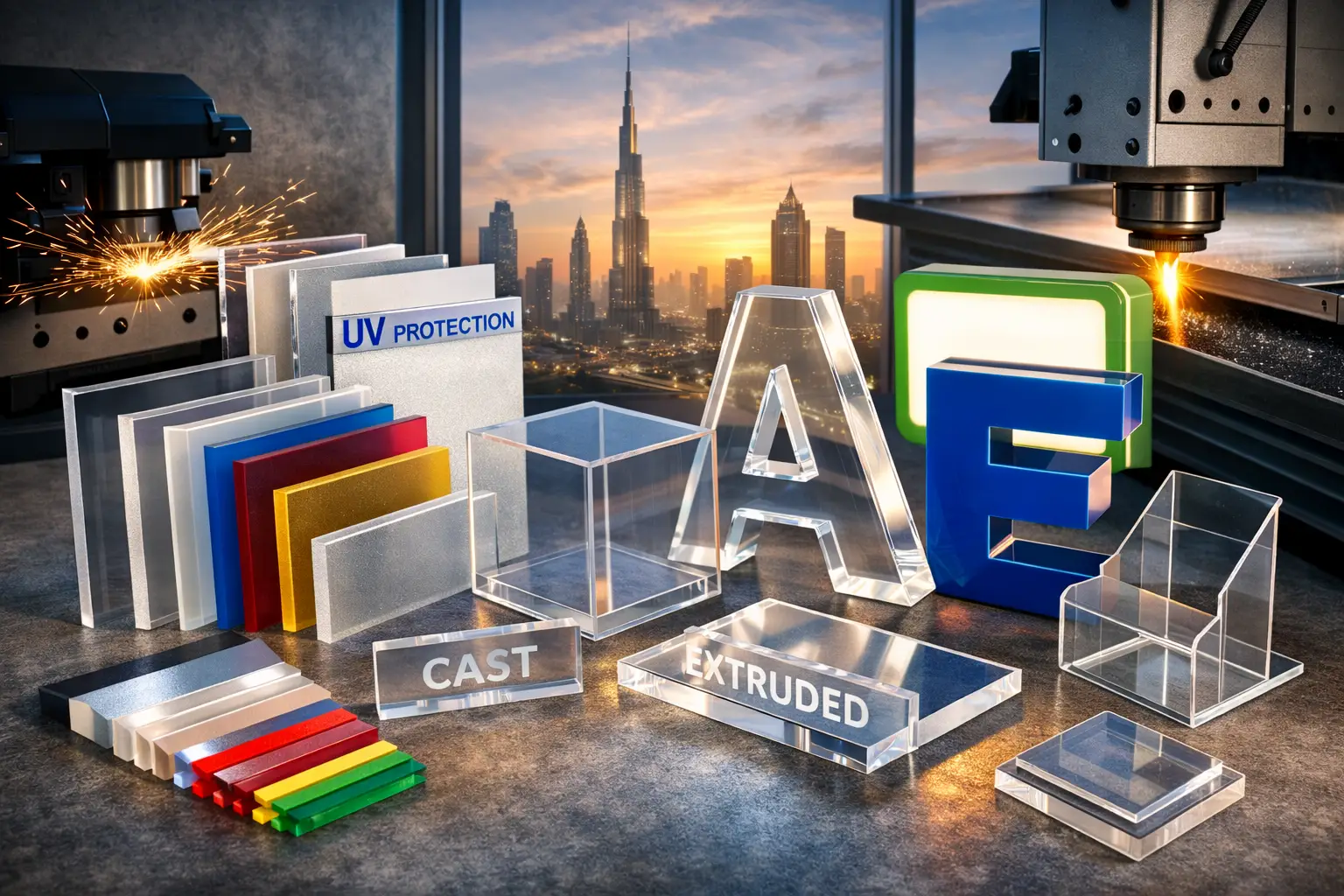
Acrylic has become one of the most versatile materials in modern fabrication, and acrylic bending in Dubai sits at the centre of that innovation. Across the city’s retail stores, corporate offices, exhibitions, and hospitality spaces, bent acrylic shapes turn simple sheets into elegant, functional, and highly customised 3D structures.
From sleek retail display stands and curved brochure holders to seamless acrylic boxes, illuminated signage, kiosks, podiums, and architectural décor, acrylic bending is the technique that transforms flat ideas into premium physical experiences. This guide explains the science, applications, methods, and benefits of professional acrylic bending, written for maximum clarity and authority.
Why Acrylic Bending Matters in Modern Fabrication Across Dubai
Dubai’s design ecosystem expects innovation, clarity, and precision. Acrylic bending provides exactly that, allowing fabricators to create smooth curves and clean angles that elevate brand presence and product visibility.
Acrylic bending creates shape, structure, and style
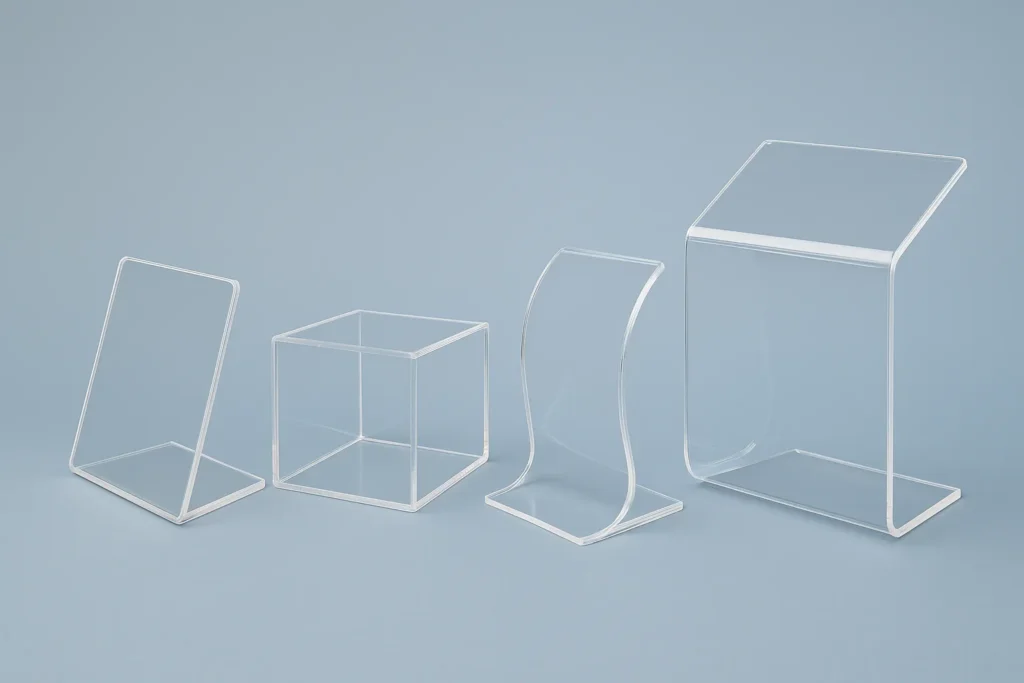
Flat acrylic sheets become functional 3D products, such as:
- Retail and acrylic display stands
- Curved brochure and leaflet holders
- Bent edges for signage and menu holders
- Museum-style and retail acrylic boxes
- Product risers and POS units
- Curved panels for kiosks, podiums, and counters
This combination of aesthetics and structural strength is why acrylic bending is a core capability for any specialist acrylic fabrication company in Dubai.
A premium alternative to metal or glass
Acrylic is lightweight, crystal clear, and shatter-resistant. It maintains optical clarity even when bent correctly, making it ideal for customer-facing environments where visual quality matters as much as durability.
Aligned with Dubai’s luxury and retail identity
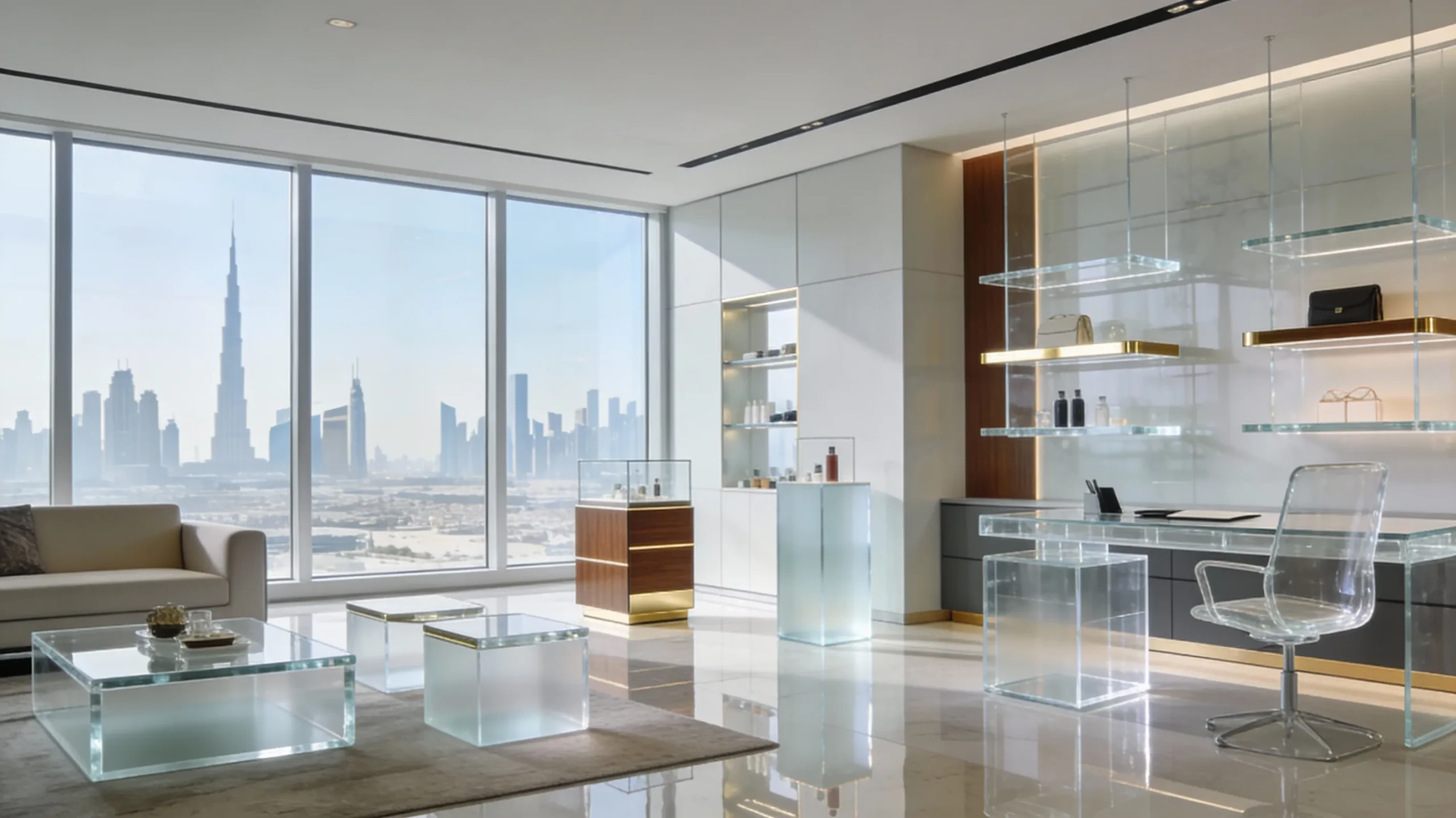
Bent acrylic features in luxury boutiques, real estate showrooms, hotels, high-end restaurants, and large retail malls. Its modern, minimal look fits naturally into Dubai’s glass-and-steel interiors and design-led spaces.
What Is Acrylic Bending? The Science Behind Heat-Formed Acrylic
Acrylic bending is the process of heating acrylic sheets to a specific temperature until they become flexible enough to be formed into new shapes. Once cooled, the acrylic retains this shape permanently without losing its clarity when done correctly.
The role of heat in acrylic bending
Acrylic (PMMA) softens at a defined temperature range. When heated evenly and controlled, it becomes pliable while maintaining a stable surface. If overheated or heated unevenly, it can bubble, burn, or distort. Professional fabricators use controlled strip heaters, ovens, or molds to ensure consistency.
More technical detail about the material can be found in general references on poly(methyl methacrylate), but in practice, experience and equipment calibration drive the best results.
Common acrylic bending techniques
- Strip heating (line bending): a narrow area of the sheet is heated along a bend line and then formed. Ideal for brochure holders, menu stands, display edges, and small bends.
- Oven bending: the entire sheet is heated in an oven to form larger curves, suitable for architectural panels, larger signage components, or furniture parts.
- Mold-based bending: acrylic is heated and shaped over or inside a mold to create highly specific curves and complex shapes.
- Free-form bending: experienced technicians manually bend heated acrylic for unique, artistic forms.
Applications of Acrylic Bending Across Dubai’s Industries
Because it combines strong aesthetics with practicality, acrylic bending in Dubai shows up in retail, exhibitions, hospitality, corporate branding, and interior design.
Retail and commercial displays
Retailers and brands use bent acrylic to create:
- Product display stands and risers
- Curved menu and information holders
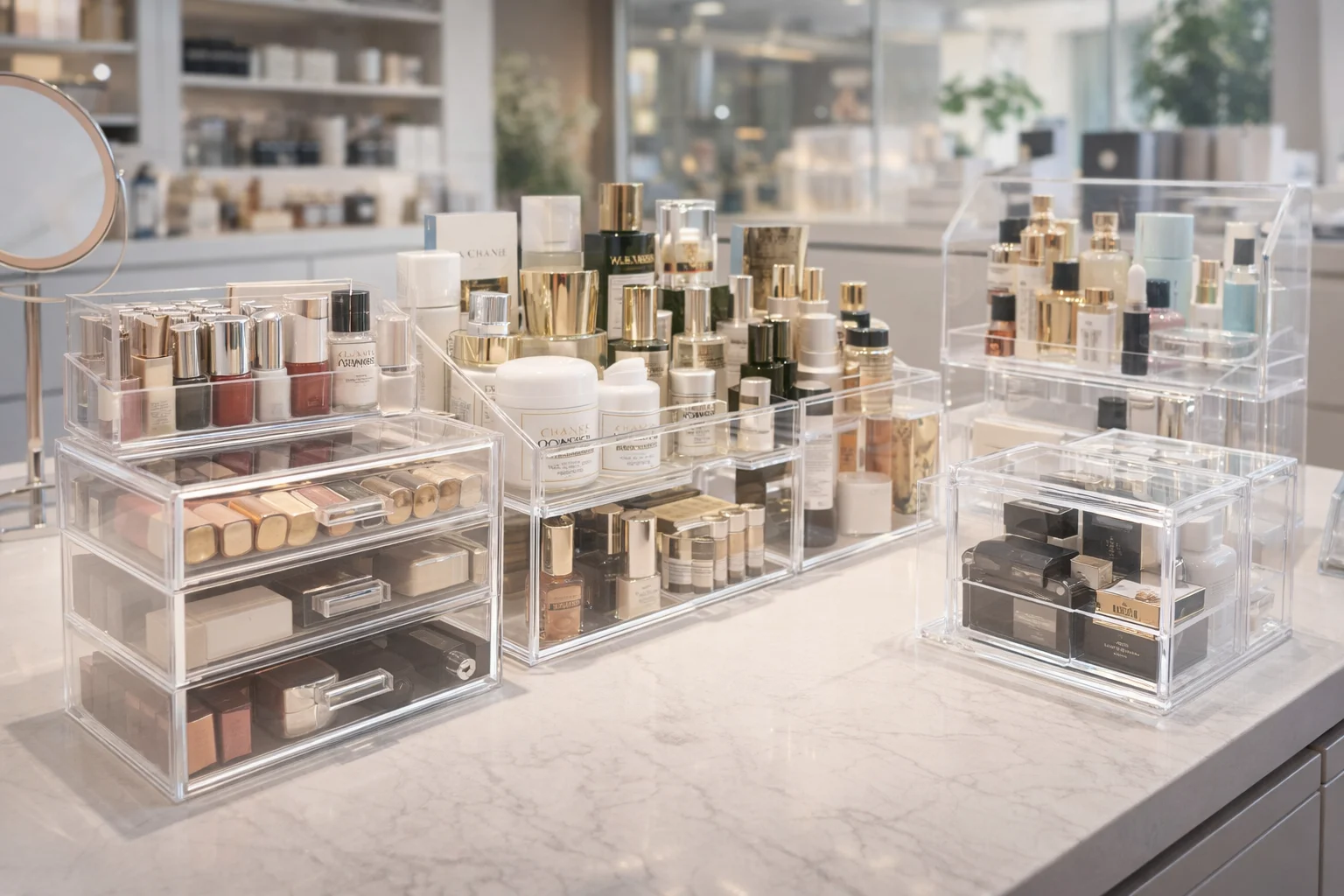
- Organisers and shelf displays
- Point-of-sale and point-of-purchase (POS/POP) display units
These pieces provide a clean, modern presentation that complements premium products rather than distracting from them.
Acrylic boxes and protective display units
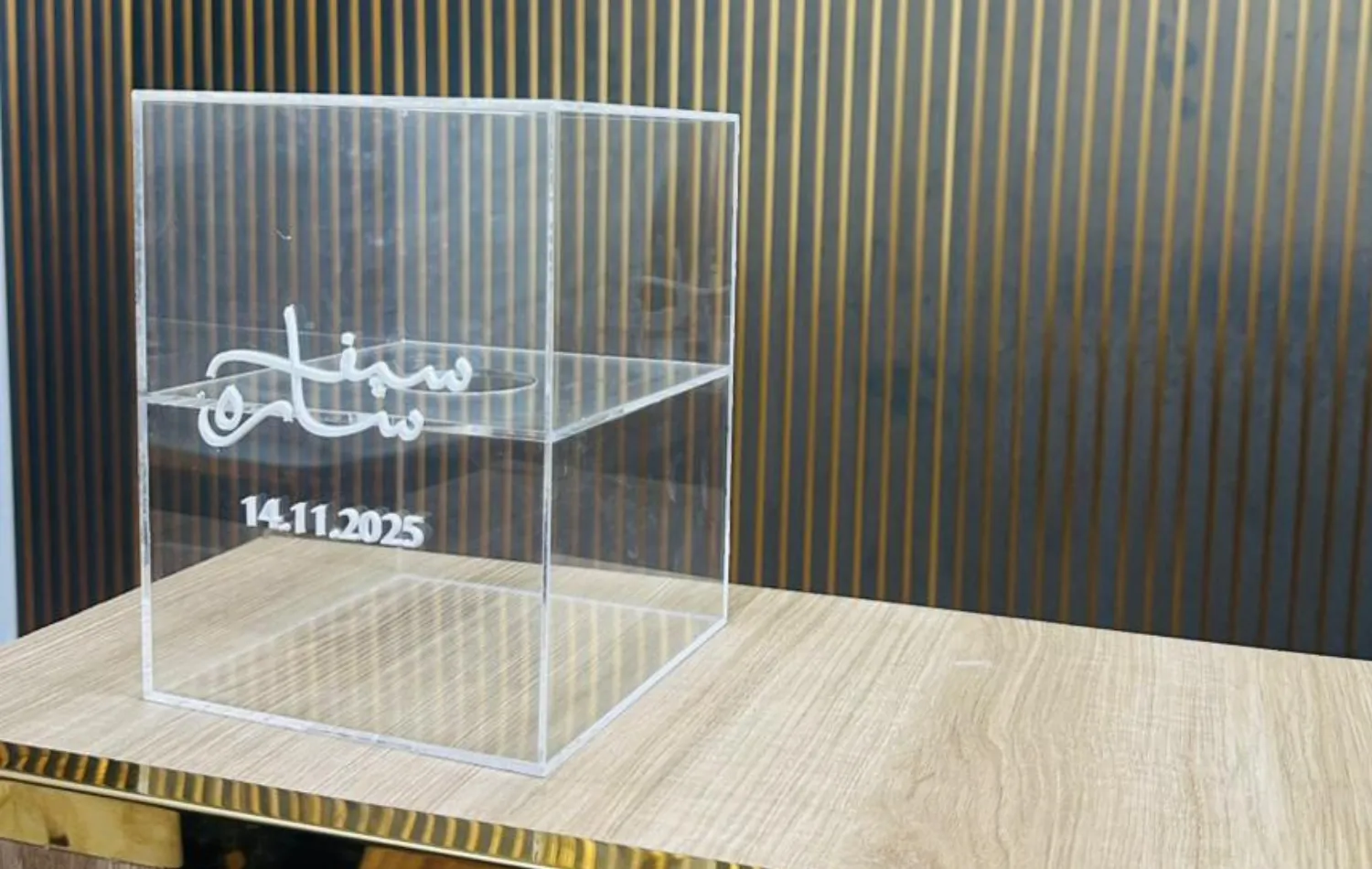
By bending and joining acrylic edges, fabricators create seamless boxes, cases, and covers for:
- Retail cube displays
- Museum-style protective covers
- Donation and raffle boxes
- Product cladding and packaging displays
Signage and branding components
Curved acrylic faces and bent edges are common in:
- Illuminated light boxes
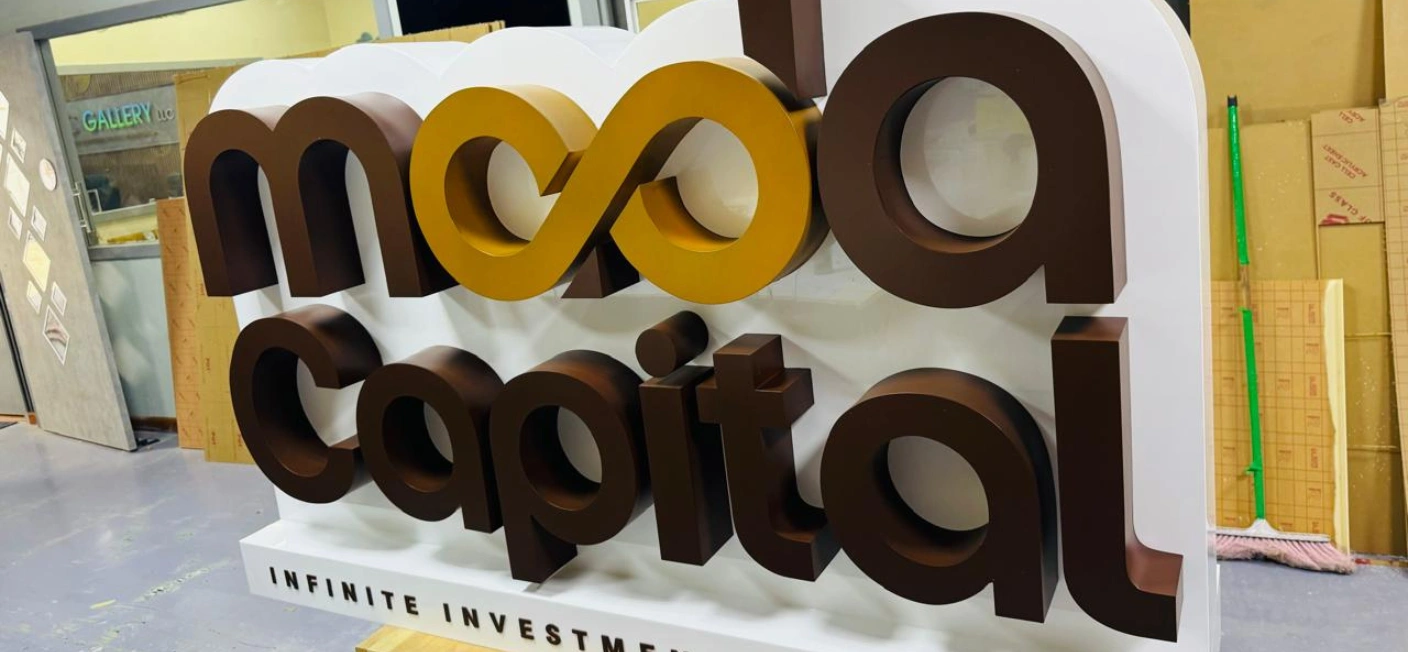
- Brand logo panels
- Framed and layered signage
When combined with laser cutting, engraving, and illumination, bent acrylic creates signage with a high-end, engineered look.
Kiosks, exhibition structures, and event fabrication
Exhibition organisers and event agencies rely on acrylic bending for:
- Curved counters and kiosks
- Branded podiums and stands
- Layered event branding elements
These pieces often appear at trade shows, conferences, and brand activations where visual impact and speed of installation are critical.
Furniture and interior architecture
Interior designers use bent acrylic for shelves, furniture accents, stand-off elements, room dividers, lighting covers, and decorative panels. Acrylic can deliver a glass-like aesthetic with less weight and a lower risk of breakage.
Heat Bending vs. Cold Bending: What You Should Know
While thin acrylic can sometimes be gently flexed without heat, professional acrylic bending service in Dubai almost always uses controlled heating for long-term performance.
Heat bending
- Provides a strong, permanent shape
- Works for a wide range of thicknesses
- Produces smooth, clean bends when properly heated
- Suitable for structural and visual applications
Cold bending
- Limited to very thin sheets and mild curves
- Higher risk of cracking or stress marks
- Useful mainly for temporary or flexible applications
For any commercial, structural, or long-term project, heat bending with professional equipment is the industry standard.
The Acrylic Bending Process: Step-by-Step
Professional acrylic bending in Dubai follows a methodical process to ensure precision, safety, and consistency.
- Inspection and preparation: sheets are checked for thickness, clarity, and defects. Protective films usually remain in place to prevent scratches.
- Marking the bend line: accurate measurements and marking ensure bends align correctly with the final design and any drilled holes or cut-outs.
- Controlled heating: the acrylic is heated using strip heaters or ovens. The time and temperature depend on sheet thickness and type.
- Forming the bend: once pliable, the sheet is bent using jigs, molds, or manual tools under the guidance of an experienced fabricator.
- Cooling and stabilising: the piece is held in place until it cools fully, preventing spring-back or warping.
- Finishing: edges may be machined, polished, or refined using services similar to specialised edge polishing and finishing.
- Assembly: bent components are combined with laser-cut parts, printed panels, or hardware to complete the final product.
Choosing the Right Acrylic Thickness for Bending
Choosing the correct thickness is essential for both appearance and performance.
- 2–3 mm: suitable for small brochure holders, menu stands, and simple display pockets.
- 4–5 mm: common for display stands, small structural elements, and POS units.
- 6–8 mm: used for larger retail structures, mid-sized signage components, and more demanding applications.
- 10 mm and above: reserved for architectural features, furniture parts, and large, curved panels that require additional strength.
Fabricators also consider the radius of the bend: sharper bends in thicker material may require special techniques or alternative design choices.
Common Problems in Acrylic Bending — And How Professionals Prevent Them
Inexperienced handling can cause issues, which is why many brands prefer established, technical partners for acrylic bending Dubai projects.
Bubbling and overheating
Excess heat can create bubbles or burns inside the acrylic. Professionals avoid this by using controlled heaters, consistent timing, and testing schedules specific to each thickness.
Micro-cracks and stress marks
Attempting to bend acrylic without sufficient heat or bending too sharply can cause small cracks. Correct pre-heating and maintaining a suitable minimum bend radius prevent this problem.
Uneven or twisted bends
Uneven heating or poor support during forming can result in misaligned bends. Proper jigs, supports, and alignment checks remove this risk.
Warping during cooling
If acrylic is not held securely during cooling, it can warp or shift. Securing the piece until fully cooled ensures the shape remains accurate.
Why Businesses in Dubai Prefer Professional Acrylic Bending Services
Choosing a professional acrylic bending service in Dubai provides several advantages:
- Consistent, repeatable quality across multiple pieces
- High clarity with minimal surface defects
- Precise alignments for assembly with other components
- Reliable lead times for exhibitions and campaign launches
- Optimised designs that balance aesthetics, strength, and cost
For critical projects—like branded displays, high-traffic retail installations, and long-term architectural features—these advantages directly impact both brand perception and the lifespan of the installation.
Cost Factors: What Influences Acrylic Bending Pricing in Dubai
Several factors influence the price of acrylic bending services in Dubai:
- Material thickness and grade: thicker or specialised acrylic sheets cost more.
- Number and type of bends: multiple angles or complex curves increase labour and setup time.
- Finishing requirements: polished edges, engraving, or printing add to the process.
- Quantity: batch production reduces cost per piece compared with one-off custom work.
- Assembly complexity: units that include hinges, hardware, or multi-part builds require more time.
- Lead time: rush projects, especially around busy exhibition seasons, may incur premium rates.
Despite these variables, acrylic bending remains one of the most cost-effective ways to create visually striking, functional structures.
How Acrylic Bending Enhances Other Fabrication Methods
Acrylic bending rarely works alone; it is usually combined with other fabrication techniques to create complete products:
- Laser cutting: provides clean outlines and cut-outs before pieces are bent.
- CNC routing: shapes and contours panels in preparation for bending.
- Printing and engraving: add branding, instructions, or decorative elements.
- Edge polishing: gives a glass-like finish to visible edges.
These combinations are what make modern acrylic fabrication so versatile for retail, corporate, and architectural applications. For a deeper understanding of professionally integrated processes, manufacturers often refer to guidance from engineering associations and material standards bodies such as plastics industry organisations or general material standards resources.
Maintenance Tips for Bent Acrylic Products
With simple care, bent acrylic products can retain their clarity and shape for many years.
- Clean with a soft microfiber cloth to avoid scratches.
- Use mild soap-based or acrylic-safe cleaners; avoid harsh chemicals.
- Do not use abrasive pads or dry paper towels on the surface.
- Position products away from direct high heat sources.
- Store larger items upright and well supported to minimise long-term stress.
Conclusion: Acrylic Bending Shapes the Future of Retail, Branding & Architectural Design
From museum-grade display boxes and elegant POS units to curved signage, brochure stands, kiosks, podiums, and furniture components, acrylic bending in Dubai is a foundational technique for modern fabrication. It merges beauty, precision, and structural strength, giving brands and designers an enormous range of options.
As Dubai continues to innovate in architecture, retail, and event experiences, professionally bent acrylic will remain an essential material choice—helping shape the visual identity of spaces, products, and brands throughout the city and beyond.
Frequently Asked Questions About Acrylic Bending in Dubai
Can all acrylic thicknesses be bent?
Most acrylic thicknesses can be bent when heated correctly, but thicker sheets require more time, specialised equipment, and attention to bend radius. Very thick panels may need custom setups or alternative design solutions.
What temperature is needed to bend acrylic?
The ideal temperature range depends on the acrylic type and thickness, but in general it falls within a controlled softening range. Professional fabricators rely on calibrated heaters and experience rather than a single universal temperature figure.
Is acrylic bending permanent?
Yes. Once heated, formed, and fully cooled, acrylic retains its new shape permanently under normal conditions. Proper design and bending technique ensure the piece remains stable over time.
Can bent acrylic crack over time?
Bent acrylic can crack if it was formed incorrectly, if the bend radius is too tight for the thickness, or if it is repeatedly stressed in use. With correct bending and installation, however, acrylic remains durable for many years.
How long does acrylic bending take?
Simple, single bends on small parts can be completed relatively quickly, especially once a setup is in place. Complex shapes, multiple bends per piece, or large batches require more time for heating, forming, cooling, and finishing.
Which method is best for bending acrylic?
For most applications, heat bending using strip heaters, ovens, or molds is the preferred method. It provides clean, permanent bends and is suitable for a wide range of thicknesses and shapes.
How do I choose a professional acrylic bending service in Dubai?
Look for a supplier with a strong portfolio, visible examples of bent acrylic work, knowledge of thickness and radius limitations, and consistent finishing quality. Reliable communication about timelines and technical constraints is also a good sign of a professional partner.