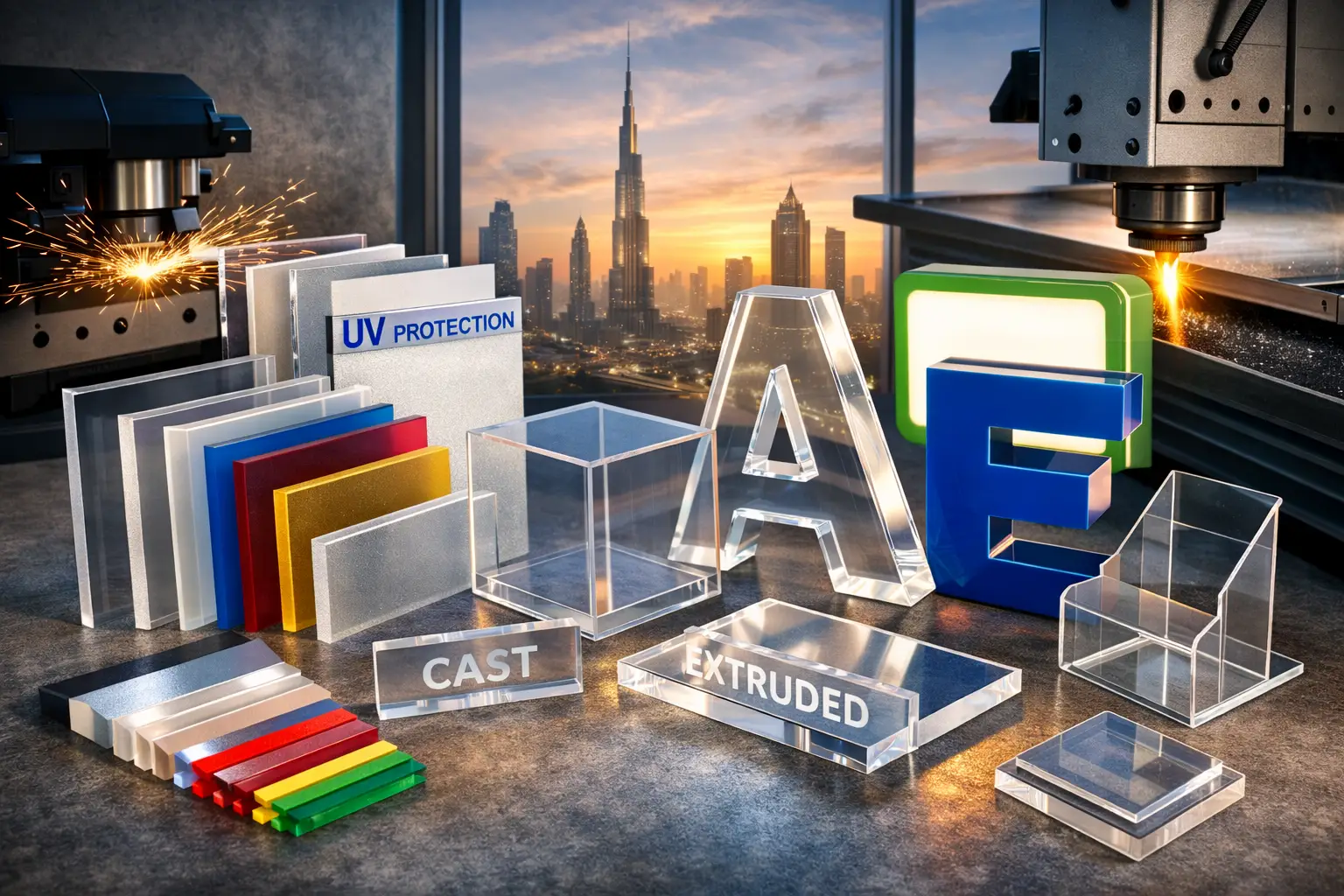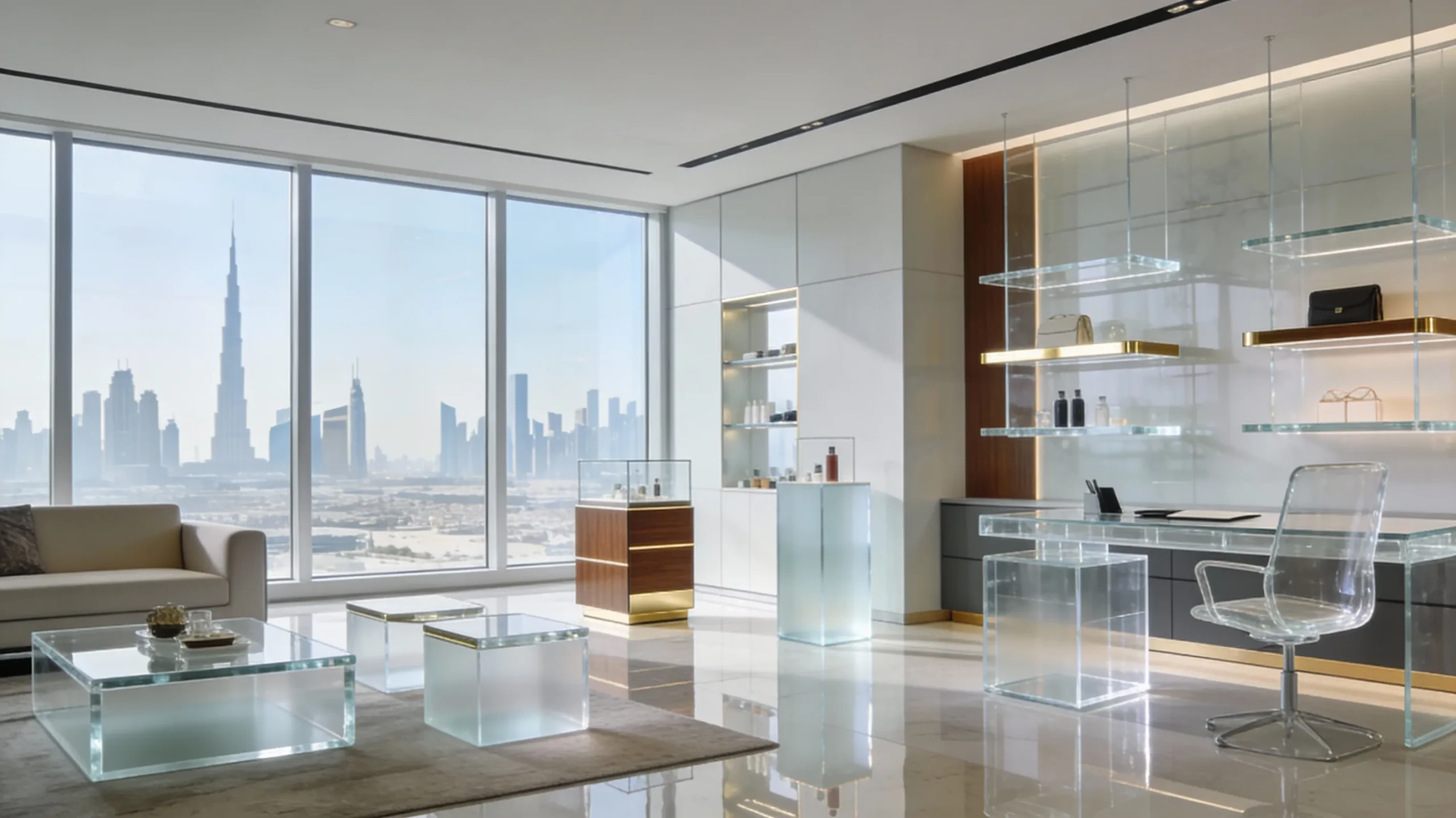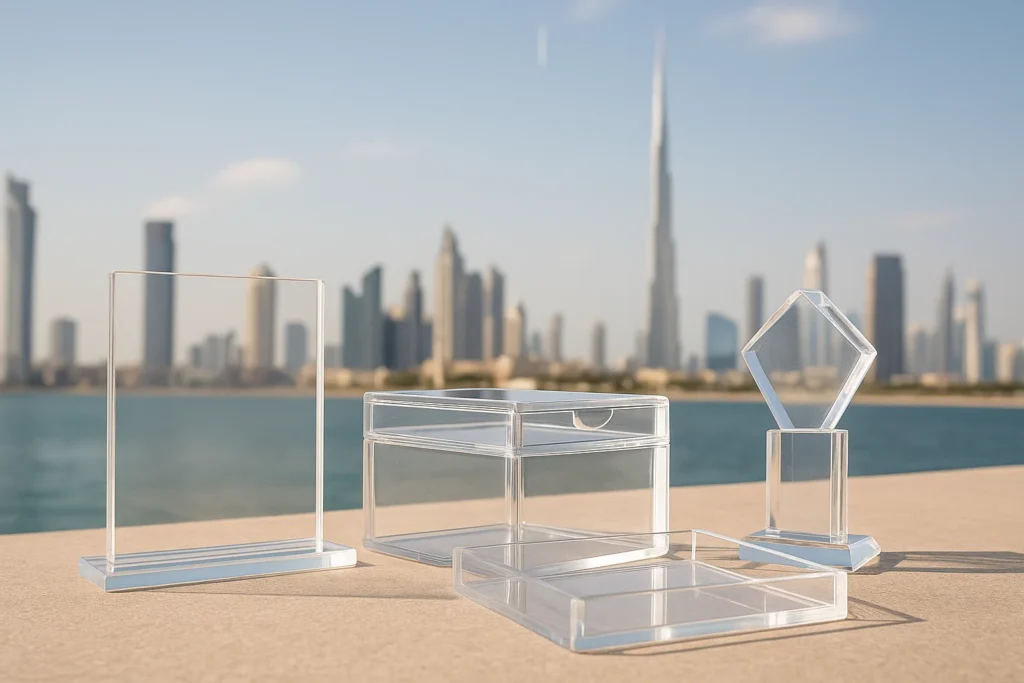
If you’re choosing between acrylic, glass, and polycarbonate for display units or signage in the UAE, the right pick isn’t just about looks. It’s about how each material handles extreme heat, high UV, dust/sand abrasion, and coastal humidity—all common across Dubai and the Emirates. In this guide, we’ll compare them head-to-head for clarity, weathering, strength, scratch resistance, thermal movement, weight, safety, and cost, then give precise recommendations for retail, malls, hospitality, events, and outdoor signage in the UAE.
The short answer: for most retail displays and sign faces in the UAE, UV-stable cast acrylic is the sweet spot for clarity + weathering + cost. Polycarbonate wins when impact resistance is critical (e.g., public safety, vandal-prone zones), ideally with a UV hard coat. Glass still has a place in luxury interiors and premium showcases, but it’s heavy, brittle, and costlier to install.
Why climate matters here:
Dubai’s UV index routinely peaks at very high levels (≈9 in summer), and coastal/inland highs frequently reach the mid-40s to 50 °C, which accelerates material aging and stresses fixings and adhesives. (Weather Atlas)
TL;DR comparison table
| Factor | Acrylic (PMMA) | Glass (Tempered) | Polycarbonate (PC) |
|---|---|---|---|
| Optical clarity (visible light) | ~92% (excellent) | ~90% (clear float) | ~88–90% (good) (sfsupplies.com) |
| UV/weather resistance | Excellent; very stable outdoors (choose cast/UV grades) | Excellent (optically stable) | Needs UV-stabilized/UV-hard-coat or it will yellow and haze (plexiglas-polymers.com) |
| Impact resistance | ~10–17× stronger than standard glass | Baseline | Up to ~250× stronger than glass (top for impact) (acmeplastics.com) |
| Scratch resistance | Harder than PC; can scratch; hard-coat options help | Best (hard surface) | Softest; needs hard coat (e.g., MR10) for abrasion (PLEXIGLAS® | EN) |
| Thermal expansion (α) | ~70×10⁻⁶ /°C | ~9×10⁻⁶ /°C | ~65–70×10⁻⁶ /°C (Campus Plastics) |
| Heat tolerance (service) | Good for UAE if ventilated; don’t enclose heat sources | Good | Good; can soften with heat load if unventilated |
| Weight | ~50% of glass | Heaviest | ~50% of glass |
| Fire behaviour (UL-94) | Often HB (non-FR) | Inorganic | Many grades V-2 to V-0 (FR) available (ACRYLITE®) |
| Cost (sheet) | $ (generally economical) | $$–$$$ (plus install) | $$ (premium over acrylic) |
| Best for UAE | Retail displays, sign faces, lightboxes, cases | Luxury interiors, premium vitrines | Safety glazing, anti-vandal, schools/transport |
What the UAE climate does to display materials
- UV & heat: High UV accelerates yellowing and property loss in plastics that aren’t UV-stabilized. Acrylic (PMMA) has excellent inherent UV/weather resistance, while polycarbonate tends to yellow and lose clarity without UV protection. Glass is inherently stable. (plexiglas-polymers.com)
- Ambient temperatures: High-40s to 50 °C summers and hot façades/rooftops increase thermal expansion and can stress fixings; plastics move far more than glass, so designs must allow for expansion slots and flexible sealants. (Reuters)
- Dust/sand abrasion: Wind-blown dust acts like very fine sandpaper. Acrylic is harder than polycarbonate (PC is softer) but glass resists abrasion best. If you pick PC outdoors, use a hard-coated UV grade (e.g., Lexan MR10 or similar) to cut haze buildup. (PLEXIGLAS® | EN)
Deep dive: Acrylic (PMMA)
Why it’s a UAE favorite for displays and sign faces
- Clarity: Among the clearest glazing plastics, with ~92% visible light transmission—that “glass-like” look customers want. (sfsupplies.com)
- UV/weathering: PMMA holds clarity and color outdoors for years; cast/UV grades are widely used in canopies, sign faces, and architectural features. Manufacturers document excellent outdoor durability and even long guarantees in certain grades. (plexiglas-polymers.com)
- Scratch resistance: Harder than polycarbonate (typical pencil hardness ~5H vs HB for PC). Still, use microfiber + mild soap for cleaning; avoid ammonia and strong solvents to prevent swirl marks or crazing. (PLEXIGLAS® | EN)
- Thermal movement: CTE ~70×10⁻⁶/°C, so allow for expansion in hot shopfronts or mall atriums; use slotted holes and flexible gaskets. (Campus Plastics)
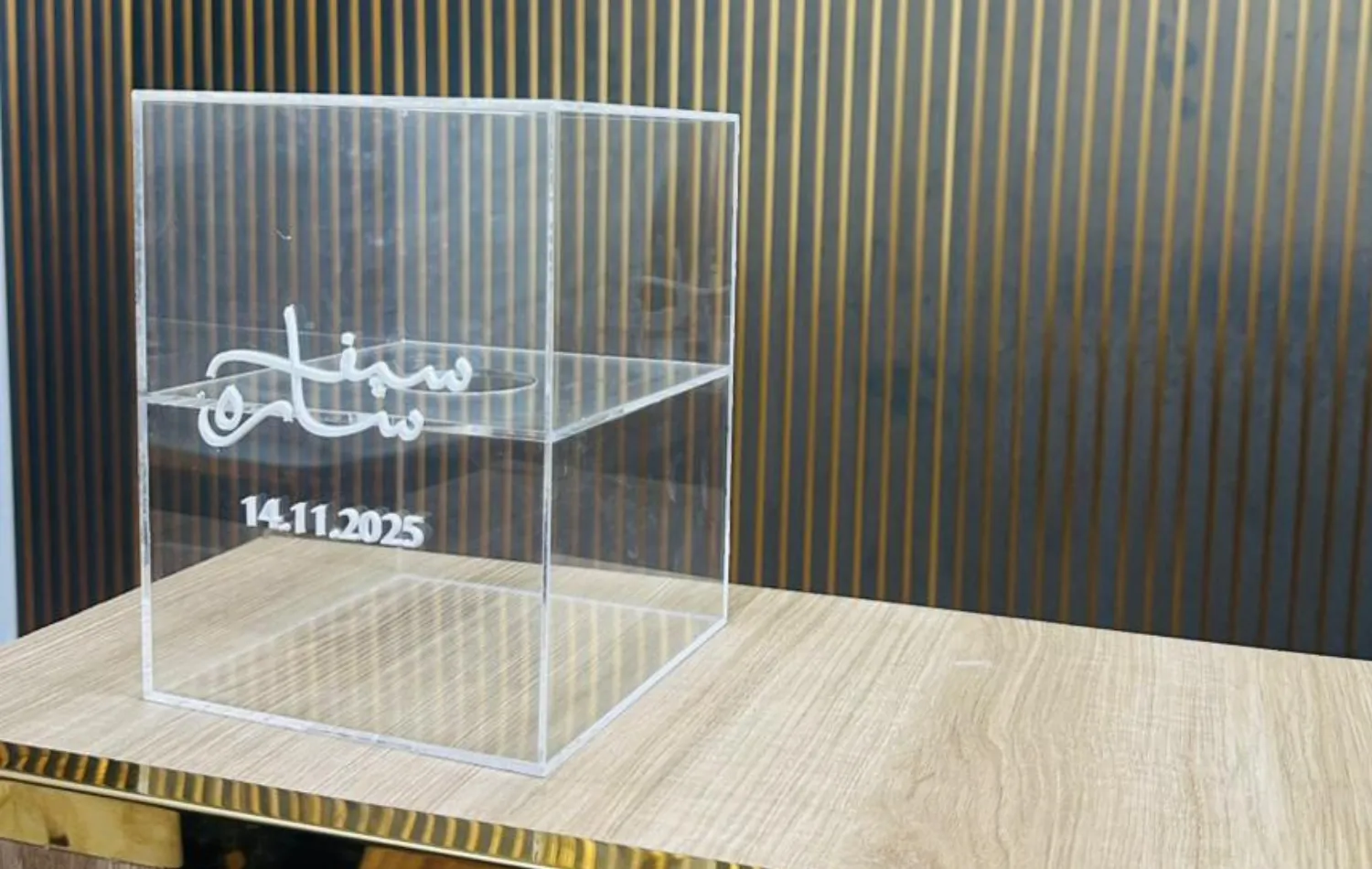
- Best uses: Retail risers, shelf talkers, product vitrines, menu cases, illuminated sign faces/lightboxes, display covers, brochure holders.
- Notes for fabricators: For lightboxes, specify cast acrylic (not extruded) for laser-cut edges that polish well; for high-traffic areas, consider scratch-resistant coated acrylic. For outdoor faces, pick UV-stable/opals tuned for light diffusion.
Maintenance tip: Clean with mild soap + lukewarm water using a soft microfiber. Avoid ammonia glass cleaners, acetone, benzene, or gasoline; they can cause crazing. (ACRYLITE®)
Deep dive: Glass (tempered/laminated)
Where it shines
- Surface hardness & scratch resistance: Best of the three; resists daily wipe-downs and airborne grit.
- Optical: Clear float glass typically transmits ≈90% visible light; specialty ultra-clear/AR glass can go higher but at a premium. (All Weather at Home)
- Heat/UV stability: Inert to UV; won’t yellow.
Trade-offs
- Weight: Heaviest option; requires stronger substructures and professional installation.
- Safety: Tempered glass is much safer than annealed, but still brittle; lamination adds safety but cost.
- Thermal movement: Very low (~9×10⁻⁶/°C), so it’s dimensionally stable but can store heat; mind thermal shock on dark back-paints or spot heating. (Imetra, Inc.)
Best uses: Luxury vitrines, premium counters, high-end interiors where scratch-free clarity matters more than weight.
Deep dive: Polycarbonate (PC)
Where it’s unbeatable
- Impact: The toughest option—up to ~250× the impact resistance of glass. Ideal for anti-vandal, schools, transport hubs, sports venues, or exposed public kiosks. (acmeplastics.com)
What to watch in the UAE
- UV aging & yellowing: Uncoated PC yellows and loses clarity under UV; in our region, that can happen quickly. Choose UV-stabilized PC with a hard coat (e.g., MR-series) for both UV resistance and abrasion resistance. (SpringerLink)
- Scratch resistance: Base PC is soft; without a hard-coat you’ll see swirl marks from routine cleaning/dust. Hard-coated PC significantly improves abrasion haze in standardized tests (ASTM D1044 Taber). (ASTM International | ASTM)
- Thermal movement: Similar to acrylic (~65–70×10⁻⁶/°C); design expansion joints accordingly. (Engineering ToolBox)
Best uses: Protective glazing, safety panels, outdoor kiosks prone to impact, public-facing covers.
Clarity, color, and light diffusion (for retailers and signmakers)
- Visible light transmission (VLT): Acrylic ~92%, glass ~90%, PC ~88–90%. For backlit branding and clean product color, acrylic tends to look brighter at similar thickness. (sfsupplies.com)
- Diffusers & opals: For lightboxes, specify opal cast acrylic with the right LGP/diffuser pairing to remove hotspots.
- Anti-reflection/anti-glare: Glass has robust AR options (premium). Acrylic/PC offer matte and hard-coat choices for glare control.
Heat, UV, and abrasion: what the tests say
- UV & weathering: PMMA (acrylic) families like PLEXIGLAS® are formulated for high weatherability; suppliers even advertise long guarantees on certain grades. PC, unless UV-stabilized, yellows and embrittles under UV—accelerated in high-UV climates. (plexiglas-polymers.com)
- Abrasion: Daily cleaning of dusty surfaces is essentially micro-abrasion. Industry uses ASTM D1044 Taber abrasion to quantify haze increase. Hard-coated PC and scratch-resistant acrylic reduce haze dramatically vs uncoated surfaces. (ASTM International | ASTM)
Fire behaviour (UL-94) in malls and public spaces
- Acrylic: many standard sheets are UL-94 HB; acceptable for sign faces (non-enclosure) but not for electrical enclosures unless specified otherwise. (ACRYLITE®)
- Polycarbonate: available in UL-94 V-2 to V-0 flame-retardant grades for higher safety requirements (airports, transport, etc.). Check the grade’s Yellow Card and thickness rating. (Pronat)
Note: UL-94 is a component test standard; application codes/authorities may require additional certifications. (UL Solutions)
Thermal expansion & mounting in the UAE
Plastics move with heat: acrylic ~70×10⁻⁶/°C, polycarbonate ~65–70×10⁻⁶/°C, glass ~9×10⁻⁶/°C. Always:
- Oversize holes (slotted) for fixings, rubber grommets, and neutral-cure silicone where appropriate.
- Ventilate lightboxes to keep internal heat down.
- Avoid tight frames that “pinch” panels; allow for the day–night delta and sun-load. (Campus Plastics)
Cleaning that won’t ruin your display
- Acrylic & PC: Use mild soap + water + microfiber. Avoid ammonia glass cleaners and strong solvents (acetone, MEK, benzene, gasoline). These can crazing-crack acrylic and damage PC. Hard-coated sheets tolerate more, but keep it gentle. (ACRYLITE®)
- Glass: Use standard glass cleaners; squeegee is fine.
Recommendations by use case (UAE)
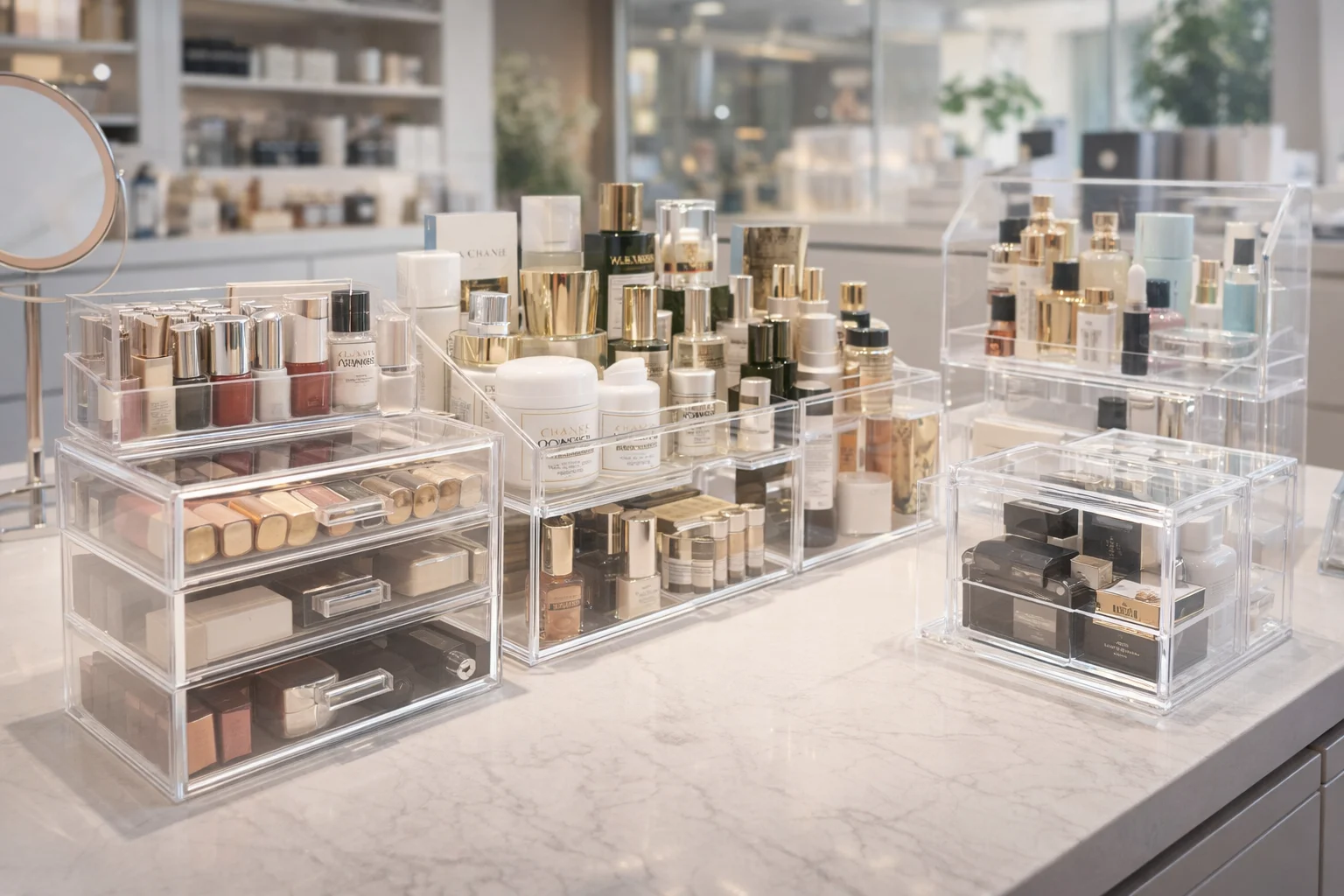
- Indoor retail displays & showcases: Cast acrylic (clear or colored). Add edge-polish for premium feel; consider SR-coated acrylic for heavy handling. (Plaskolite.com)
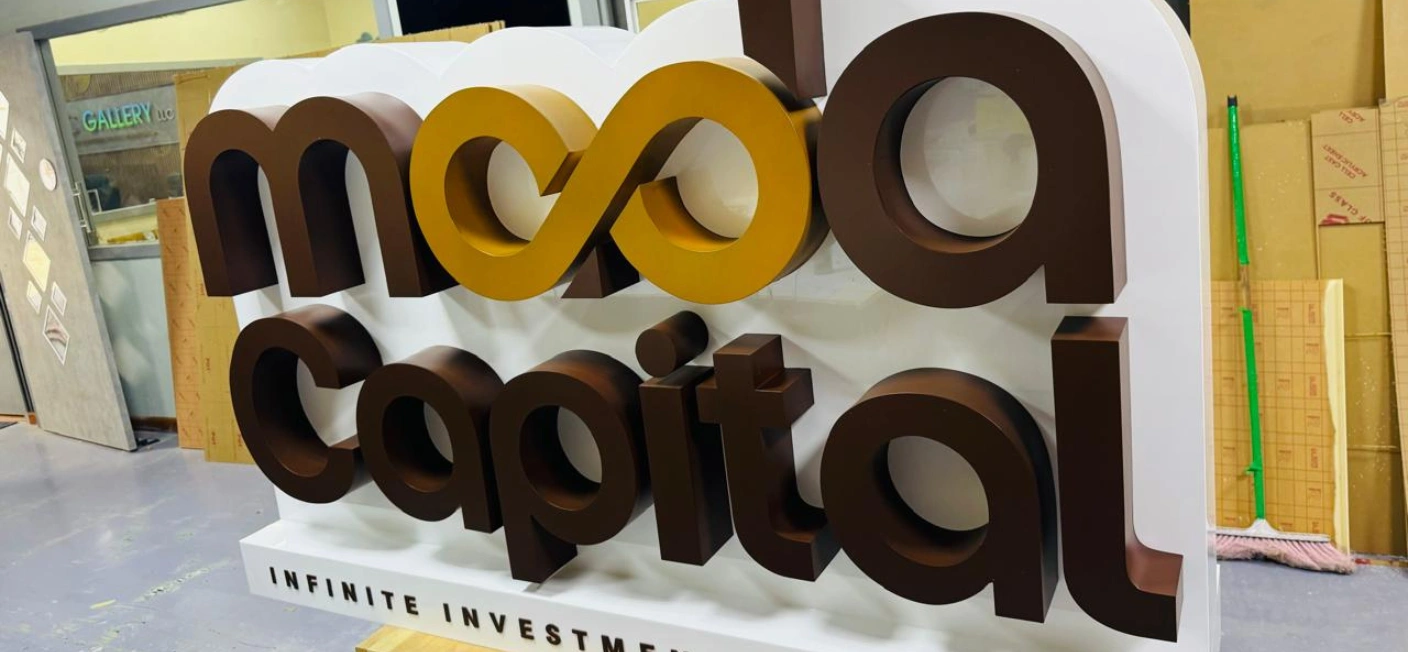
- Outdoor sign faces / lightboxes: Cast acrylic sign-grade opal for light diffusion; where impact risk is high, use UV hard-coated PC (e.g., MR-type) and accept slightly lower clarity. (professionalplastics.com)
- Anti-vandal/schools/transport hubs: Hard-coated, UV-stabilized polycarbonate.
- Luxury vitrines & premium interiors: Tempered or laminated glass for scratch-free longevity and that “stone-hard” surface.
- Coastal installations: Plastics resist corrosion, but hardware (screws, hinges) must be marine-grade; keep a rinse schedule to limit salt + dust abrasion.
Simple “shop-floor” tests you can request
If you want proof before committing, ask your fabricator to demonstrate:
- Taber abrasion (ASTM D1044) haze comparison between uncoated acrylic, hard-coated acrylic, uncoated PC, and hard-coated PC. You’ll see the haze difference quickly. (ASTM International | ASTM)
- UV-lamp exposure snapshot (accelerated bench test) to illustrate yellowing susceptibility of uncoated PC vs PMMA. Published studies document PC’s yellowing and property loss under UV if unstabilized. (SpringerLink)
- Thermal expansion demo: Mount equal-size acrylic/PC plates in a small frame, heat them with safe radiant lamps, and watch hole offset or edge contact; it’s an effective visual.
FAQ (schema-ready)
Q1. For outdoor sign faces in Dubai, should I pick acrylic or polycarbonate?
For most sign faces: cast acrylic (UV-stable) gives the best clarity + weathering at a good price. If your site is prone to impact/vandalism, choose hard-coated, UV-stabilized polycarbonate and accept a slight clarity trade-off. (plexiglas-polymers.com)
Q2. Will acrylic or polycarbonate turn yellow in UAE sun?
PMMA holds up very well outdoors (pick reputable grades). Uncoated PC will yellow/haze; use UV-stabilized + hard-coated PC for outdoor UAE installs. (plexiglas-polymers.com)
Q3. Which material resists dust/sand scratching best?
Glass is best. Between plastics, acrylic is harder than PC, and hard-coated versions of either perform far better in ASTM D1044 abrasion tests. (PLEXIGLAS® | EN)
Q4. What thickness is right for a 1.2 m-wide retail shelf riser?
Typical: 6–10 mm acrylic depending on span and load. Use ribs or bent flanges for stiffness. (For heavy loads/long spans, step up or use discreet metal stiffeners.)
Q5. Any installation tips for summer heat?
Yes: slotted holes, floating frames/gaskets, neutral-cure silicone, and ventilation for lightboxes. Plastics expand ~7× more than glass. (Campus Plastics)
Q6. How should we clean displays without scratching?
Use mild soap + water + microfiber. Avoid ammonia glass sprays and strong solvents (acetone/MEK). For PC, follow Lexan cleaning bulletins. (ACRYLITE®)